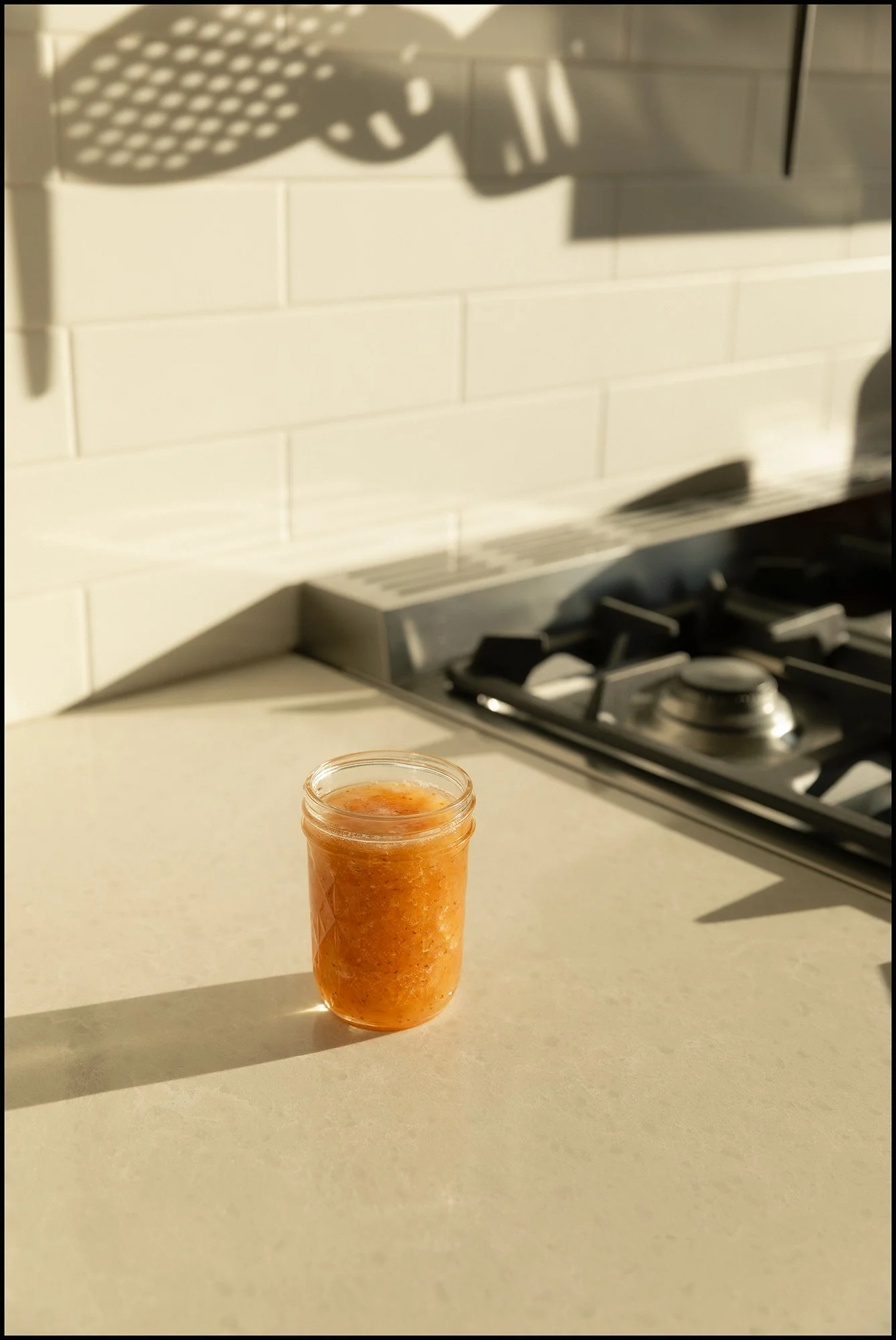
Pineberry Jam
Equipment & Tools
5 8-ounce glass canning jars, rings, and lids
Plate
Water-boiling canning pot
Rack
Jar lifter
Saucepan
Thermometer
Large bowl
Strainer
Cutting board
Knife
Large pot
Potato masher
Silicone spatula
Measuring cups and spoons
Splatter screen
Ladle
Wide-mouth funnel
Towel or drying rack
Ingredients
Produce:
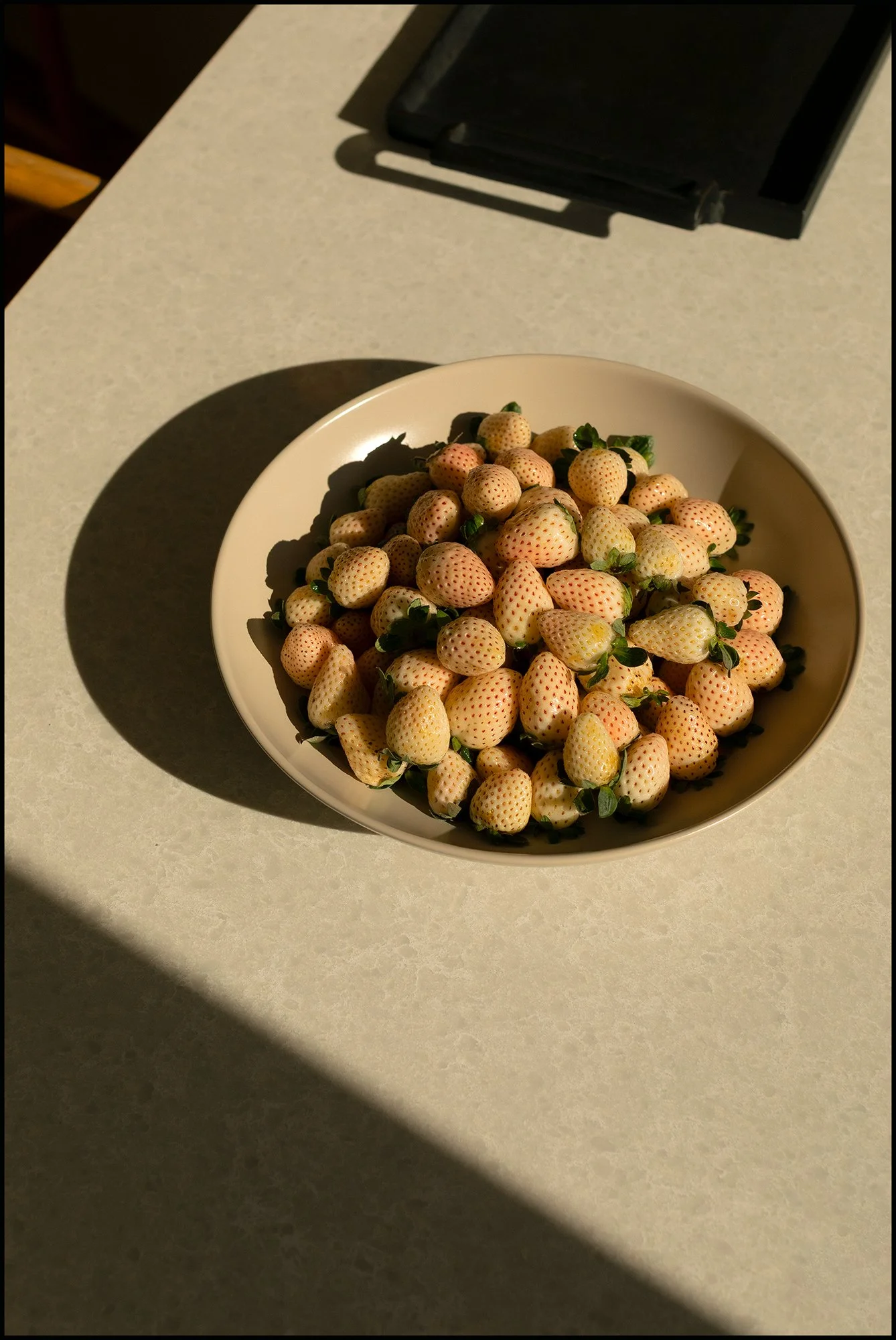
2 quarts pineberries (This is approximately 3 lbs.)
Additional:
2 tablespoons lemon juice
4 tablespoons pectin
3 cups sugar
Recipe Notes
“Honor the fragments” is a phrase I heard this morning that has not left my mind. If you have a full calendar, you know how quickly any given day can pass. You might think to yourself, “I wish I could dedicate more time to this conversation.” Your shower. Your book. Packing your child’s lunch. Life moves quickly some days, no matter how intentionally we hope to slow it.
When our time feels fragmented, we can still honor the way it is spent. When a conversation feels rushed, it is still a conversation worth honoring. When a shower feels too short, it is still a moment of aloneness worth honoring.
I honor the time I spent making this batch of Pineberry Jam. It was a brief, focused burst of energy in my day, and I am so very pleased with its flavor.
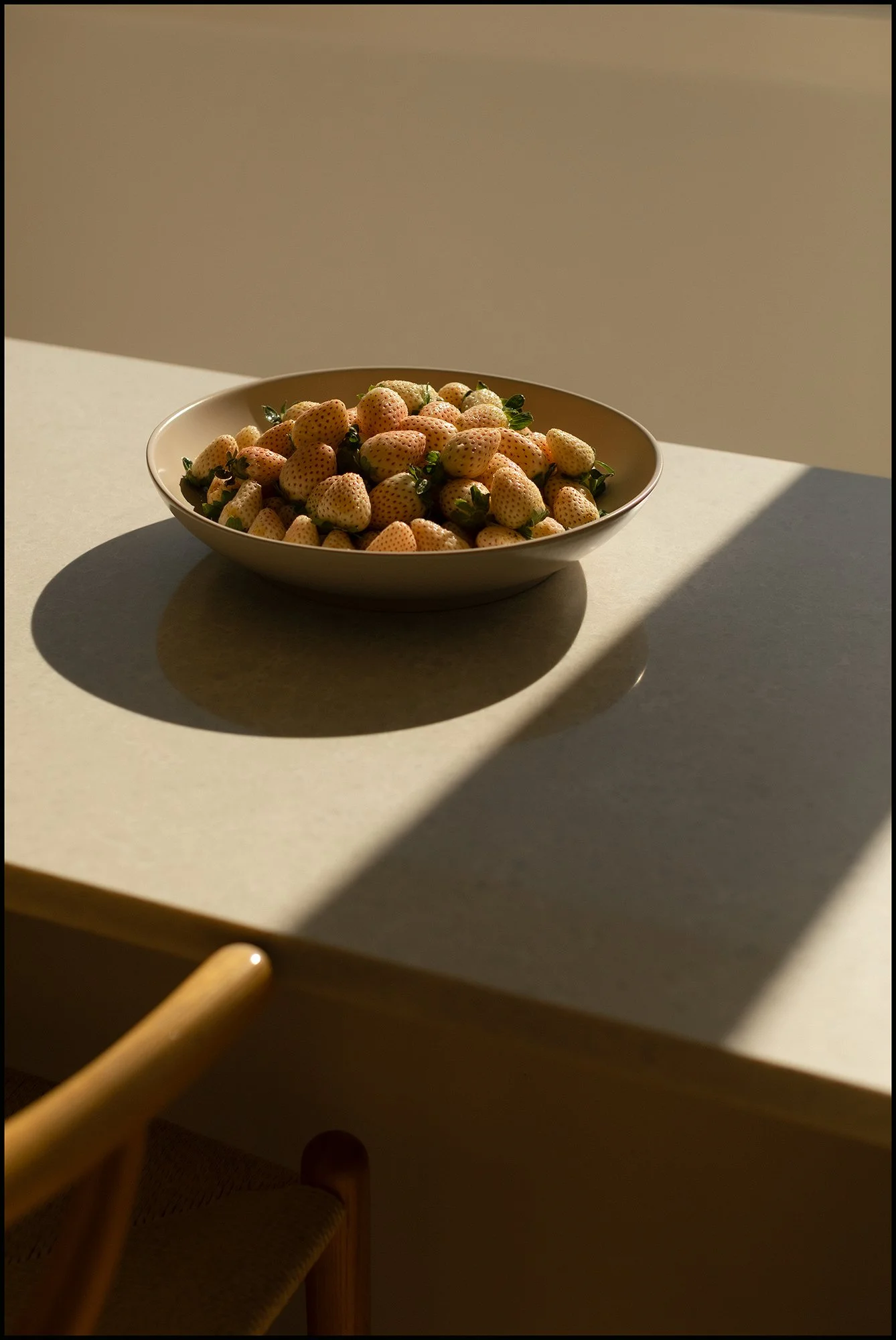
If you stumble across “white strawberries,” you have found pineberries. They are the sweeter, more aromatic sibling of a classic strawberry. While pine is part of their name, this berry is indeed a member of the strawberry family.
Step-by-Step Process
Yield: Approximately 5 8-ounce jars
Total steps: 21
Take a look around your kitchen. Make sure it’s a space in which you’re ready to spend some time. Turn up your favorite playlist, open a window, or light a new candle.
Prepare your ingredients, and read the full recipe. Set your ingredients out, and make sure you have every item you need before getting started. Read through each step below to learn your landscape ahead.
Place a plate in your freezer. This chilled plate comes in handy at Step 15 when you’re ensuring your jam has set and is ready to be ladled into your jars.
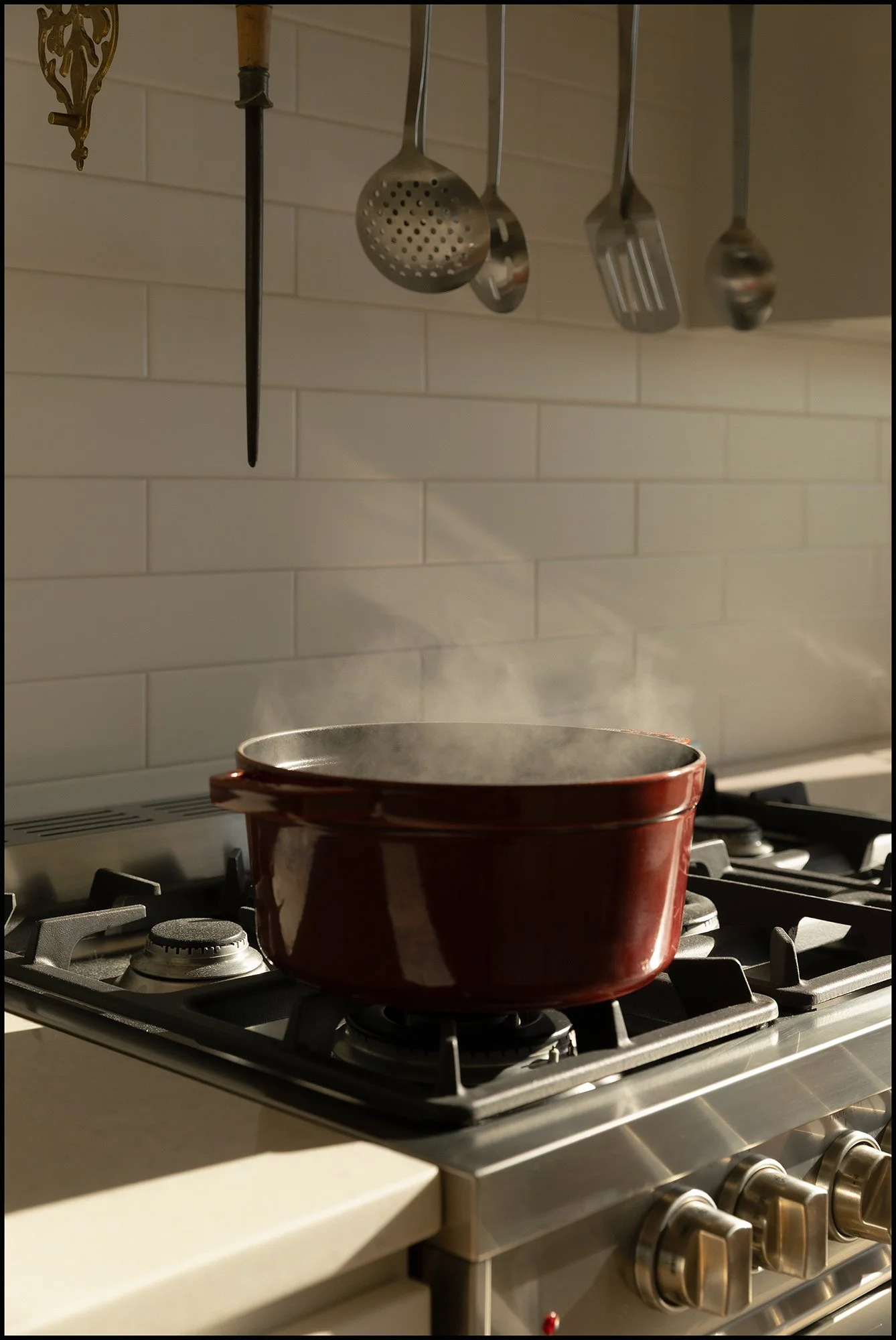
Prepare your water-boiling canning pot. Fill your canning pot with water. Place your rack inside your canning pot. Do not yet submerge your rack. Place the jars and rings on top of the rack. Submerge the rack, jars, and rings, allowing the jars to completely fill with water. Ensure the water level is ultimately about 1 inch above your jars. Place your lid on your canning pot, and bring to a boil for 5 minutes. This step not only prepares your water-boiling canning pot, or water bath, but it also sterilizes your jars. (Boiling water may harm the sealant on your lids, so sterilize your lids by placing them in a saucepan of 180°-water for 5 minutes.)
Bathe and rinse your pineberries. Put your pineberries in a large bowl. Fill your bowl to the very top with cool water. Your bowl should be large enough to leave 1—2 inches of water sitting above your pineberries. Begin to gently sift through your pineberries with your fingers. You’ll notice loose stems, leaves, and debris begin to float to the top. Remove the excess debris, and transfer your pineberries into a strainer. Rinse your pineberries.
Hull your pineberries. In other words, remove the leafy cap (the calyx) from each pineberry.
Rinse once more.
Ready your sterilized jars. We ready our jars closer to the beginning of the preserving process. We do this because we want to be able to quickly remove our jam from the heat once it has set. Once your water-boiling canning pot has boiled for 5 minutes, remove your jars and rings from your canning pot. Remove your lids from your saucepan. They’re going to be hot to the touch, so use your jar lifter to protect your hands. Allow jars, rings, and lids to cool.
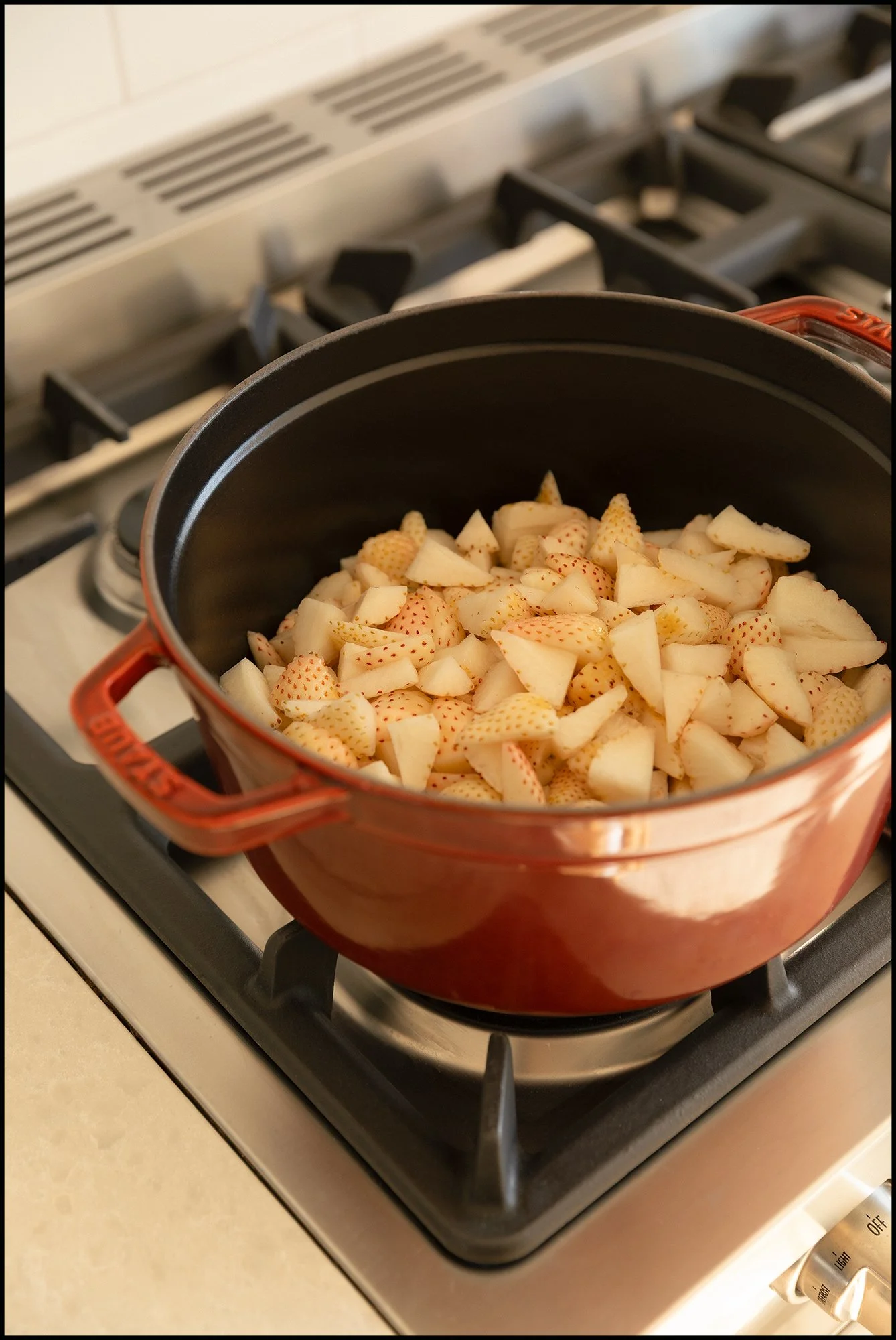
Place your pineberries in your large pot. Begin to heat your pineberries on low to medium (closer to low) as you begin to crush them. Use a potato masher or large fork to fully crush your berries. Take your time. Use your spatula to begin slowly stirring. This should take about 5 minutes. Do not boil at this step.
Add your lemon juice. Once the berries are fully crushed, continue slowly stirring. Add your lemon juice tablespoon by tablespoon. Include any jam that has made its way up the sides of your pot.
Add your pectin. As you continue stirring, add your pectin tablespoon by tablespoon. Still include any jam that has made its way up the sides of your pot.
Add your sugar. As you continue stirring, add your sugar cup by cup. Still include any jam that has made its way up the sides of your pot.
Boil your jam. Increase your heat to bring your jam to a low, gentle boil for 10 minutes.
Remove any foam that has accumulated on the surface of your jam.
Make sure your jam has set. This is an important step, and here’s how it goes! You can ensure your jam has set via 2 ways. Firstly, ensure it has set via a freezer test. Remove your chilled plate from your freezer, and place a spoonful of jam on your plate. Wait 2 minutes. After 2 minutes, nudge your spoonful of jam with the tip of your finger. If it wrinkles as your finger moves through, it has set. If your finger moves smoothly through your jam, allow it to boil 5 additional minutes, and test again. Secondly, you can ensure it has set by paying close attention to the way it drips off your spatula via a drip test. Hold your spatula above your pot, and notice how your jam drips. If it drips quickly and appears thin, it hasn’t yet set. If it drips slowly and more heavily, it has set! Ensuring your jam has set is something that can make you feel unsure, but don’t let it! Following these steps, using the freezer test, and paying close attention to how it drips will ensure your jam has thickened to a delightful consistency.
Transfer your jam into jars. Your jam will be very hot, so do this carefully. Use your funnel to guide each pour, and use a ladle or a measuring cup to transfer your jam. Fill each jar to the lowest part of the jar’s mouth, about ½ inch below the rim of the jar.
Tidy your jars. Wipe your jars clean, especially the rim of each jar, with a warm, damp towel.
Add your lids and rings. Tighten.
Process your jam. Submerge your jam into your water-boiling canning pot, and place the lid back onto your canning pot. Allow your jars to boil for 5 minutes. Begin your timer once your water is boiling. Adjust for altitude if needed.
Cool. Carefully remove your jars from the water using your jar lifter, and set them on a towel or drying rack to cool.
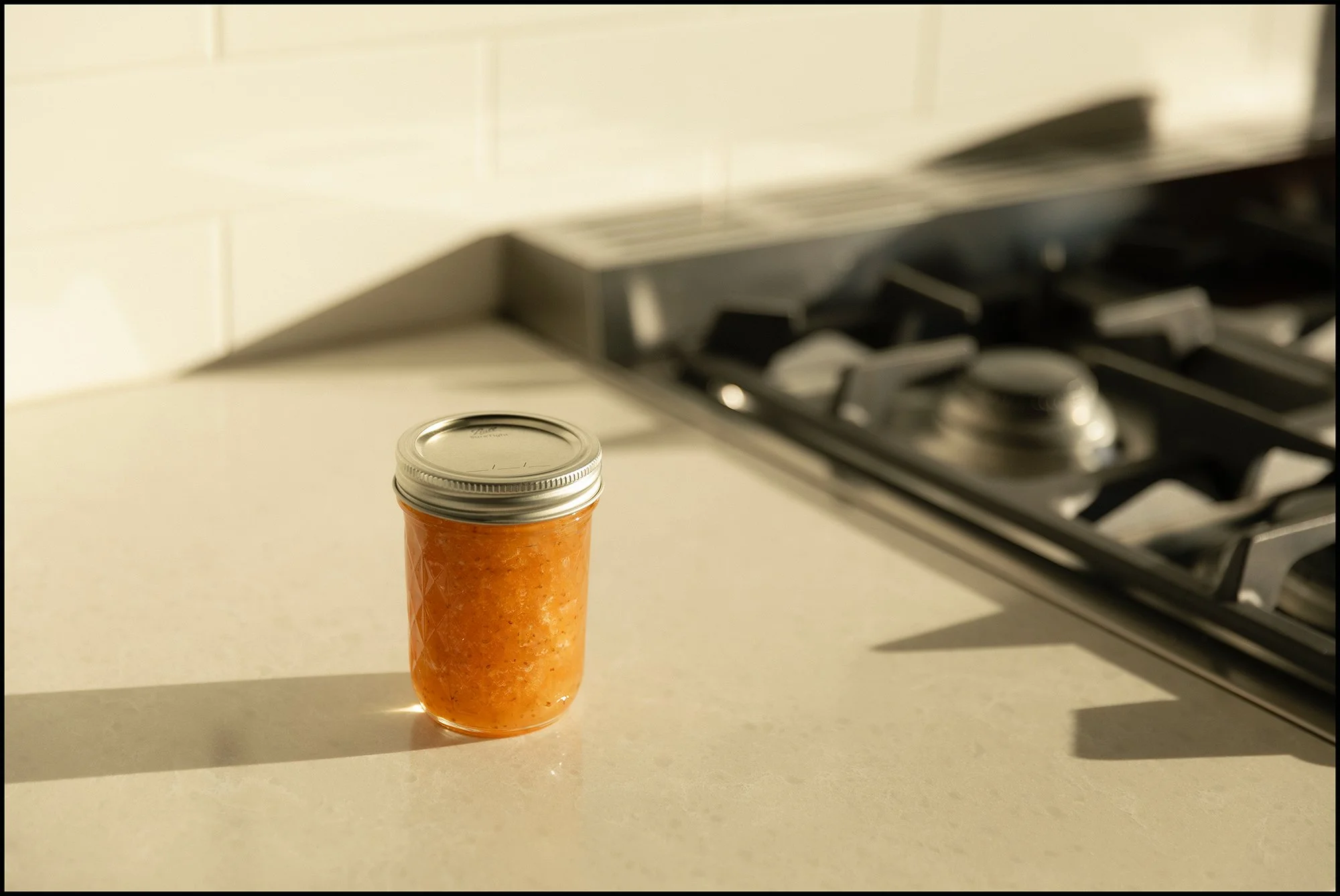
Ensure they have sealed. Once cooled, ensure your jars have sealed properly. You can do this via 2 ways: listen for your jar to “pop,” an audible indication it has sealed, or push the center of the lid to see if it pops up and down. If it doesn’t, it’s sealed! Date your jar, and store. If the lid does pop up and down, it did not seal. Simply put that jar in your refrigerator, and enjoy within 1 month.