In Dialogue: Zachary Gray
In Dialogue: Zachary Gray
What does friendship mean to you?
What does a friend mean to you?
How much value do you place on friendships?
Does the value of a healthy friendship equal the value of a healthy partnership? Good health? Financial security? A career that is intellectually and creatively satisfying?
Friendship, to me, is the fourth leg of a steady chair. It is the fresh egg in a chocolate cake. It is the lush towel packed inside my beach bag. It is absolutely necessary to the wholeness of my life, and because of this, I often ask myself, “Why? What does a friend mean to me?”
A friend means I have a safe home outside of my home. It means I have an extra set of eyes and ears that see and hear the brutally honest truth of my heart. It means I can babble and vent and embarrass myself knowing my innate goodness will be seen and valued regardless. It means I will be course corrected if I have ventured off my path and haven’t yet noticed myself. I place tremendous value on this. A healthy friendship is as important as a healthy partnership. Good health. Financial security. A career that is intellectually and creatively satisfying. It is that good. It is that unique. It is that integral to the wholeness of my life.
Zachary Gray is a close friend of mine—one who listens more than he speaks, one who gives me honest feedback about the work I create, and one who reminds me that my husband’s love for college football is completely normal and healthy.
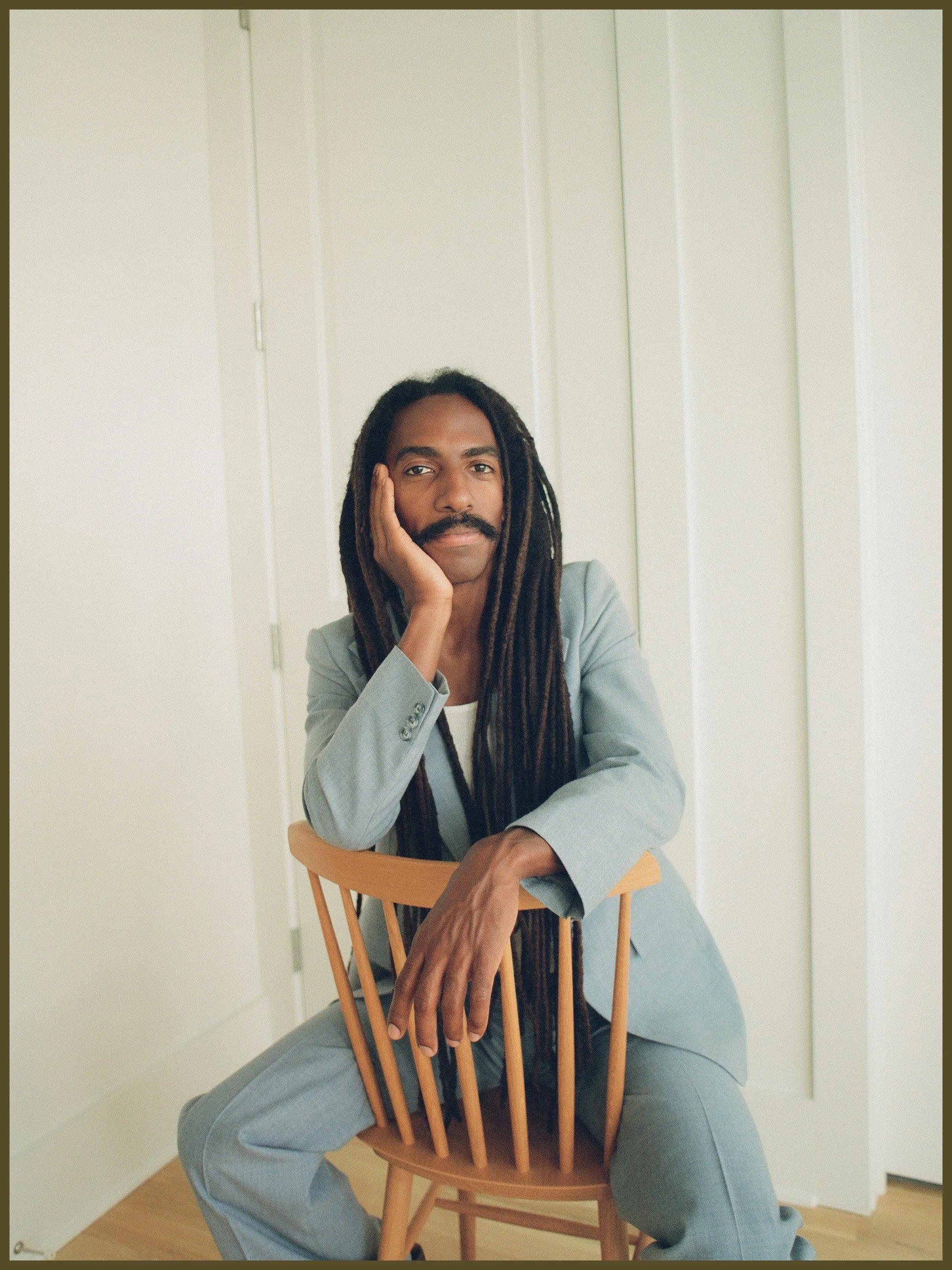
Zachary is also a muse and mentor. We first met through Elizabeth Suzann Studio. I helped plan our product and editorial photoshoots, and Zachary captured every product and editorial photo. He did so while remaining calm, consistent, and so very kind. Since we met, we have built a friendship that has brought growth, honesty, joy, and generous listening to my life. When I faced my most insecure moments while writing The Wiley Canning Company Cookbook, I went to Zachary for feedback knowing he would tell me the truth, knowing he wished the absolute best for me. This level of trust and respect is a level I covet. I ultimately made several changes to my book after speaking with Zachary.
Zachary is a Los Angeles-based photographer. His clients include Elizabeth Suzann Studio, Imogene and Willie, Reformation, and Paramore. Zachary also photographed my portraits from The Wiley Canning Company Cookbook, seen here.
Below, Zachary and I are in dialogue about friendship, humanity, photography, family, and more.
Chelsea: When we have the opportunity to visit with each other, I always leave feeling listened to. As a friend and fellow artist, you make me feel as though my ideas and experiences uniquely matter. If someone were to spend two to three hours with you—a dinner, a long walk, an easy-going photoshoot—how do you hope they feel after leaving? In other words, how do you hope people feel in your presence?
Zachary: Overall, I hope people feel comfortable in my presence and that they can trust me. I'd rather listen than talk any day.
Chelsea: Tiana Gidley, a dear friend and past In Dialogue interviewee, and I recently discussed this truth: we live in a culture of improvement, or betterment. We are often encouraged to improve our health, caliber of work, social skills, and more. If, for a moment, we immersed ourselves in a world of pure, unadulterated satisfaction and acceptance, one without a desire to improve any part of ourselves, what parts of yourself feel most valuable? In other words, what don’t you feel a need to improve? What makes you proud as is?
Zachary: I could list off many of my weaknesses! I'd say that no matter how uncomfortable I am in different social settings and especially at work, I have a layer underneath that somehow keeps me at peace with who I am, and I don't feel the need to put on an act or show. I think I can attribute that to becoming an adult in a place like Nashville where you can truly be yourself without judgement. I can't imagine how moving to Los Angeles without a proper foundation would have played out for me.
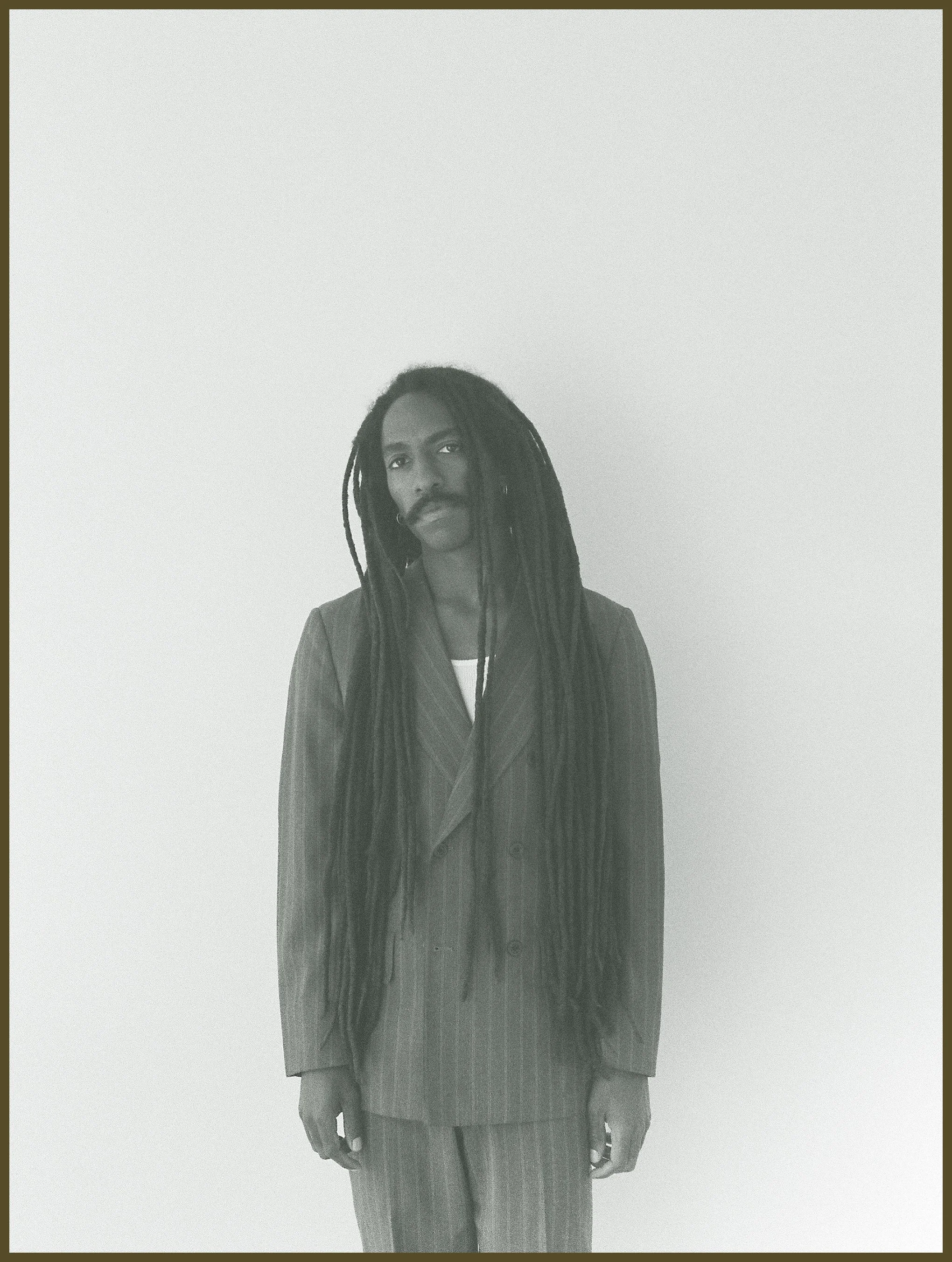
Chelsea: You’ve told me once before that you use a camera you received from your father. Does he create photographs himself nowadays? Is there any one feature of your own work that is inspired by your father? In a similar way, if someone were to inherit your camera one day, what is one feature you would be honored to see carried forward in your name? In other words, what is one feature that makes a photo a “Zachary Gray” photo? I always know a Zachary Gray photo when I see one. Why is this?
Zachary: He isn't out shooting as much as he used to, but he has work in the Jazz Museum and Nelson Atkins Museum in Kansas City. Whenever I'm home he has an old camera or print to show me that hasn't seen the light in 20–30 years. His work was very reminiscent of Guy Bourdin or Helmut Newton in that the same picture could exist on a gallery wall as fine art, and also in a catalog selling you a product. He has so many negatives sitting in storage that no one has ever seen. I think I must get some of that from him. I'm pretty sentimental and sometimes my work feels a little too personal to set free. So as much as I give him a hard time for not having a website, I get it. Still, my favorite camera to shoot with is his old Mamiya from the ’70s. It's fully mechanical and weighs 8 lbs, but there's something about the slowness and simplicity that maybe contributes to how I shoot when using it.
Chelsea: As an artist—specifically as a photographer—when have you felt most confident? In other words, is there a particular project, place, or team that has brought out the most confident version of you?
Zachary: I am forever indebted to Liz, Chelsea, Elise, and the entire Elizabeth Suzann team for believing in me when they really had no reason to. I didn't always know what I was doing, but their patience and trust gave me so much confidence that was vital for my growth as an artist. What started out as a client relationship has turned into many years of friendship that extends beyond photography or fashion.
Chelsea: Oppositely, as an artist, can you share with us a time when you have felt insecure, uncertain, or embarrassed? As someone who identifies as an artist, I have had to move through several instances of insecurity, uncertainty, and embarrassment. It has taken me years—several hours of introspection and dialogue—to have a healthy relationship with embarrassment, for example, and it requires encouraging self-talk often.
Zachary: Even after years of doing photography, I still have these moments. It's usually when I take on a job that's out of my realm. Luckily, there's always learning that comes from embarrassment and it usually doesn't happen twice.
Chelsea: What is one food-related habit, priority, or value rooted in your past, with family or close friends, that you wish to carry forward into the future? If there isn’t one, what might you start?
Zachary: My mom would wake up early to make breakfast for me and my brother every morning before school. Then, when we got home after school and practice, my great grandmother who lived with us would have dinner ready on the table. I grew up with three generations of women who made sure I was always fed, who showed their love by making sure I had everything I needed. Consistency is something I hope to carry with me when I have a family of my own. For now, I try to implement consistency with food in my day to day. I stick to making the same three to four meals and rotate them, much like it was growing up.
You can follow Zachary on Instagram here.
Photos by: Chelsea J. O’Leary