
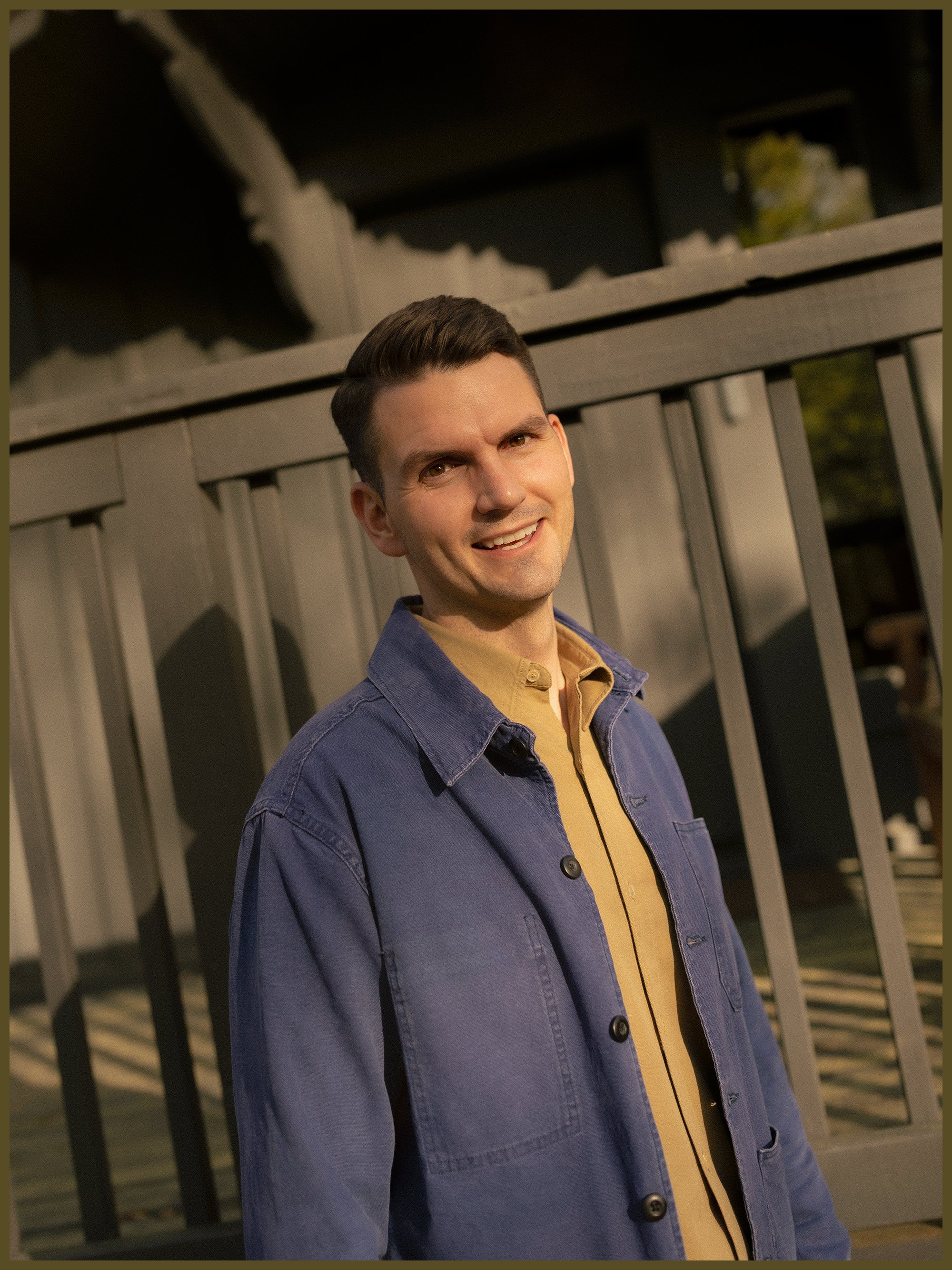
In Dialogue: Jared O'Leary
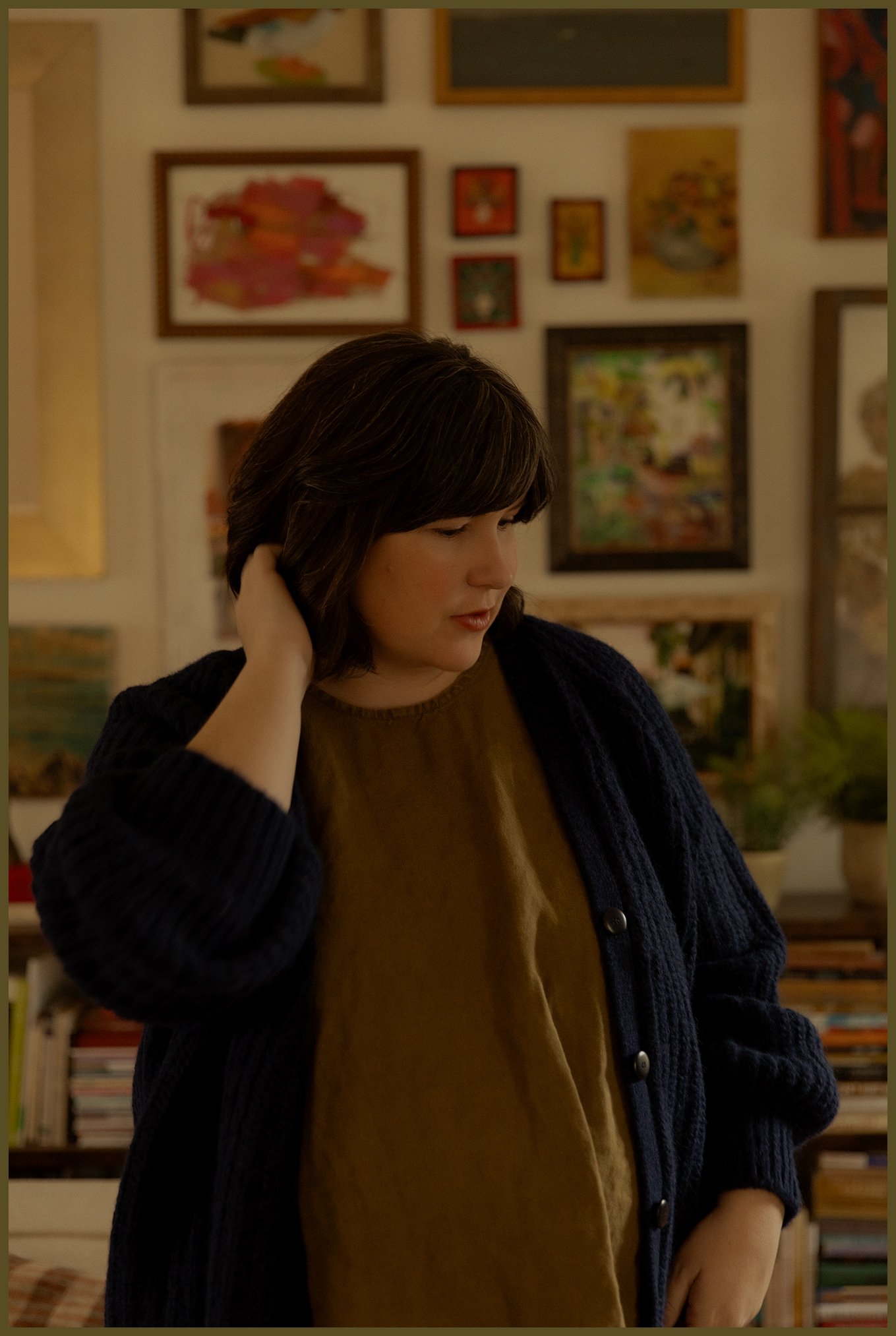
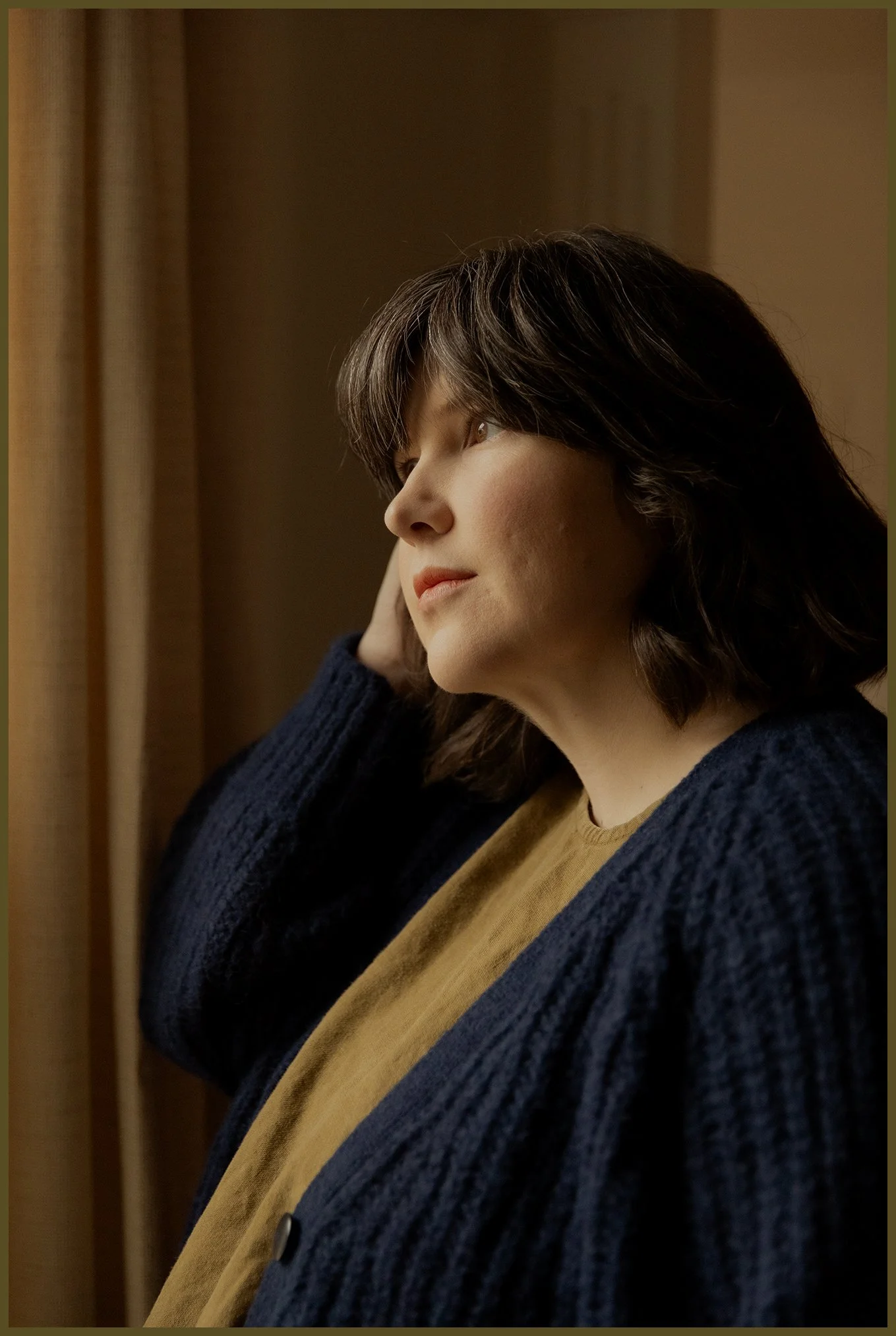
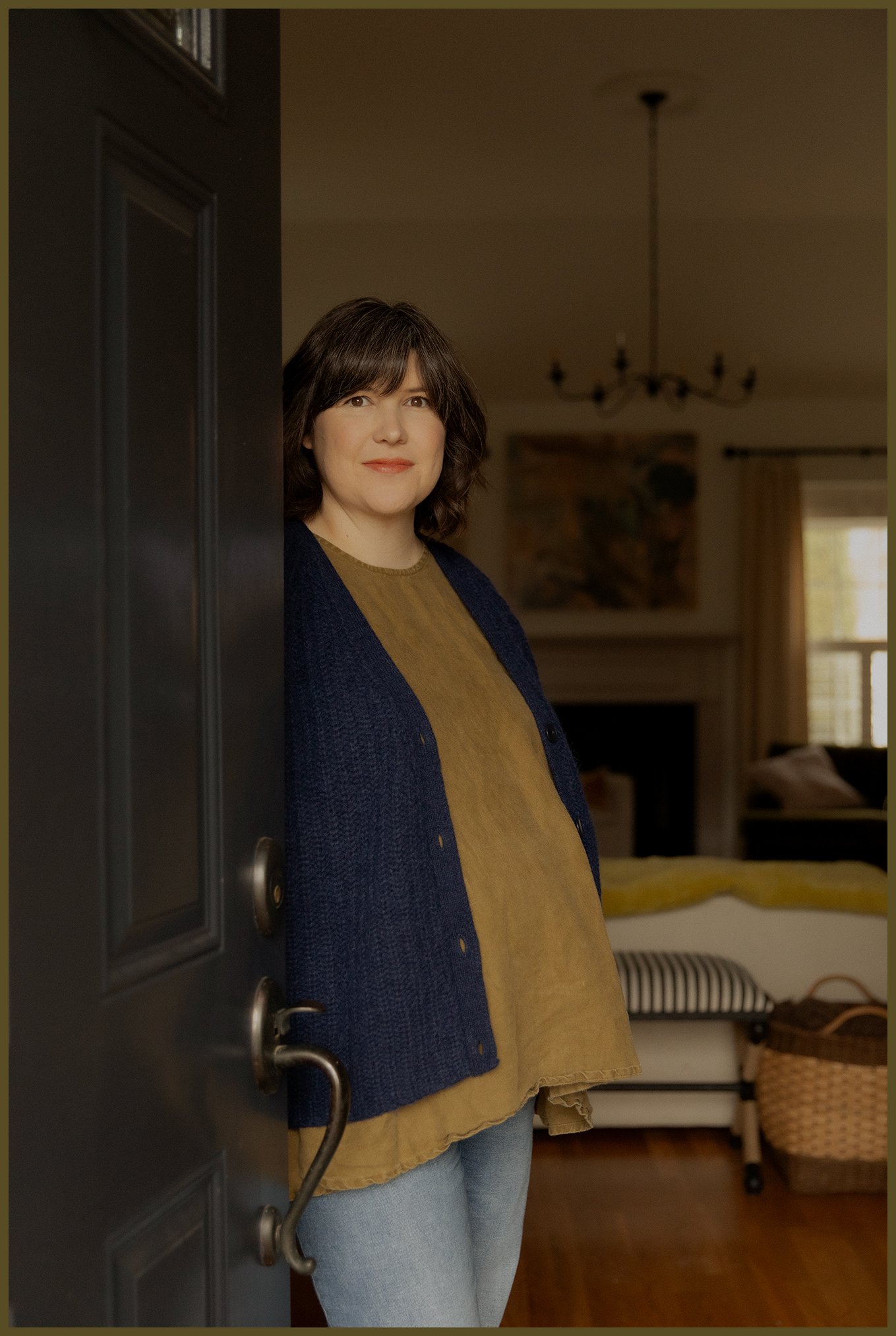
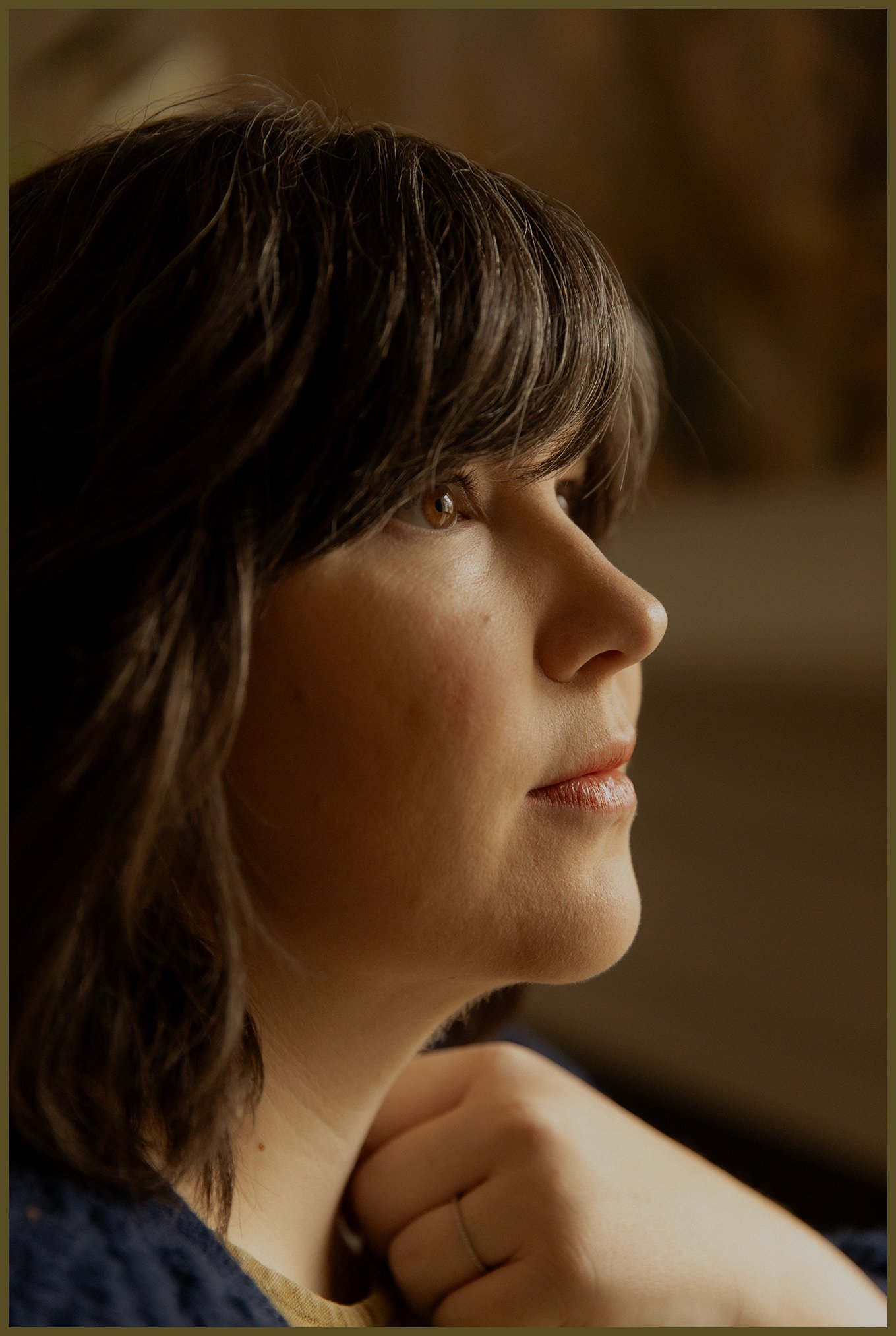
This month’s In Dialogue feature is quite meaningful. I am fortunate to welcome you into my conversation with Jared O’Leary—my partner in life, love, parenting, and Wiley Canning Company.
In Dialogue: Jared O’Leary
This month’s In Dialogue feature is quite meaningful. I am fortunate to welcome you into my conversation with Jared O’Leary—my partner in life, love, parenting, and Wiley Canning Company. Jared leads a quiet online life, and I am very grateful he, so thoughtfully, participated in this forward-facing interview. This experience encouraged me to interview family members, as it was deeply moving to learn more about someone I know so intimately.
Jared is my primary sounding board when planning and executing my career goals. He is willing to spend anniversary dinners and long hikes discussing Wiley Canning Company, and this generosity of time and energy has undoubtedly refined the business that exists today.
Outside of our family, Jared is an interventional cardiologist at Vanderbilt University Medical Center. He is the Program Director for Interventional Cardiology, as well as an Assistant Professor of Medicine and Medical Director for Quality at Vanderbilt Heart and Vascular Institute. Casual.
Since we began dating, Jared has always prioritized well-made food, time spent around a table, and conversations made livelier by the perfect choice of Irish whiskey.
Below, I invite you into our conversation about food-related values, his balance of objectivity and sensitivity, our integration of partnership and careers, and his vision for family meals.
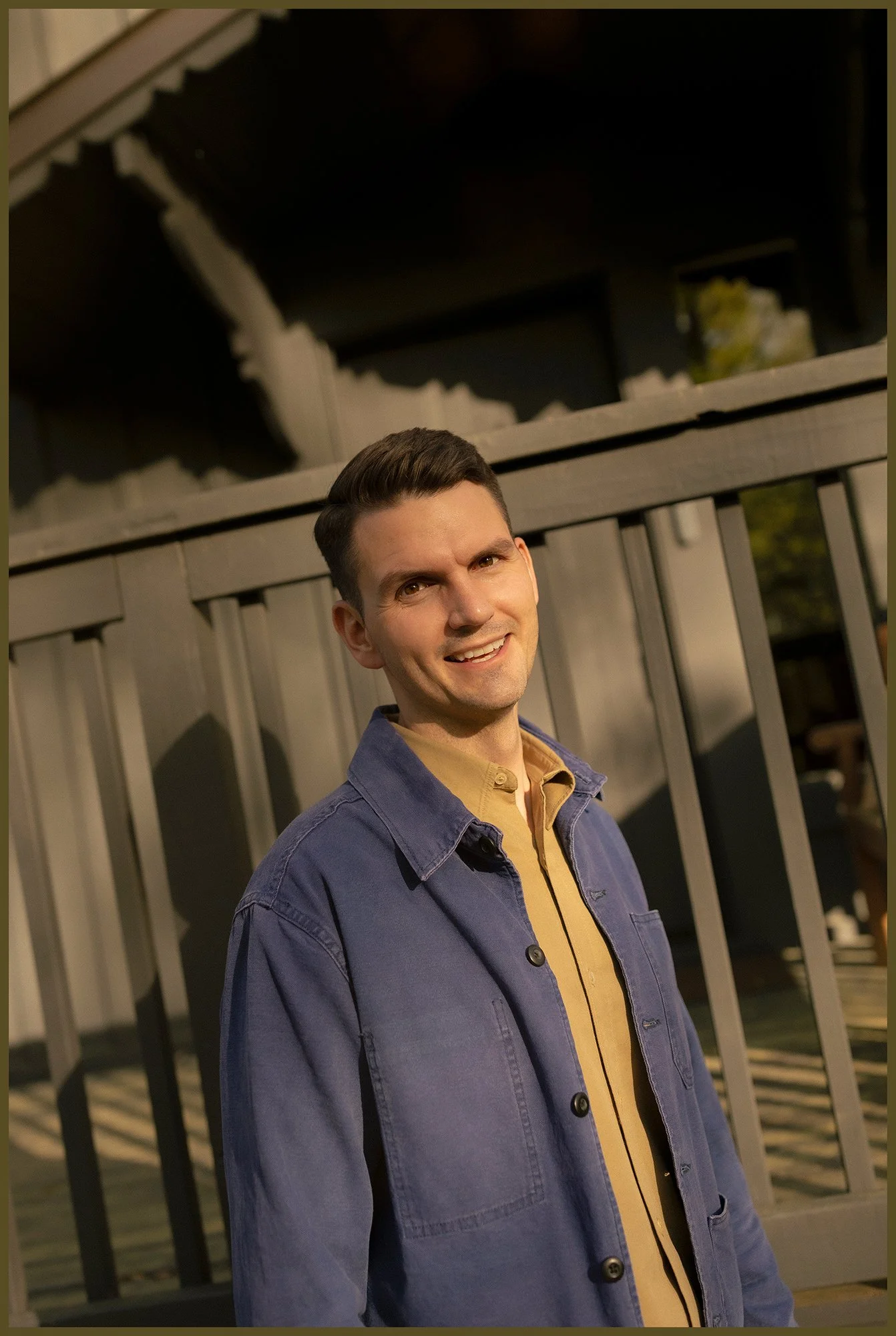
Chelsea: Any time I share the story of Wiley Canning Company, I tell the story of my grandmother, Grandma Trudy, specifically how she enjoyed and prioritized home food preservation, shared meals around a table, and the use of food as a catalyst for gathering. This is a value she first exemplified, one I wish to carry forward into my future and the future of our family.
You, of course, are an interventional cardiologist. You pursued medicine and academia, similar to your father, Art O’Leary. Your father instilled values in you that you wish to carry forward. Can you share what values he instilled in you and how this plays out in your present?
Jared: A few things come immediately to mind, perhaps not core values per se, but things that came uniquely from Dad. On the subject of food, Dad is a great cook and definitely set the precedent that food is a wonderful thing to celebrate and explore. Growing up in a small Ohio town in the '90s, we always ate a much more diverse array of foods than our friends. Many things that are ubiquitous today, such as sushi or hummus, none of my friends had ever tried, but Dad was insistent we try new and (at least for the time and place) exotic things. I remember having escargot when I was about ten and reveling how it grossed out my friends. To this day, I love to explore new and different cuisines.
Dad also refused to shy away from answering a complex question. I can recall asking when I was about six, “How does a plane fly?” He launched into a long explanation about the shape of the wing, called an airfoil, caused the air moving over the top to move faster than the air moving underneath, and this generated lift. I probably looked at him cross-eyed at the time, but this is how he treated most inane questions. This communicated two things: 1) the world is understandable; complex phenomena have explanations and can be understood if we try, and 2) I'm smart enough to understand it, too. I try to do this with my (our) own kids.
Finally, Dad had a saying: "A message never sent is never received." I think there is a lot wrapped up in those seven words about the importance of candor, honesty, directness, and affecting change. Of course, this doesn't have to come at the expense of compassion, politeness, sensitivity, etc. I think about that quote any time I'm in a position where I have to have an uncomfortable conversation, give feedback, or address a situation that needs some course correction.
Chelsea: When one thinks of an interventional cardiologist, one often thinks of a ‘left-brain’ person. You certainly are. However, I also know you are sensitive and creative. Can you tell us how your sensitivity and creativity fit into your day-to-day as a physician? Additionally, how do you ensure you protect your sensitivity and creativity—your humanity—in a field that is so data driven and results driven?
Jared: I guess I'm tempted to make the case that the practice of medicine is a perfect fit for a data-driven, left-brain (as you say) person who is also sensitive and creative. Executing on attempting to combine those two things in an optimal fashion basically describes my day. Sensitivity is very important when trying to meet a patient where they are, when coming up with a treatment plan, and clearly when we have to deliver bad news about a prognosis or procedure outcome. But, medicine is also very much a team sport, particularly in the cath lab where for any given case you have a team of one physician, possibly a physician or two in training, two nurses, and two technicians. Therefore, it requires sensitivity around how best to interact with your team and treat them well while still having high standards. As far as creativity goes, no two procedures are ever the same. You are always taking foundational skills or techniques and figuring out how to combine them to complete the procedure.
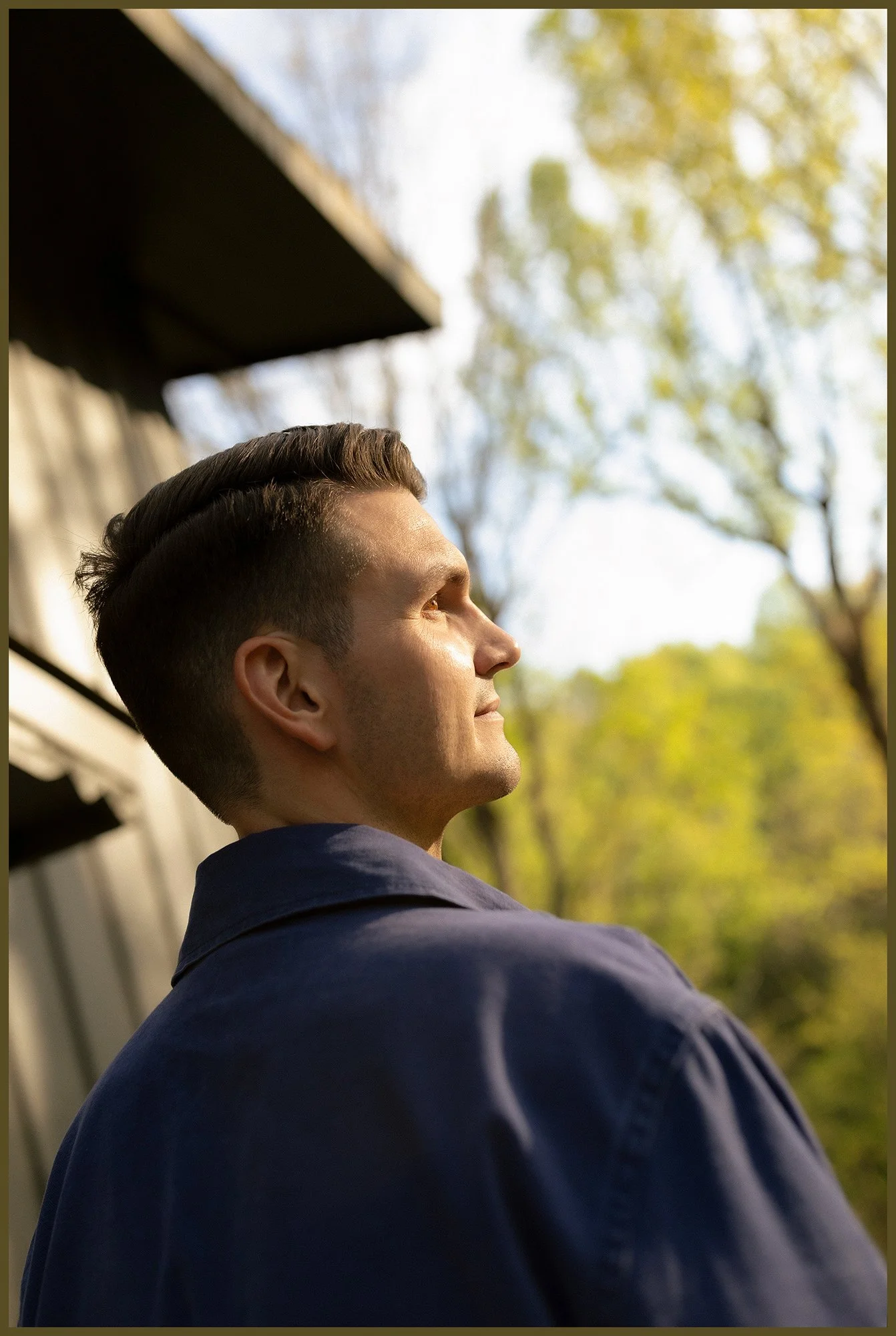
Chelsea: Your work requires you to be very ‘on’. How do you recharge in order to bring your best, most present self to work each day?
Jared: I'd say this is an area that could use some improvement for me. I've always been pretty good about compartmentalization, which helps. When my exercise routine is going well, that is when I'm at my best and most resilient. When I get out of a good routine, I can really feel the difference.
Chelsea: You’ve shared with me how you see the best of humanity in times of devastation and crisis. When my Grandma Trudy was near her death, I saw best of my family’s humanity. Can you invite us into your world for a moment and share more about what you witness from family members and loved ones in times of devastation and crisis?
Jared: Families in crisis can be pretty awe- inspiring to behold. It's easy to forget, for instance, that the spouse who never leaves their loved one's side during a grueling two-week ICU course has two kids at home that an aunt or uncle or grandmother taking care of them 24/7. I've unfortunately had to deliver the news about someone dying more times than I'd like to think about, and in the vast majority of cases, the family has expressed profound thanks to me and the team. It's mind-blowing.
Chelsea: We are, of course, married! (Thankfully!) We occupy very different fields; I am a business owner, photographer, and writer, and you are an interventional cardiologist. I believe we integrate our work into our partnership very well. How do you think we do this well? What advice do you have for others who are in a long-term partnership and in pursuit of meaningful, differing careers?
Jared: Oh boy, I certainly don't think there's any secret sauce. Some of the standard things you hear are good, like, “Never go to bed angry.” I guess I would just say try to be flexible and acknowledge when a thing/situation is just simply hard, and remember why you're doing it.
Chelsea: What is one food-related habit, priority, or value rooted in your past, with family or close friends, that you wish to carry forward into the future? If there isn’t one, what might you start?
Jared: I'm not sure an existing one comes to mind. But, I love the idea of a standing family dinner night, where every Saturday night let’s say, there's always a big family dinner and something of an open-door policy when visiting friends or family, grandkids, etc. are always welcome and know the time and place.
View more In Dialogue features here.
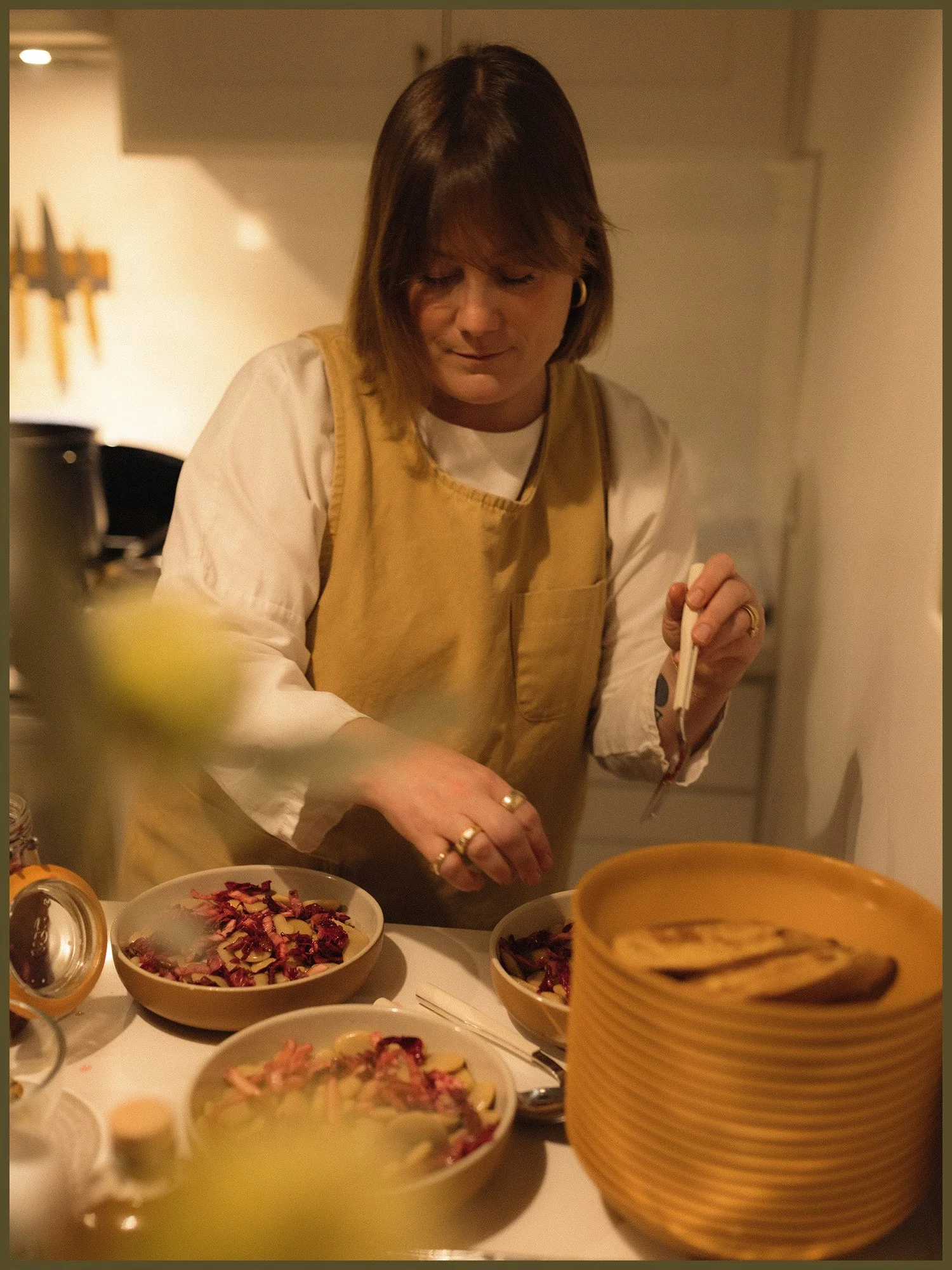
In Dialogue: Chloe Walsh
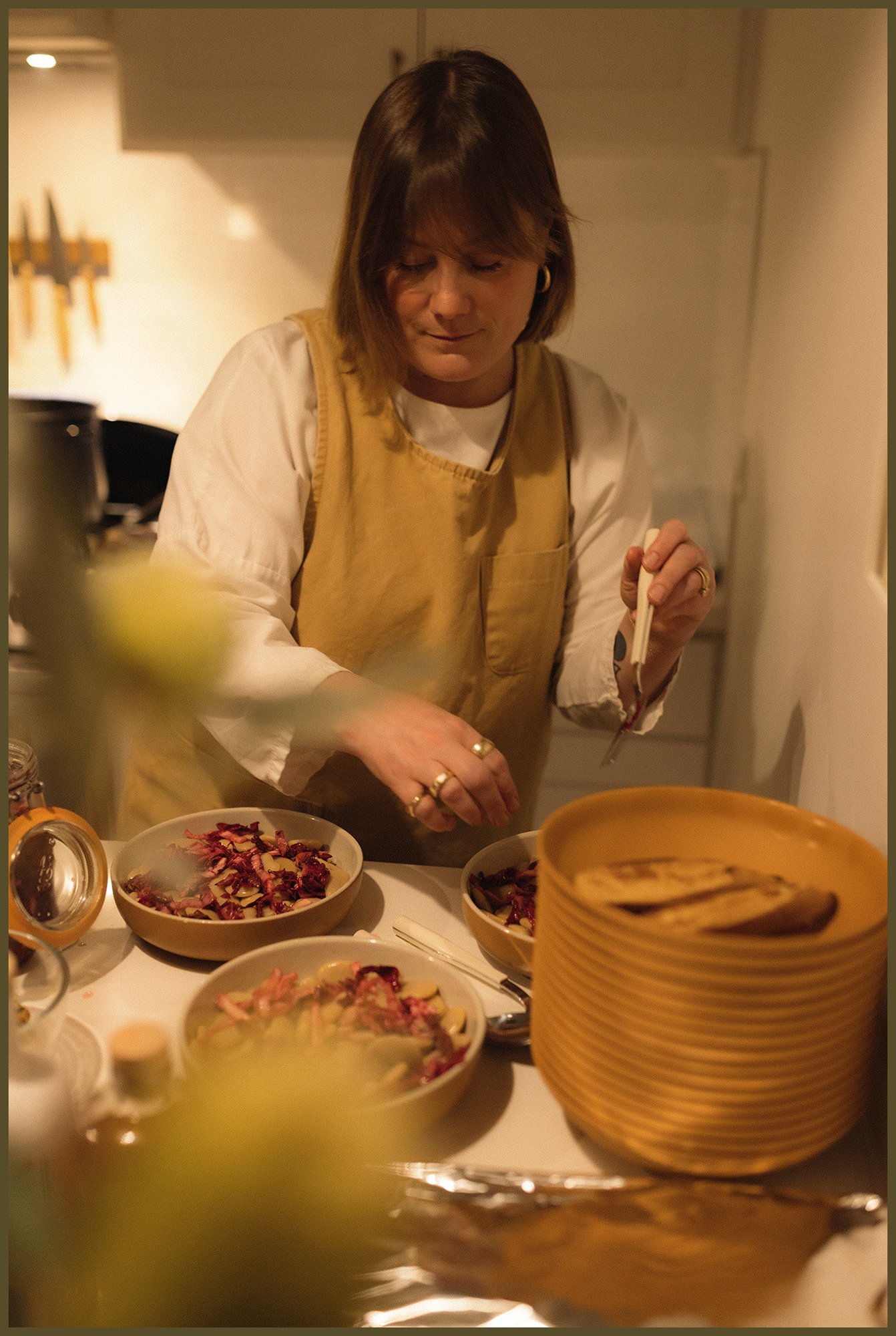
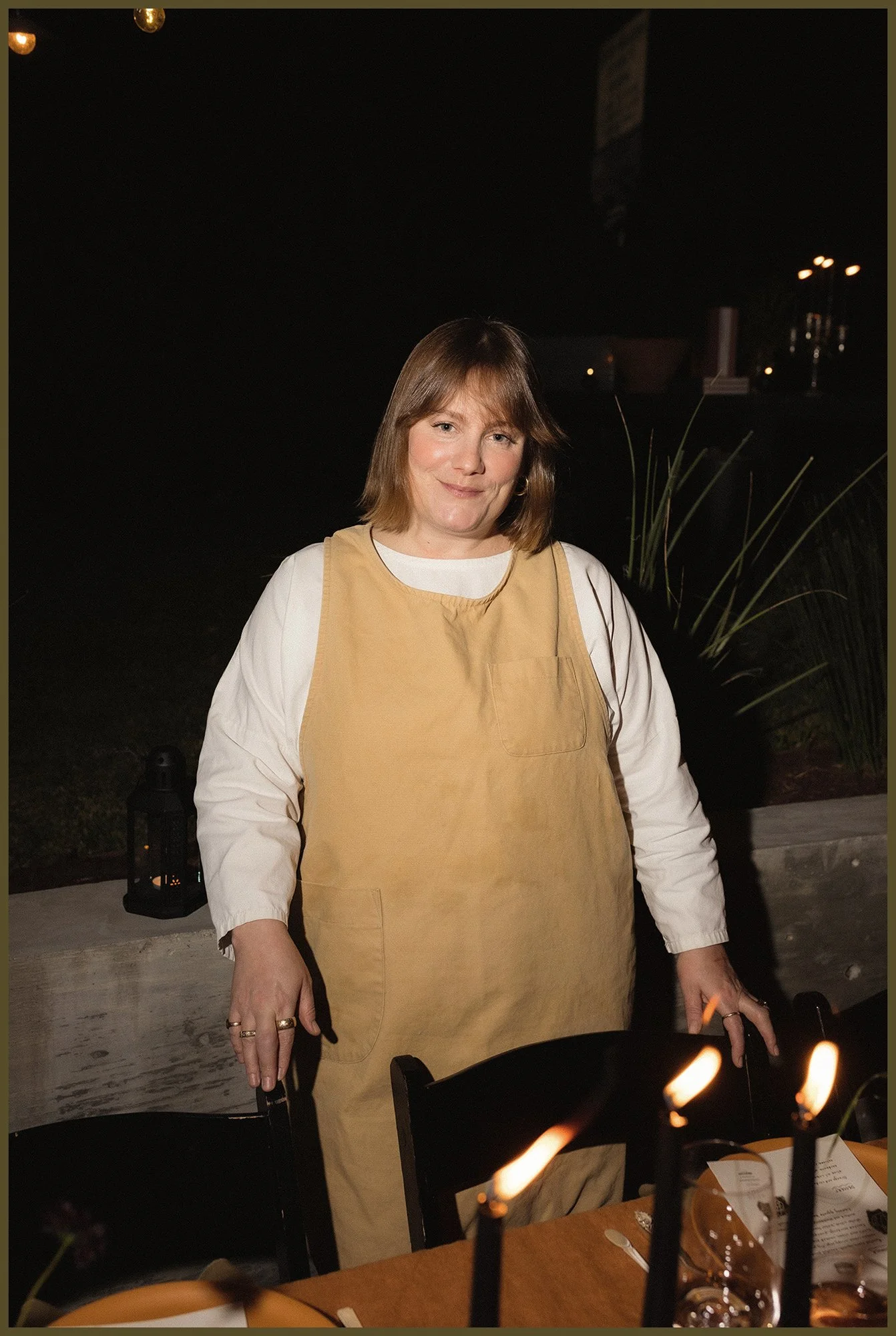
I am overjoyed to feature Chef Chloe Walsh as a part of our In Dialogue series. Chloe is an ever-thoughtful chef, food writer, and recipe developer, as well as an extraordinary supper club and pop-up host.
In Dialogue: Chloe Walsh
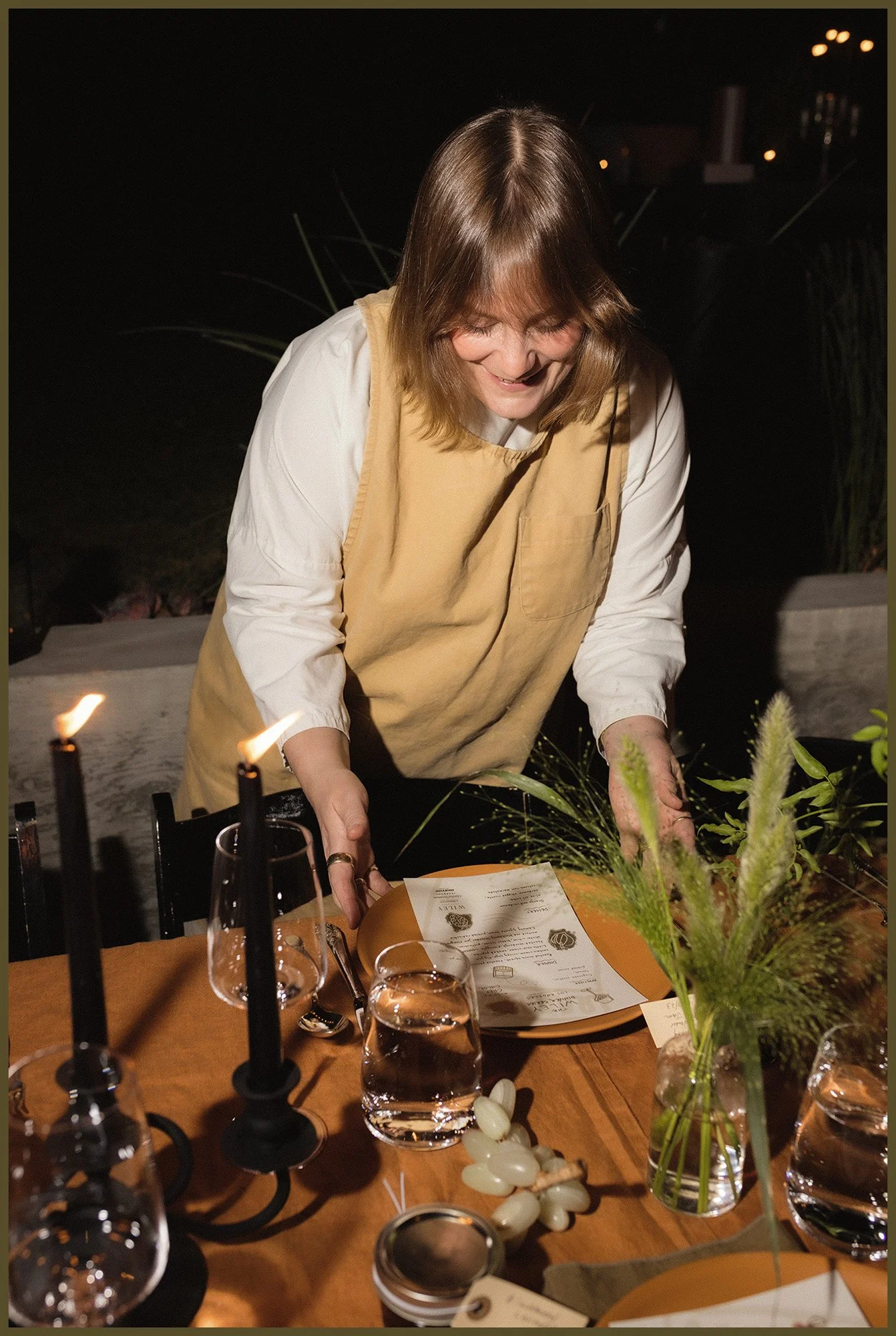
I am overjoyed to feature Chef Chloe Walsh as a part of our In Dialogue series. You may immediately recognize her as our featured chef in Los Angeles, where we hosted the Wiley Dinner Series at Elise Joseph’s Highland Park home last November. To this day, I glean inspiration from the evening’s menu.
Chloe is an ever-thoughtful chef, food writer, and recipe developer, as well as an extraordinary supper club and pop-up host. Would you look at her recent dinner at Casetta? Swoon! Chloe’s upbringing in the U.K., as well as the community she has now cultivated in L.A., inspires her creativity, work, and lifestyle.
I have long admired Chloe for her commitment to careful sourcing and meals made with ingredients of high integrity. Chloe’s approach to food creation epitomizes, “Quality over quantity,” a values-driven process I find both aspirational and inspirational. Her Substack, Anchovies & Soup, is one of my very favorites. Her bean recipes! I also hope to make her recipe for roasted squash this Thanksgiving.
Below, I invite you to take part in our recent conversation. Chloe and I discuss her energizing work, inspiration, and self-care practice that gives rise to new ideas, as well as consistent physical movement.
Chelsea: You are such a fantastic, inspiring chef, Chloe (and so much more!). You also have enriching friendships, a beautiful partnership, a nurturing home, and very sweet pets. In general, what is your approach, or philosophy, to building a well-balanced, well-juggled life? Throughout different seasons, do you feel like your work requires more of you than others, and if so, how do you navigate this with close friends and a partner?
Chloe: Thank you so much for all of your kind words! I really do feel like I have an enriching life, and it feels so nice to reflect on that sometimes—because when I am in the thick of the day-to-day, I tend to forget. I think, for me, I do find it hard to say “no” to things, in many parts of my life—including work—because I am just so grateful for everything. In my brain, it feels counterintuitive to turn down work, for instance, or not go to my friend’s event that they so kindly invited me to. But, I am learning to recognise when I need to rest, or even just lighten the work load, which is easier said than done. I think in the industry that I am in, and particularly the many facets of work in food that I do, I can feel pulled in many directions, but I find being open and honest with communicating my needs is the biggest help. That could be in work, life, or marriage. Communication is key!
Chelsea: You are an independent and freelance chef, recipe developer, writer, and more, and you have been for several years. This is a very specific route, right? It has tremendous value and advantages. Within the food industry, many chefs choose a path related to restaurants, corporate editorial work, and more. Is there any part of you who craves being a part of a larger entity, or do you love being independent and freelance? As a business owner myself, which I very much love and appreciate, I find I admittedly crave feedback, and perhaps a team, from time to time. Is this a phenomenon you also experience? From where, or from whom, do you receive valuable feedback or a sense of teamwork, if and when you crave it?
Chloe: Yes, my work and practice is a specific route. I kind of planned it like that when I made the decision to go freelance, and somehow, it all is working out. But, to me, it makes sense because I cook, recipe develop, write about food and nostalgia, work with brands to create content food and lifestyle content, and host supper clubs and pop-ups, all as part of my job! And some might think this is a lot, and indeed it can be. But, it is all based around the biggest love in my life (aside from my husband)—food. And so it doesn’t feel like a lot, all at the same time. It feels synced and alighted, and therefore, it all makes sense.
I love the structure of my life and work life currently, as it allows me to decide my day-to-day, take on new and exciting projects, travel and truly design my working week (deadline dependent). But yes, the idea of having somewhere physical of my own has been the topic of conversation for the last year or so, and I am trying to figure out what that could potentially look like. Cafe June is the name of my pop-up currently, but perhaps it could be a real cafe one day. I dream of a cafe with homemade pantry goods that is a community driven space. I would serve simple, all-day food with a British sensibility but with a California heart. Perhaps we open for wine and dinner on the weekend—who knows! But, yes—I dream!
Regarding feedback, we all need feedback to push forward in life, I feel. I get that from friends, my husband, and fellow work colleagues. I am constantly running things by my best friend, Kate, or chatting things over with my husband. I feel very lucky and extremely grateful to have really honest people around me that are not afraid to tell me when they think something might not work, or perhaps something isn’t a good idea. At the same time, I am a big believer in trusting your gut. I am very confident in my ideas and the work that I produce, so if I need the final say sometimes, I will.
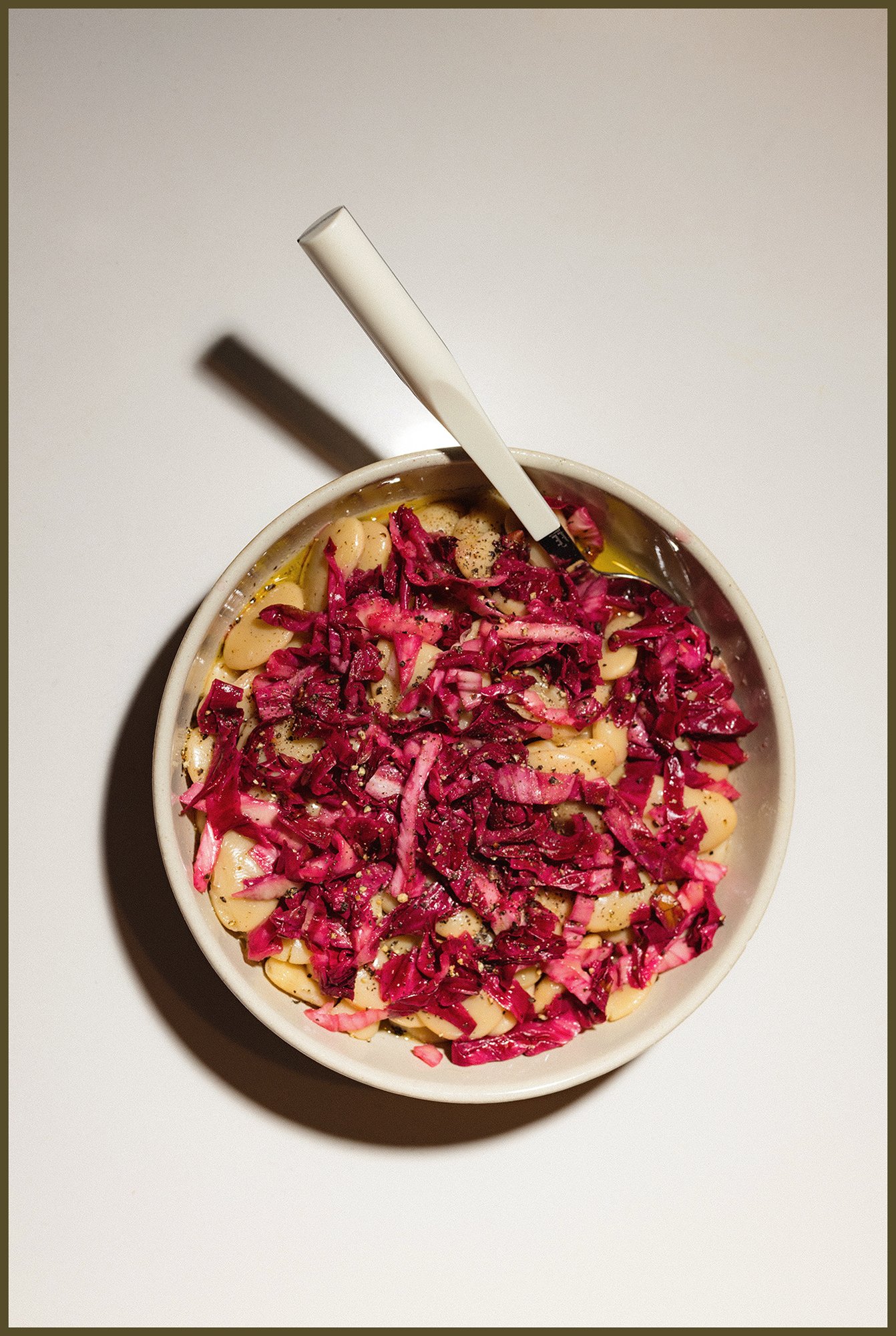
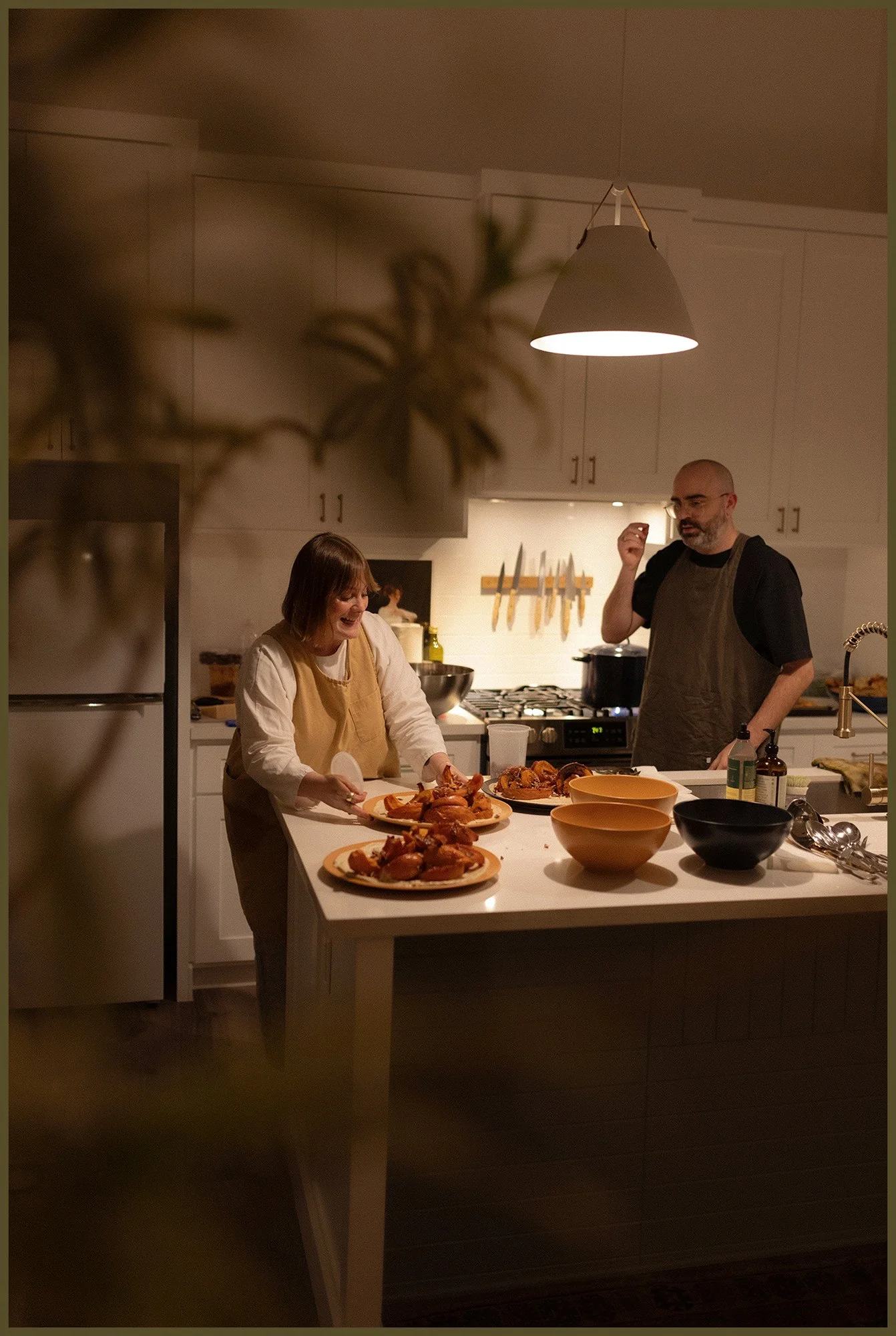
Chelsea: I very much admire how you create delightfully flavorful dishes that may appear simple but are, in fact, quite complex and dynamic. Two dishes that come to mind are a delicious lima bean dish or a vegetable-forward soup. As I have gotten to know your work, I have learned this may be, in large part, due to how you source individual ingredients. I often say, “Delicious ingredients lead to delicious meals.” When we focus on parts, the whole often takes care of itself. Can you speak to how you source, where you source, and why this matters so much to you creatively?
Chloe: I source most of my produce from the abundance of farmers’ markets that we have here in LA. We are so lucky to have multiple farmers’ markets running throughout the city, on any given day. I shop and source everything seasonally, but things are inherently going to taste better that way. You haven’t lived until you have tried a farmers market plum; I’m telling you!
Not everyone has the access, privilege, or money to shop at farmers’ markets on a day-to-day basis. I get that. But, one thing I always will encourage is to shop seasonally—even at the grocery store. Tomatoes will not taste good in January; it’s just a fact. In July, however—no matter where you get them—they are going to taste good. From a farmers’ market, they will taste heavenly!
Chelsea: Travel is a huge part of what inspires you; I absolutely love learning more about this through your Substack, Anchovies & Soup. In addition to travel, is there a person (or people) who have influenced your approach to cooking throughout the years?
Chloe: This is such a good question, and I have so much to say but almost don’t know where to start because I am so influenced by truly everything!
My grandparents both informed my taste, and indeed how I like to eat. I was eating tinned mackerel and homemade pickled celery with my grandad for as long as I can remember, and my grandma taught the joy of cooking and indeed how to cook. So, they inspire everything I do. Similarly, my parents were both very good cooks, and even better hosts. Our house was filled with people and dinner parties since day dot, and so I like to say my parents taught me how to really live, to host, to make a house a home—and for me (and them), that means filling it with food and people.
Books inspire me, and all kinds of travel inspires me. That could be to a new place, city, or country, but that could also mean a trip to the grocery store or farmers’ market. The beauty in the day-to-day inspires me. Memories inspire me, and food nostalgia. My friends inspire me and trying other people’s food. That could be in a restaurant or just someone else’s home. My childhood and growing up in the UK and Spain forever inspires me, but I suppose you can tie that back to food nostalgia, too.
I collect menus from everywhere I have ever eaten, and I have a screenshot folder in my phone, too, of menus that I see online.
Chelsea: Throughout the years, I have found home food preservation to be quite physical. In many ways, it is my exercise most days! Do you find this to be true in the kitchen, as well? If so, how do you take care of yourself physically in this profession? Do you have routine practices that feel restorative?
Chloe: Yes! I am always pickling something or fermenting vegetables here, there, and everywhere. It is an important part of my cooking in general, and it is especially part of my home kitchen. My fridge is half-full of condiments and half-full of my own concoctions, leaving little space for much else!
And yes, I love to look after myself—and that means mind and body. It is really important to me, as I have rheumatoid arthritis. Therefore, if I need to take a day, I will—because I know, ultimately, it will aid in me having a better, more productive day/week/month afterwards. And this past year I have really made swimming part of my daily routine and main form of exercise. I absolutely love it. I feel strong, but it also allows me to think. I like to say I do best work in the pool—it’s where all my ideas are formed. It is also a lovely ritual of taking an hour to myself everyday, to tend to my physical needs, which is so important to me.
Chelsea: What is one food-related habit, priority, or value rooted in your past, with family or close friends, that you wish to carry forward into the future? If there isn’t one, what might you start?
Chloe: My husband and have very busy lives, and sometimes it feels like we are passing ships in the night. And so, in light of this, we like to have a date night out once a week, which we have always tried to uphold. It creates purposeful time for one another, and we find it necessary for deeper conversations than you might have just having dinner at home. And then always one dinner together at home—at the table. It helps us feel grounded in our relationship and allows us to connect.
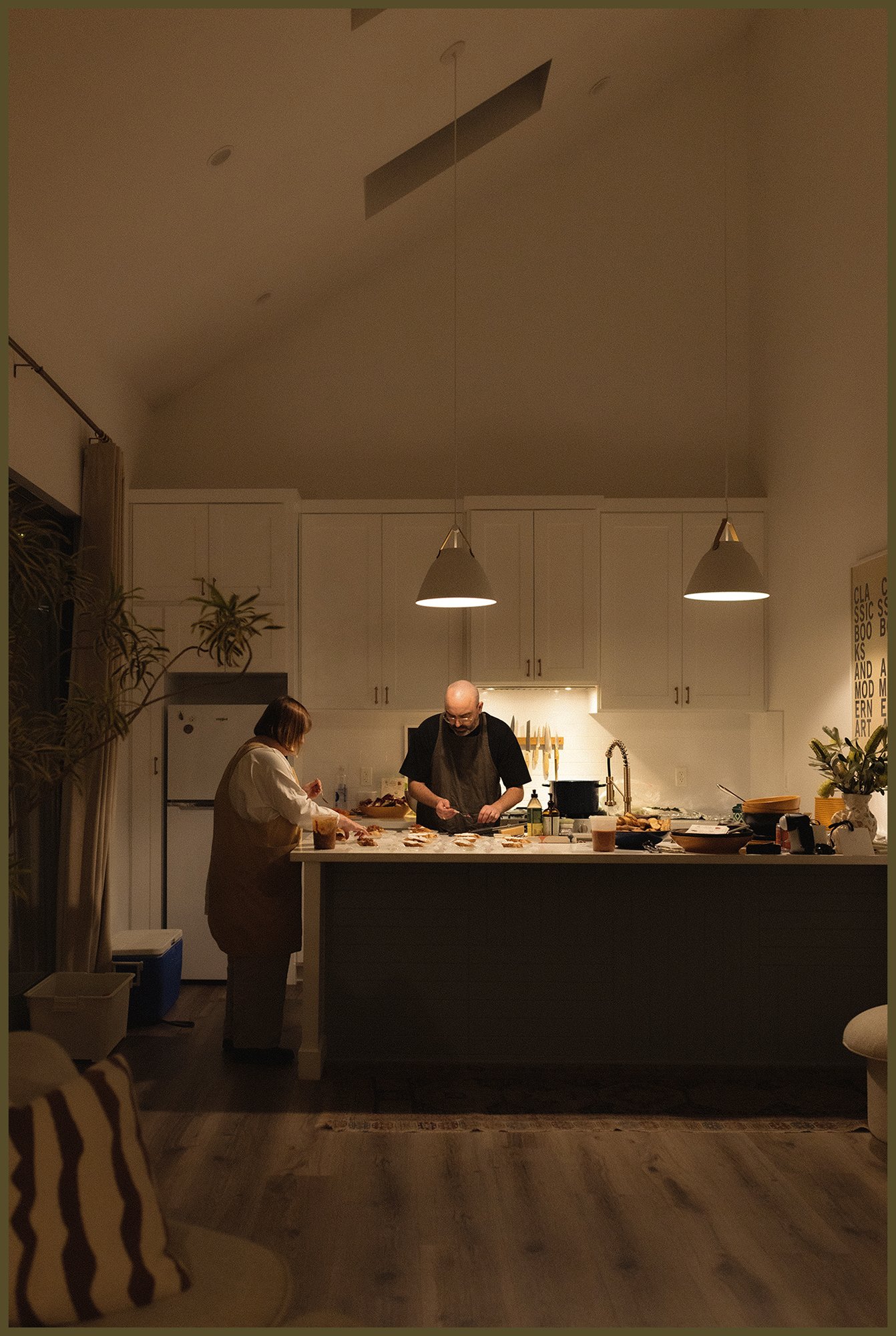
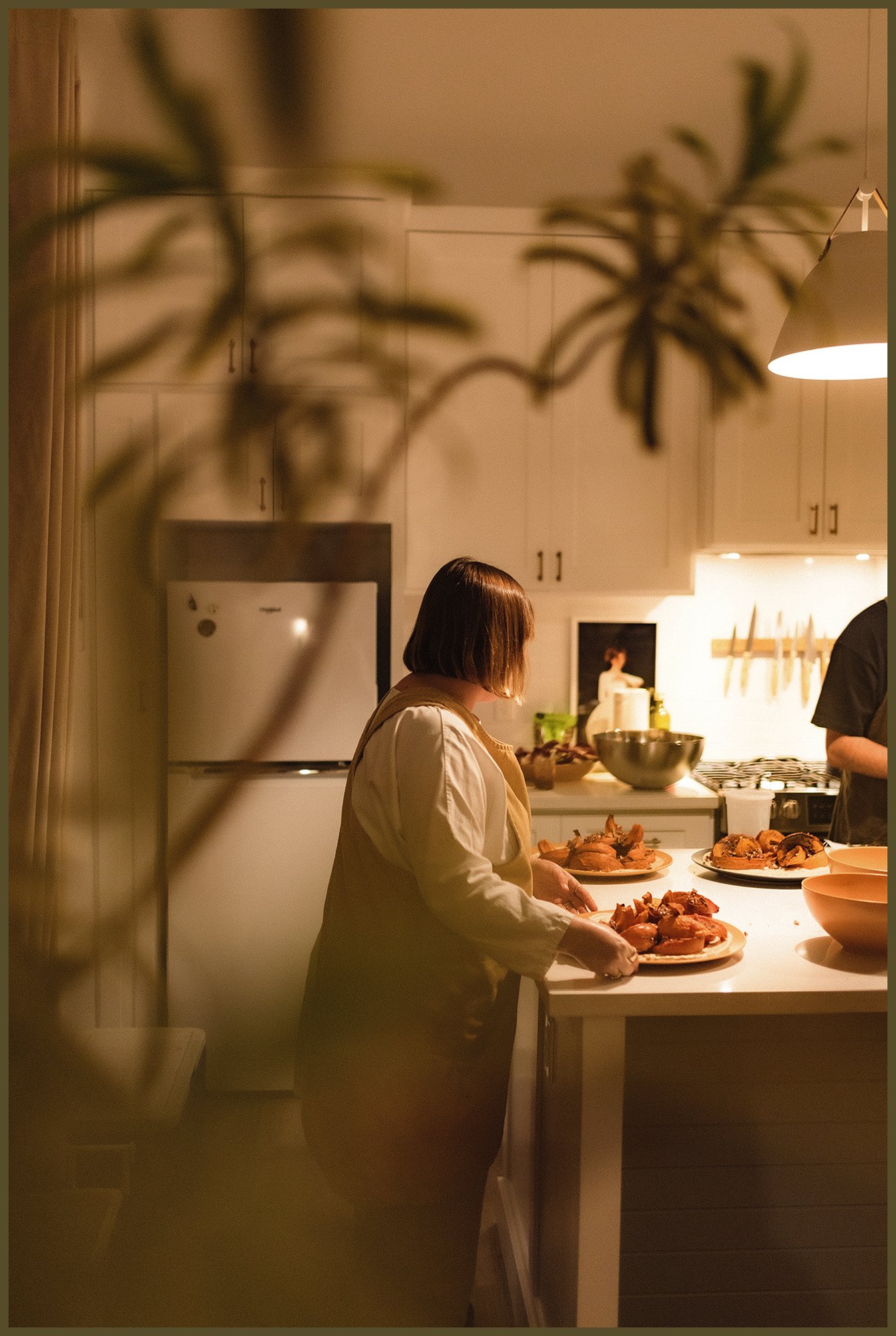
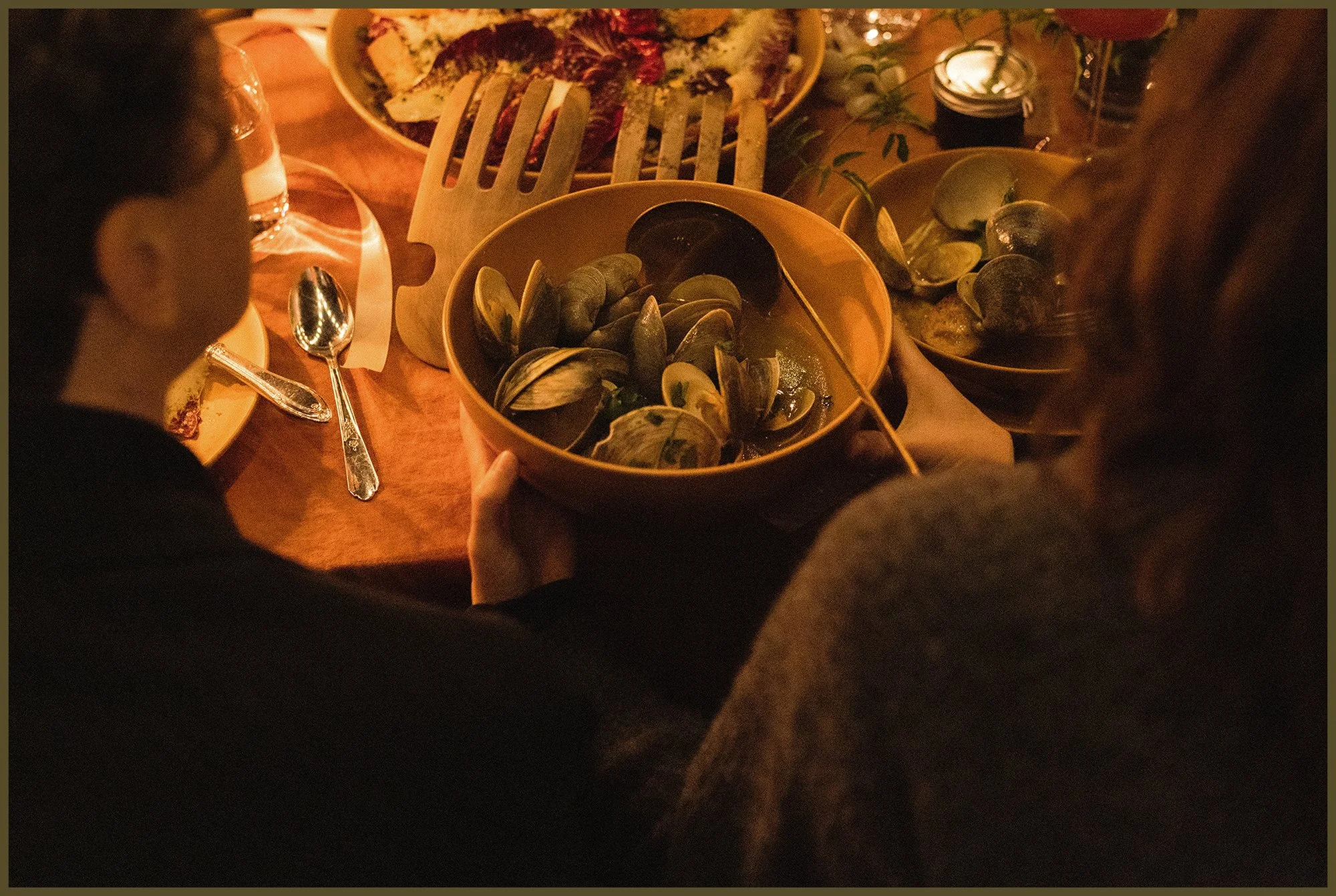
You can follow Chef Chloe on Instagram here and on Substack here.
Photos by: Emily Ferretti
In Dialogue: Lauren Palmer
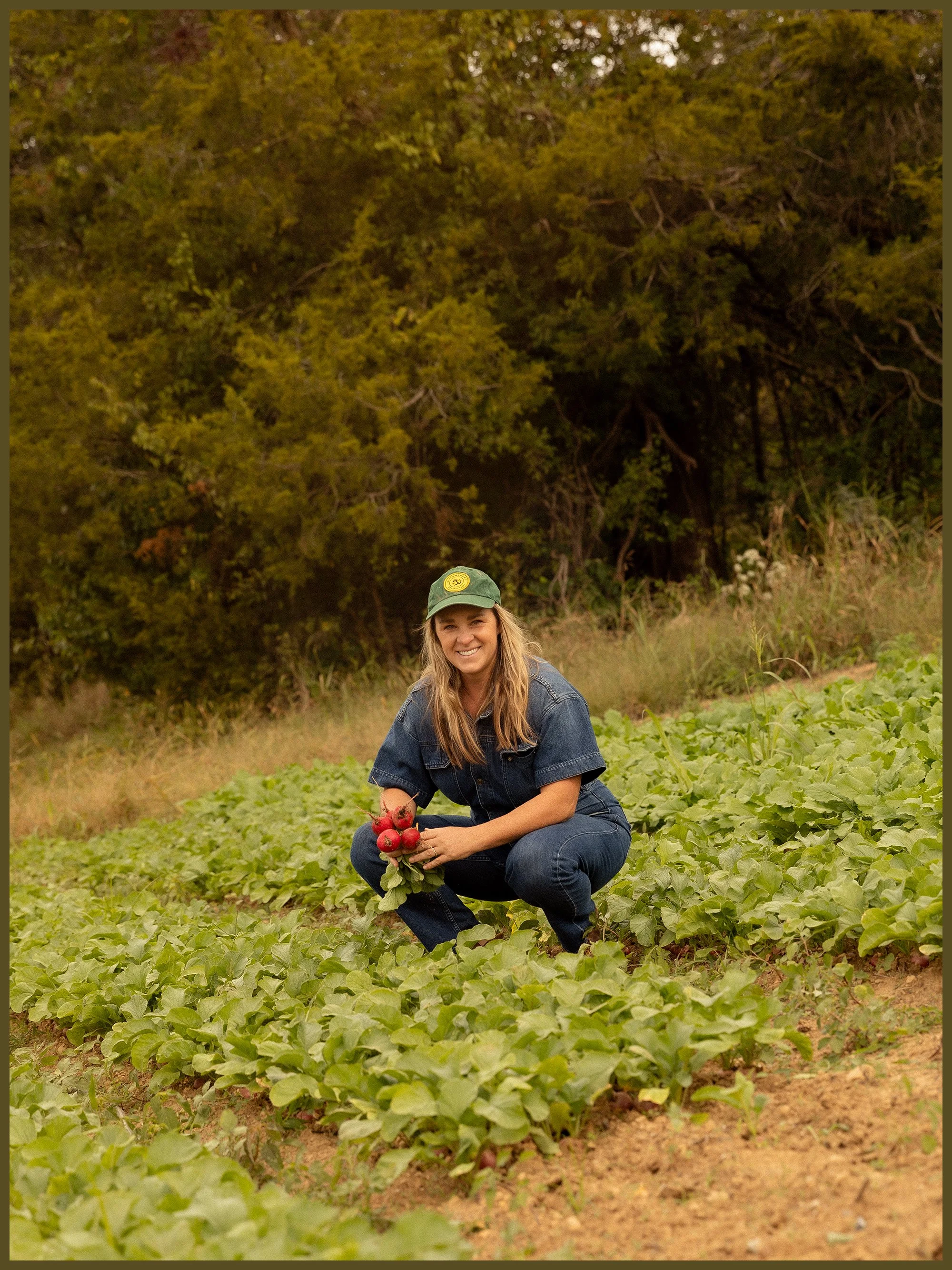
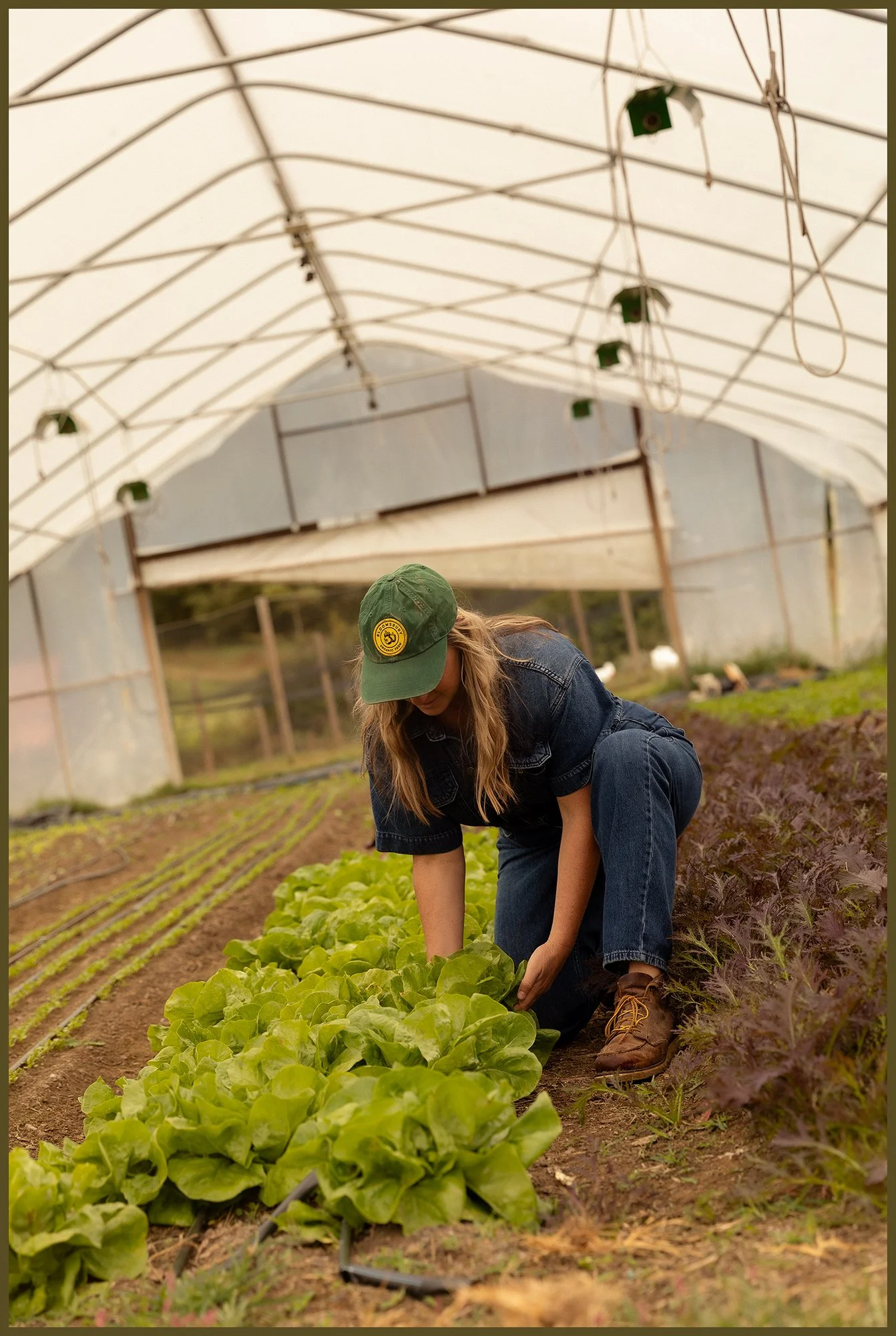
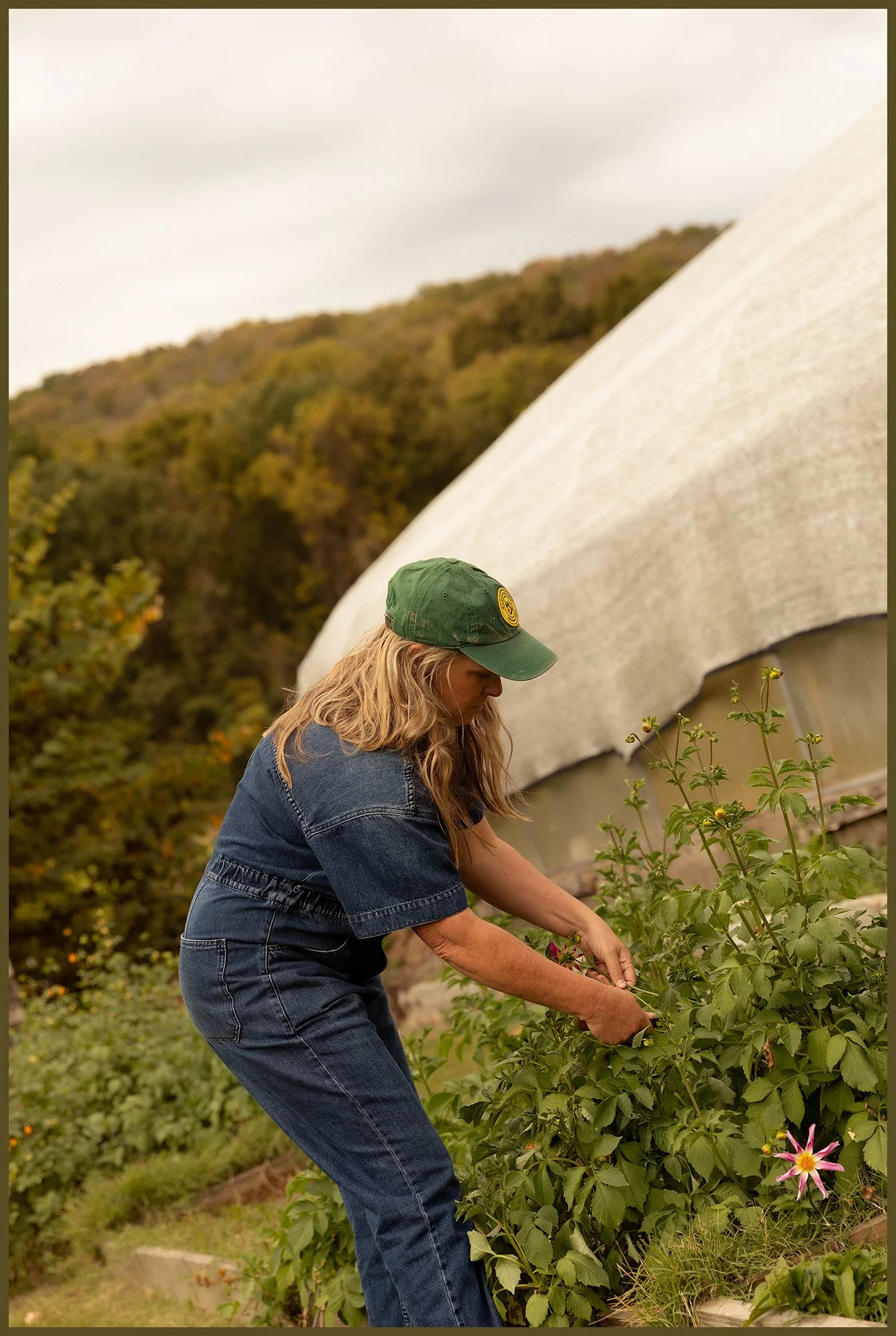
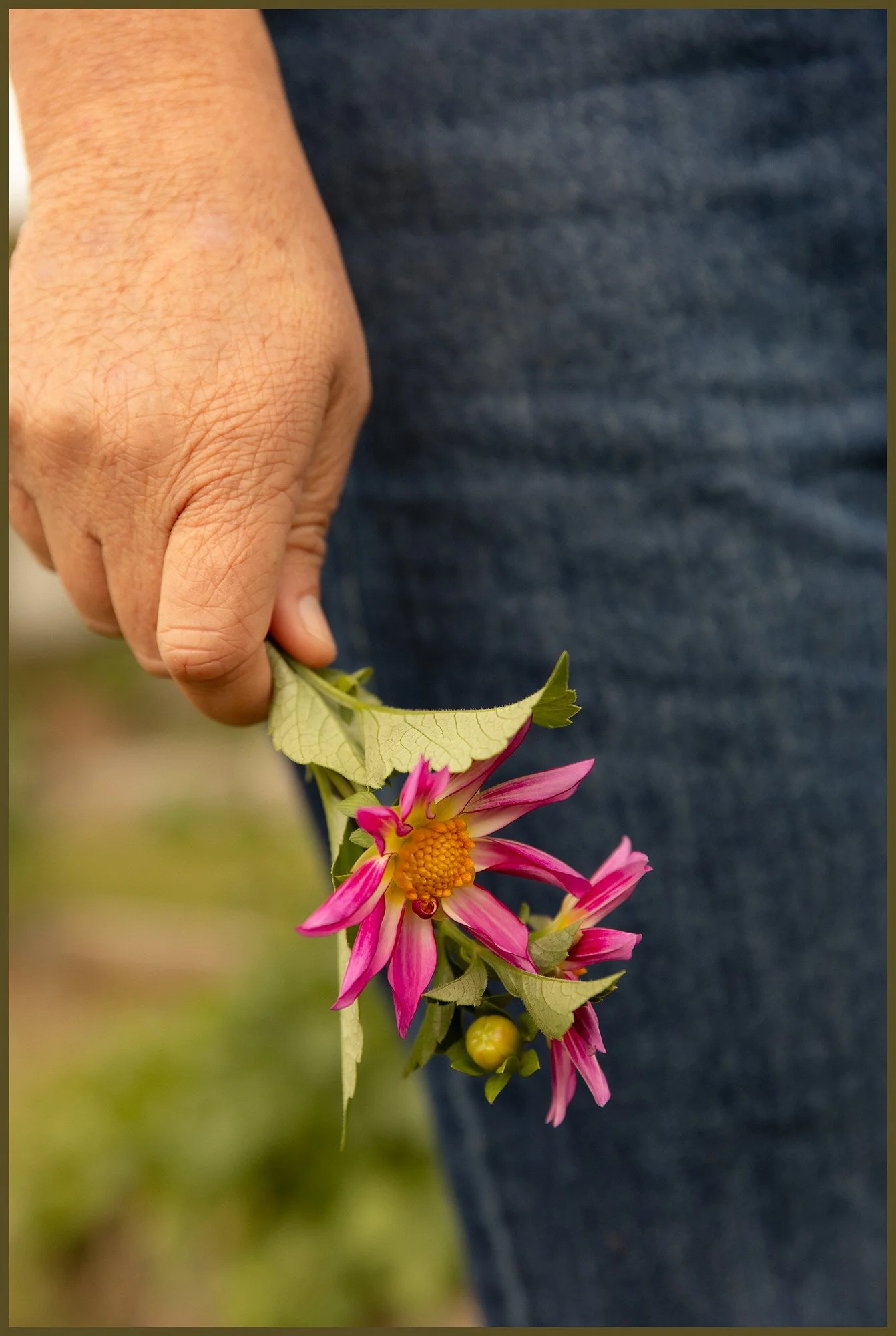
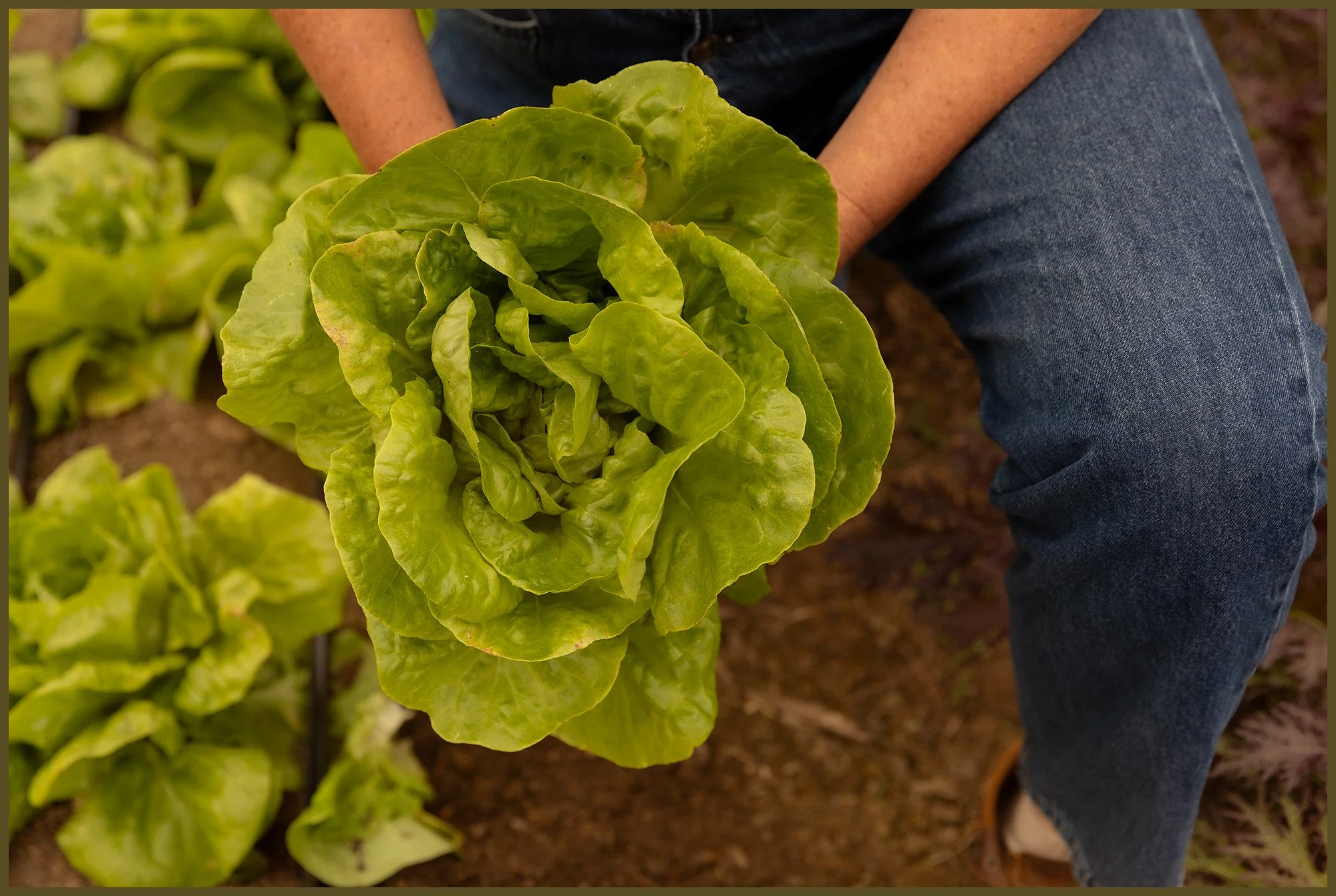
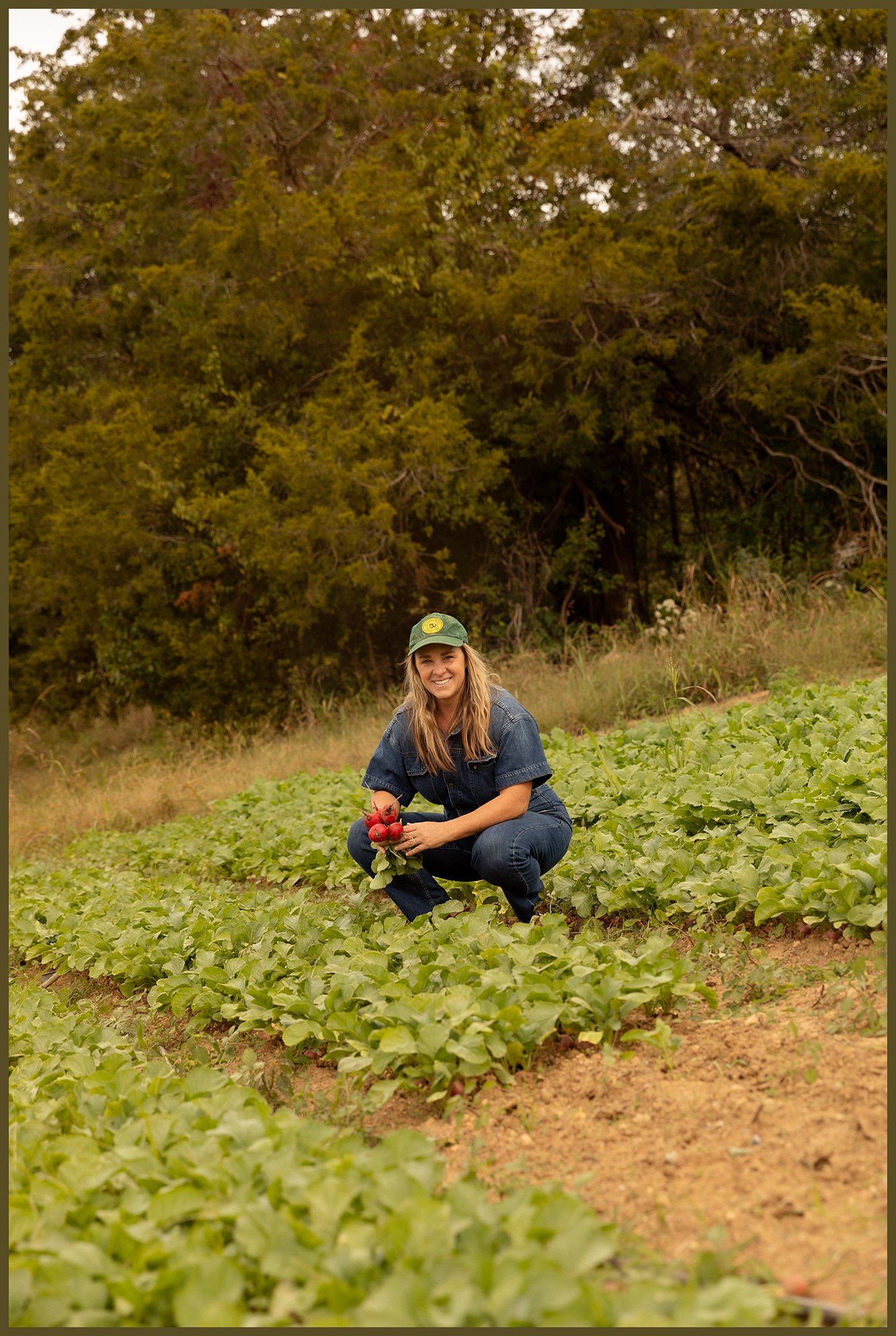
Lauren Palmer, the force behind Bloomsbury Organic Farm, is our tenth In Dialogue feature. For several years, Lauren has been a guide and inspiration to me.
In Dialogue: Lauren Palmer
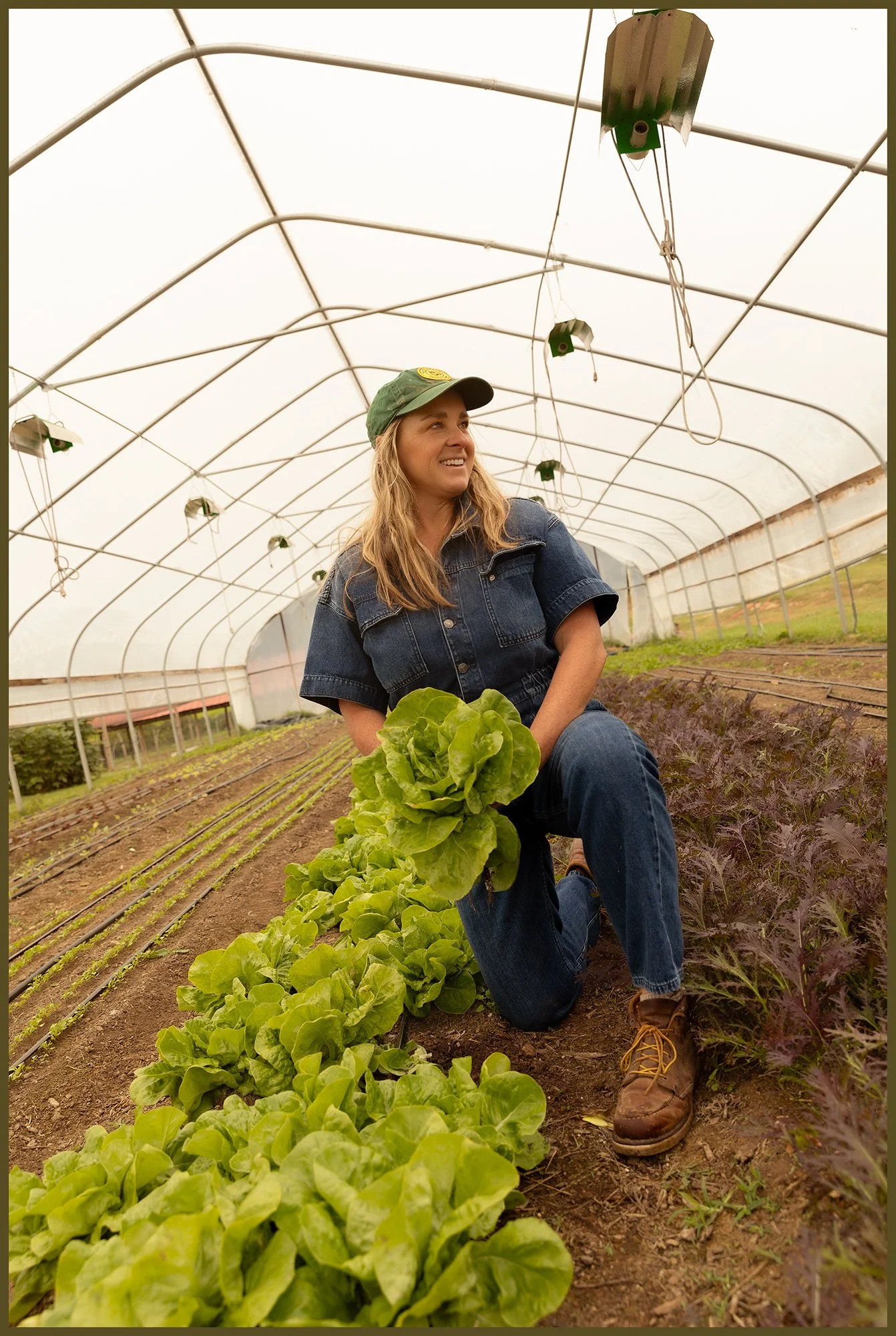
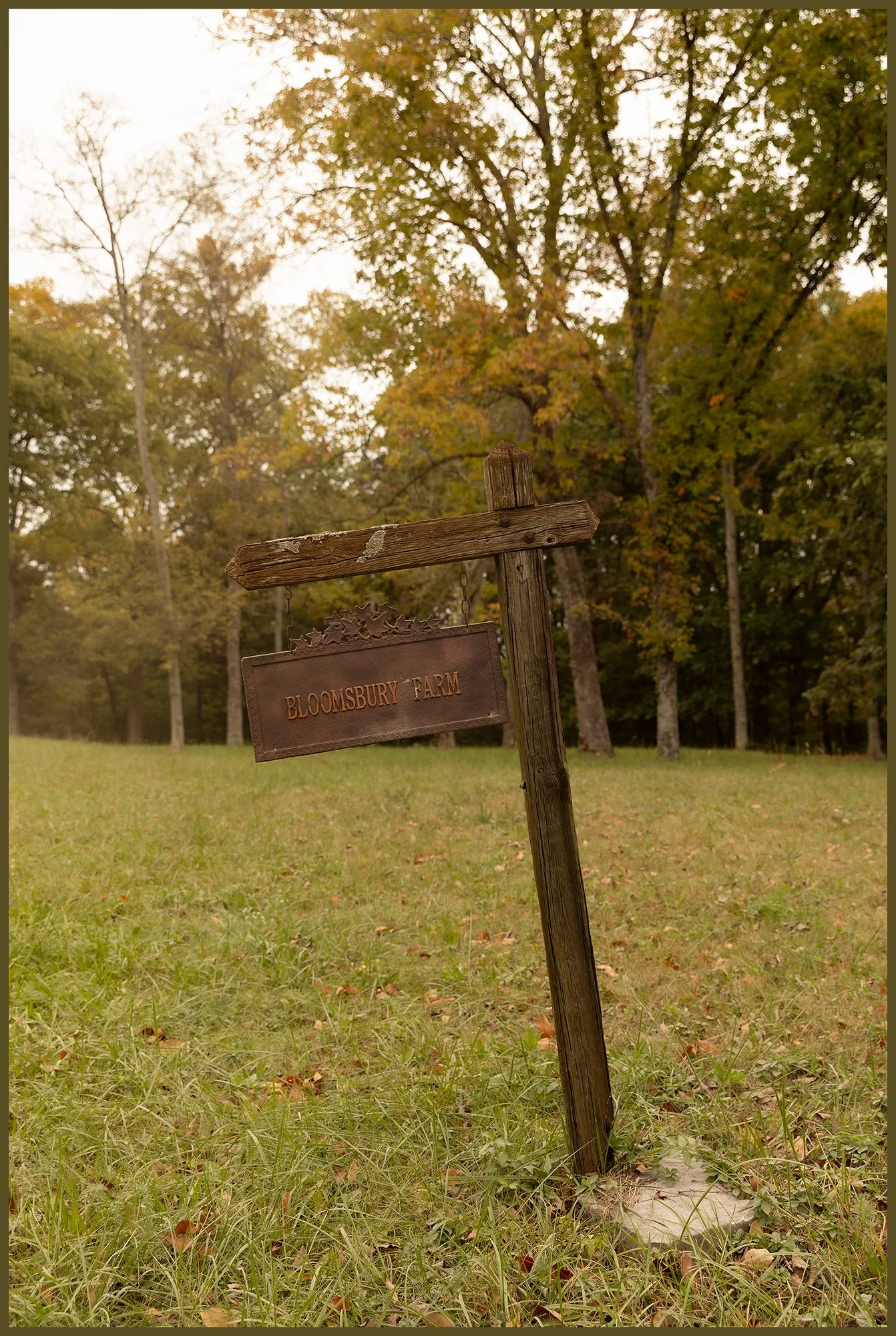
Lauren Palmer, the force behind Bloomsbury Organic Farm, is our tenth In Dialogue feature. For several years, Lauren has been a guide and inspiration to me, due to her choice to be consistently present, community driven, and committed to honest, high standards.
Lauren began Bloomsbury in 2009, and it has since expanded into a sustaining source of organic produce, community gatherings, events, and education. My son, Sullivan, attended Little Sprouts, Bloomsbury’s educational program for young children. It is also home to Bloomsbury Farm School, a Reggio Emilia-inspired environment that empowers children to strengthen their independence, connection with their environment, and intrinsic needs and senses.
I highly encourage us to stay abreast of all Bloomsbury offers to our community, such as Farm Fridays, farmers’ market offerings, collaborative dinners, classes, and more.
It is a sincere honor to share Lauren with you today. I always leave our time together feeling a newfound sense of confidence, kindness, and drive, and I believe you will, too, after reading her words below.
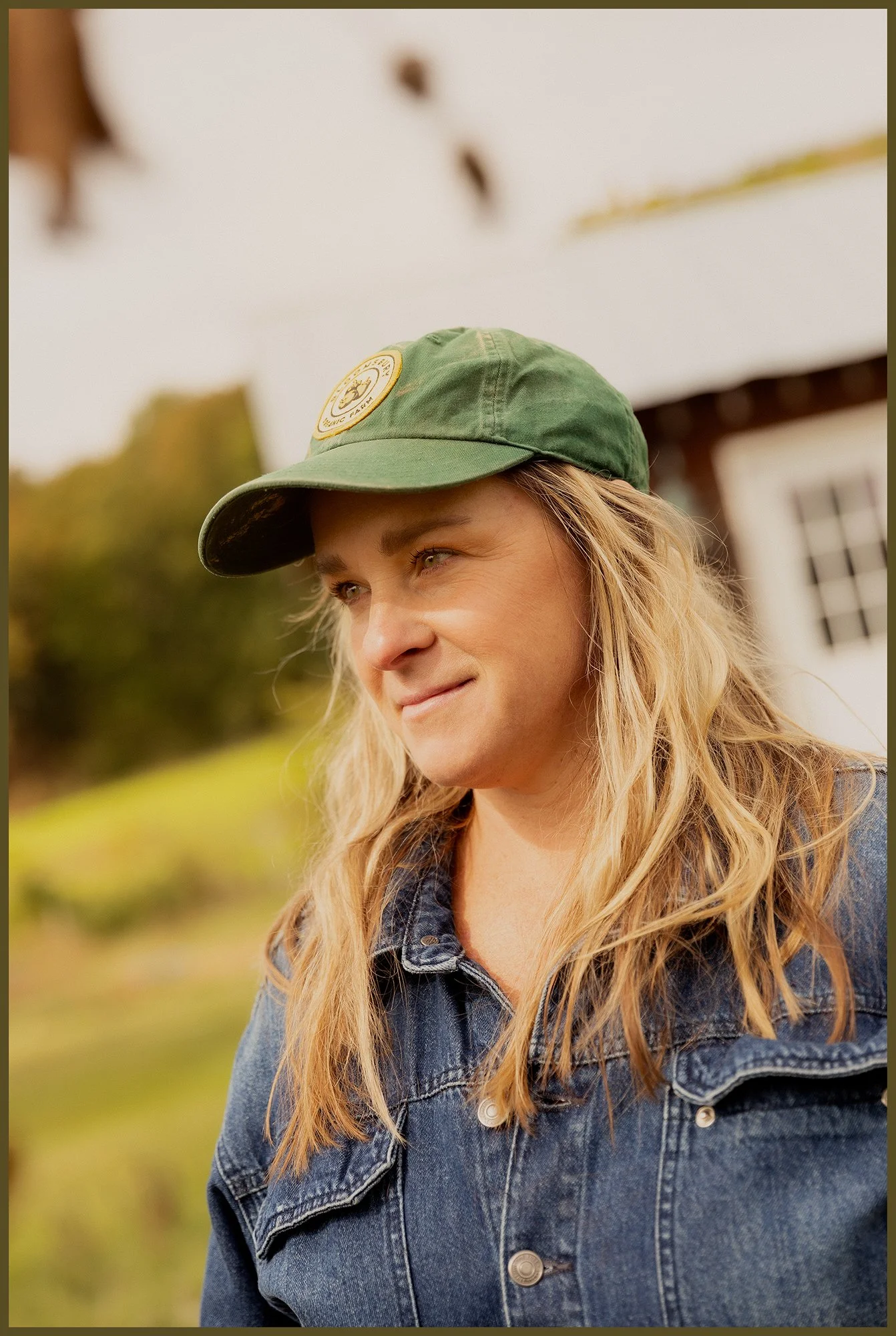
Chelsea: You are, of course, the owner of Bloomsbury Organic Farm, which I have deeply admired for years. I have experienced Bloomsbury, and therefore you, through a variety of ways. My son, Sullivan, was a part of your early childhood educational program, Little Sprouts. I source your produce as often as I can. You have welcomed Wiley Canning Company onto the farm for a Wiley Workshop. One day soon, I would love to attend a Bloomsbury dinner. Your recent strawberry-focused Rambler Event and dinner with Outstanding In The Field both looked magical.
It’s no secret you wear many, many hats. Bloomsbury, and you, do so much agriculturally, educationally, and for our community. Given this, you must certainly delegate priorities and work to your team.
However, what is one aspect of your work you choose to hold onto as Bloomsbury thrives and expands? In other words, what do you feel must stay with you? To what do you hold tightly?
Lauren: I love this question. Thanks for seeing all the hard work because it takes one to know one. To me you have so magically created Wiley, and I have loved every step. What I hold so close, and also share, is the community and the people we touch. I love connecting and seeing a need and knowing that within our reach there is a relationship to be had. I am so proud of the time and attention to people that we give, and it shows in all aspects of the farm. Education, events, farm, food, simple hospitality…but from a producer. It’s no surprise I love farmers’ markets. If you ask me for a tour of the farm, I get giddy. Showing off our hard work makes it all worth it. From talking to chefs and parents to CSA members, I want to know you and for you to feel known, too! I love being creative. I didn’t think I had the genes, like my mom, but veggies are art, and I love everything about growing, eating, and marketing them. The farm is my canvas.
Chelsea: Your role at Bloomsbury is very community-facing. You are so often present at Farm Fridays, farmers’ markets, events, and more. When it’s time for you to recharge, how do you do so? In other words, how do you pour into yourself in order to be so present for others?
Lauren: I do feel loved and appreciated, and that does fill my cup for sure and is why we do what we do! I am an introverted extravert, so I do like quiet time. I like walks on the farm and connecting with my four-legged friends. I am a closet motorcyclist, so a little wind in my hair is always good. A good ol’ chef dinner with friends in town is such a treat!
Chelsea: One quality of yours, among many, I respect and commend is your inclusion and integration of your children and family into your work. As a mother of two, how have your children enhanced your work? How have they challenged it?
Lauren: Oh, big enhancement for sure! They are the reason for the season. I do this for us and a lifestyle that suits us as a family. Life, work, and play all here at the farm with them makes it sweet and is a luxury I know is rare. I am a better businesswoman and friend being a mom and having family intertwined. I don’t see doing it any other way. I came from parents who overlapped business and family, too. A world where this is so separate would be foreign to me. I have such fond memories of farm-family kiddos playing together and life lessons being learned right before our eyes. It takes a village, and man, this one is sweet with the ones that choose to do it with us.
Chelsea: Due to the nature of your work, owning and operating Bloomsbury, you are committed to the geographical area of Nashville, Tennessee. When my cookbook was released in 2023, I had so much fun, and derived so much meaning, hosting signings and dinners in several cities throughout the country. And, it is also true this series of signings and dinners helped me discover my desire to prioritize Nashville specifically as Wiley Canning Company grows and expands. I hope to invest in Nashville and its community, above all. When thinking about this for yourself, do you feel similarly? Is there a part of you who would like to explore time in another city, causing you to navigate the inevitable tie you have to Nashville?
Lauren: Ohhh, fun one! My dad’s adage is, “Bloom where you are planted,” and that has proven to work so nicely in my backyard. I do see us on menus in bigger cities and knowledge of the farm being spread across the globe. I love folks having access to us every Friday, too. The internet does really help us connect, so I do look for ways for our brand to be bigger than Tennessee. Is there a tangible thing other than perishable produce that will translate outside of here? I will keep pouring into what I know and love and the potential of bigger or more may or may not be what fulfills us. I do think I want simply more awareness, but sometimes I battle with at what cost. I am super happy literally feeding my community, but I do have my eye on a bigger reach. Shapeshifting is what our farm does best, so I always hope to mold into what needs are ever present. That could be a farm how-to or market tutorials to simply cheering on other mom farm entrepreneurs. Now I have my wheels turning.
Chelsea: Due, again, to the nature of your work, there is an infinite list of to-dos present at any given time. Change is also very visible and constant. The seasons shift. Produces grows and is consumed. Animals are born, and animals age, all before your eyes. Do you find it difficult to feel settled, due to this? Is the experience of ‘feeling settled’ important to you?
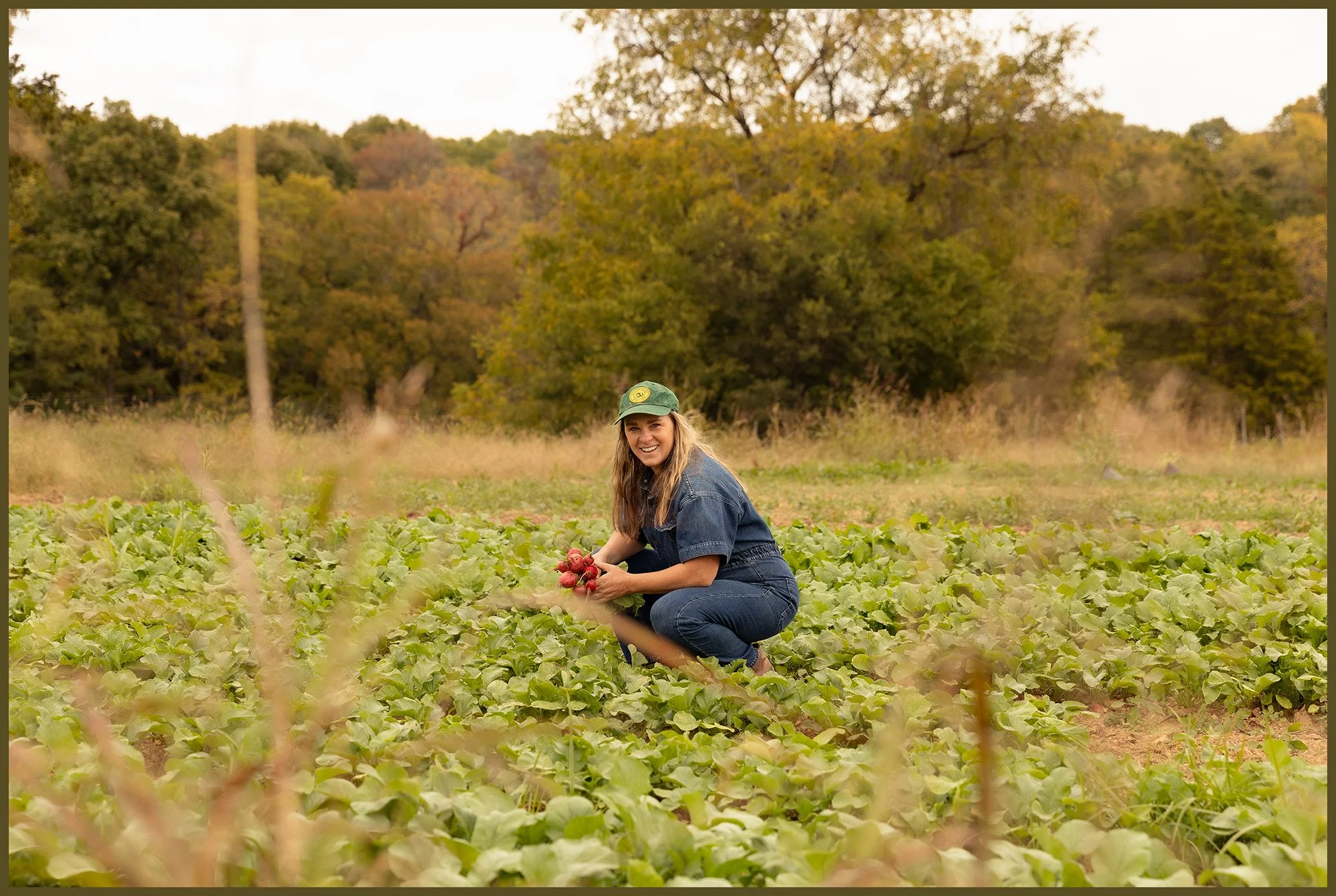
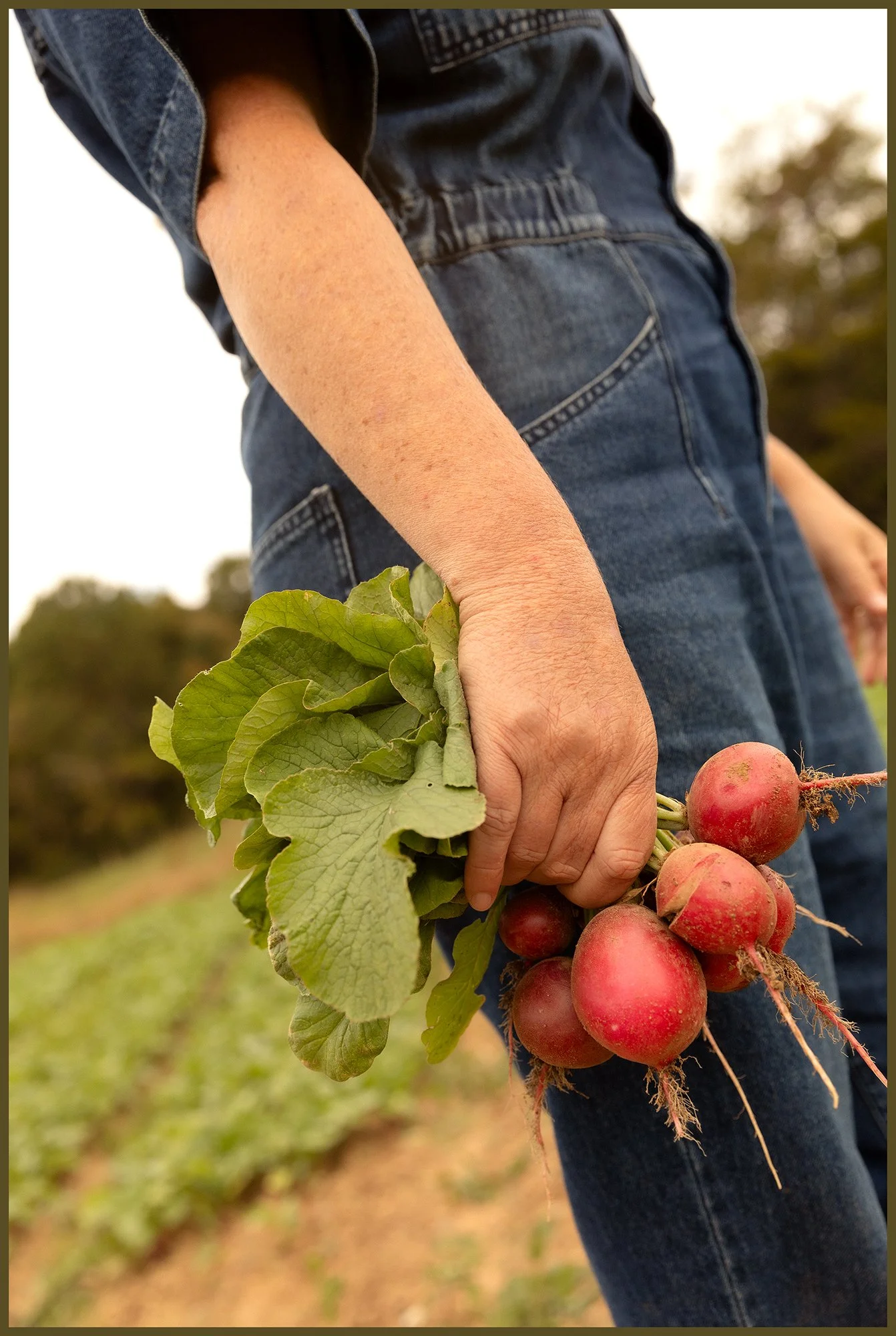
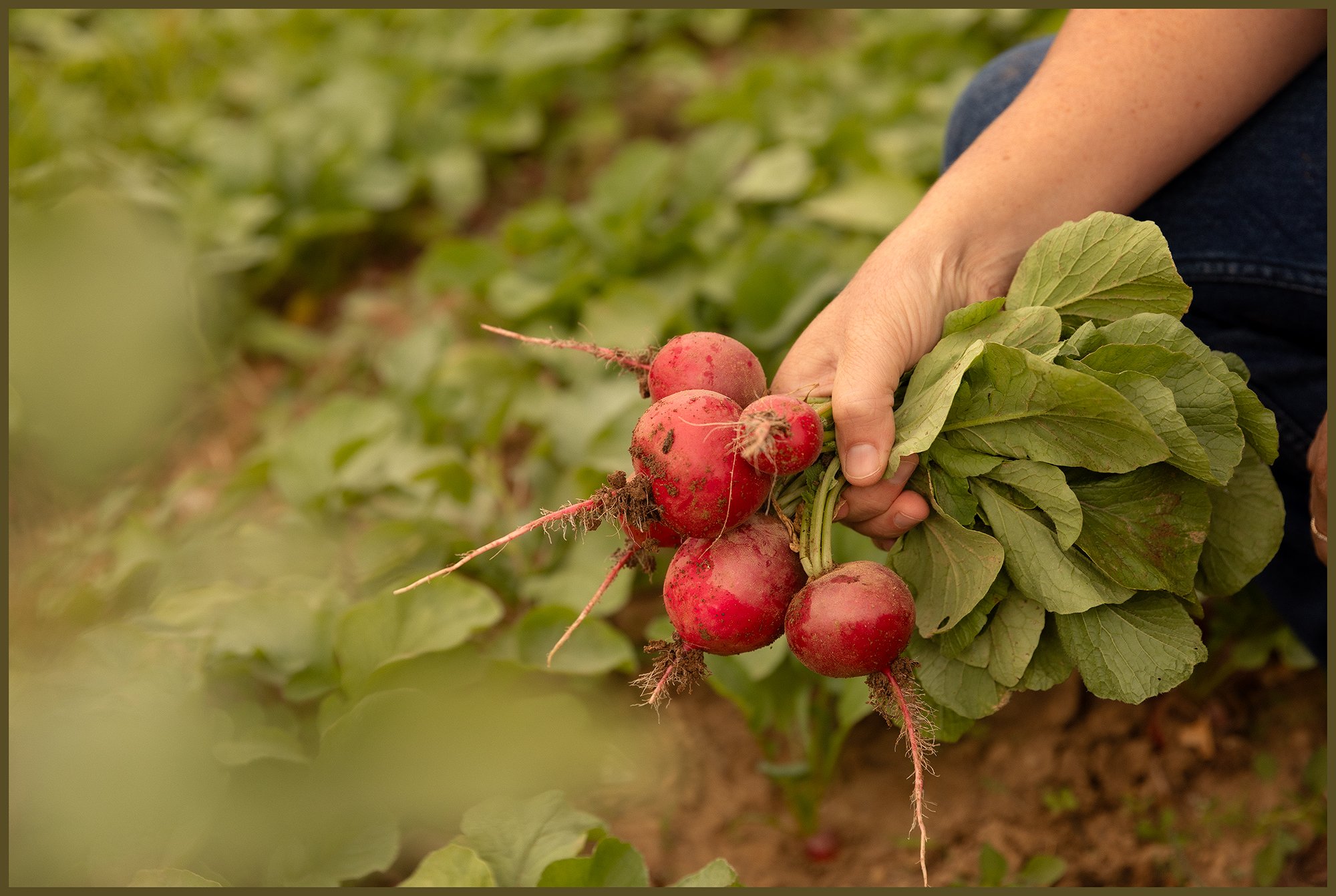
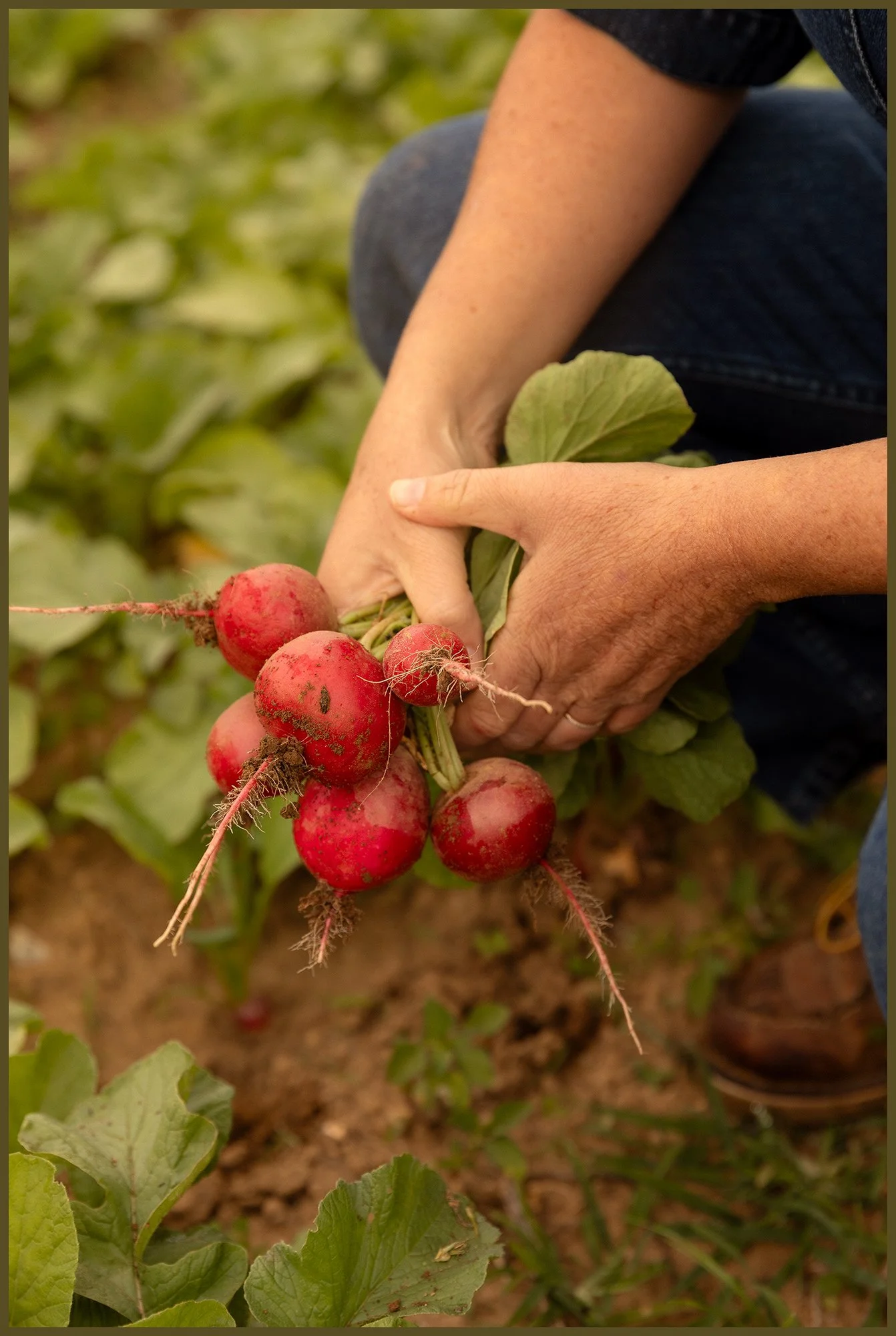
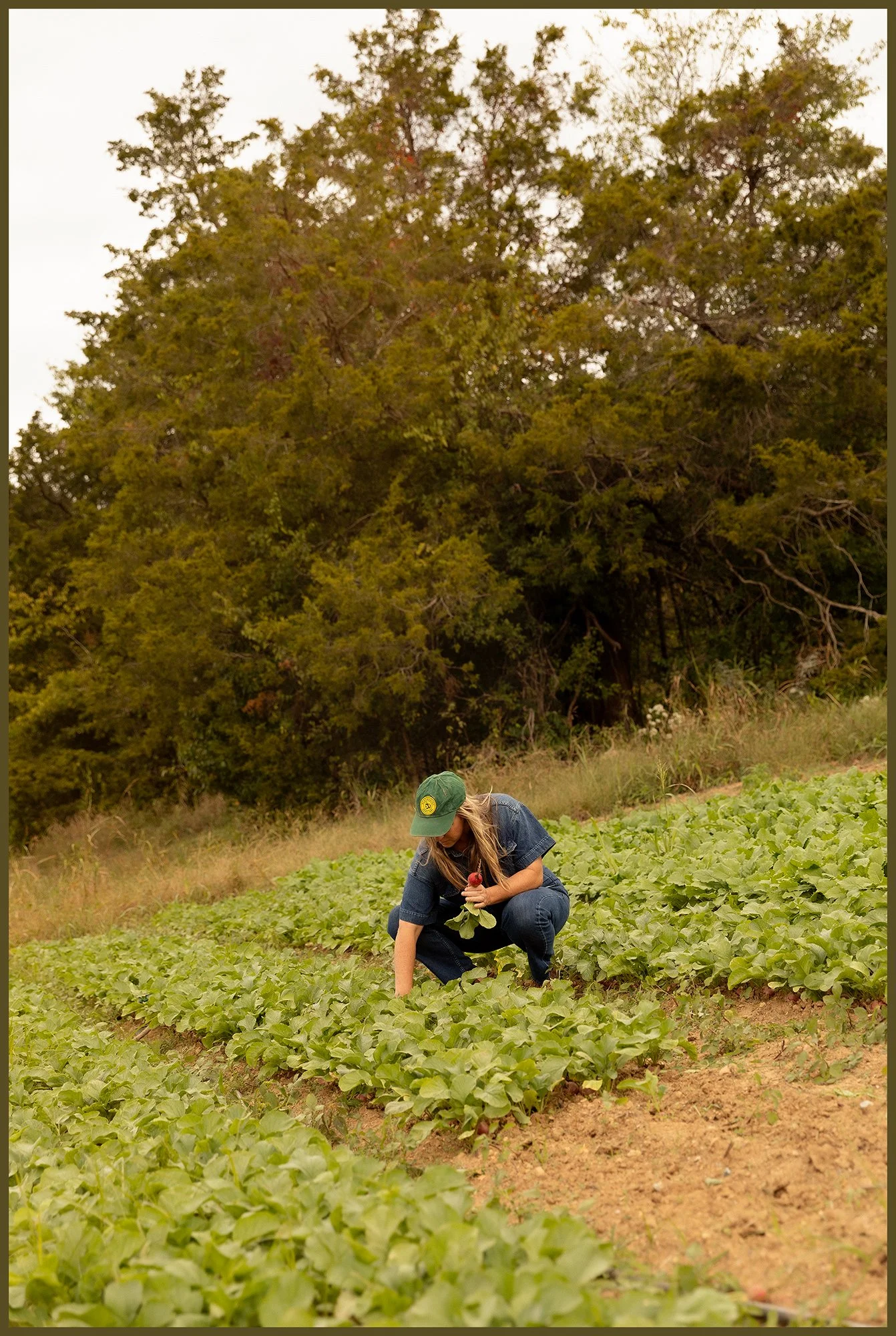
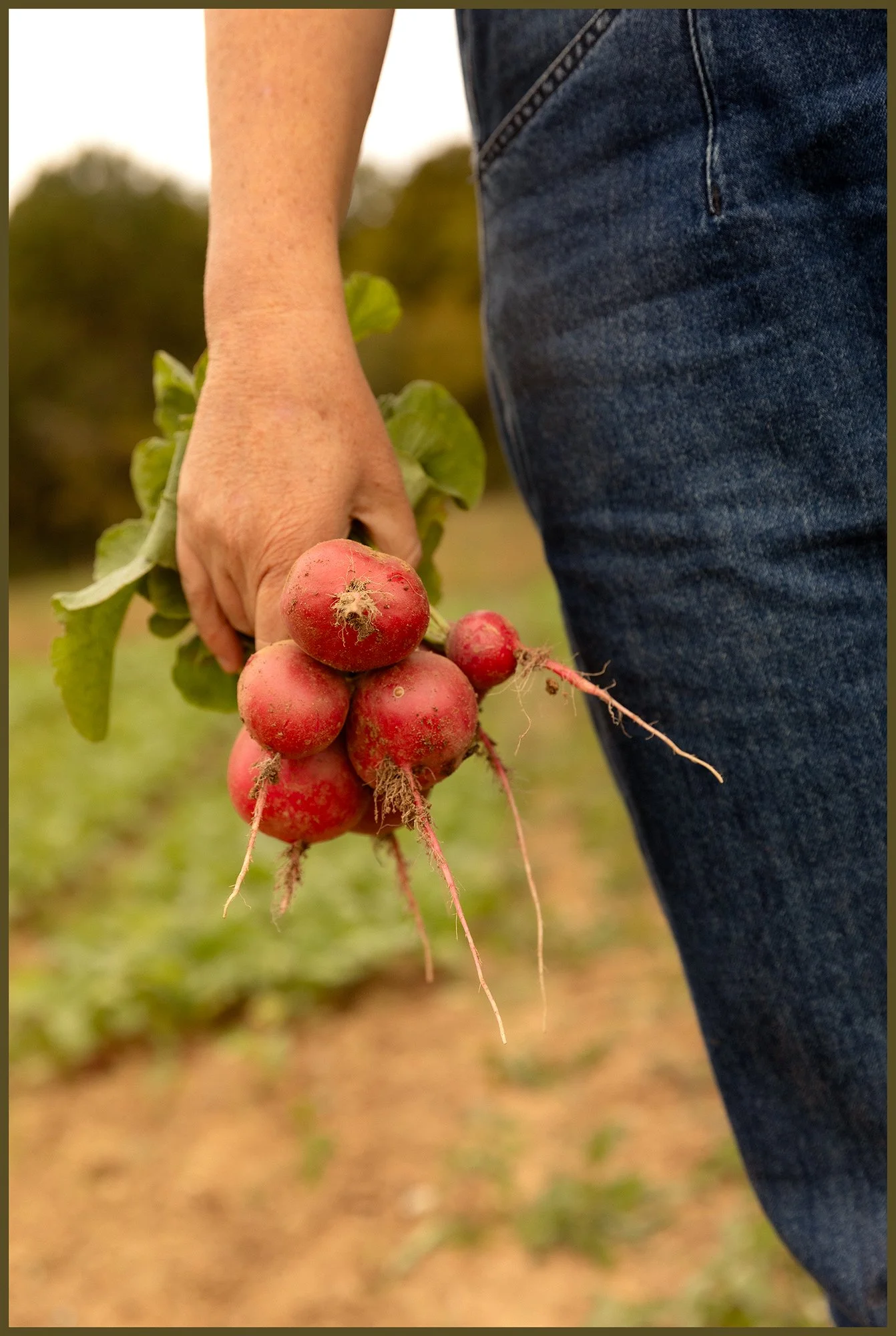
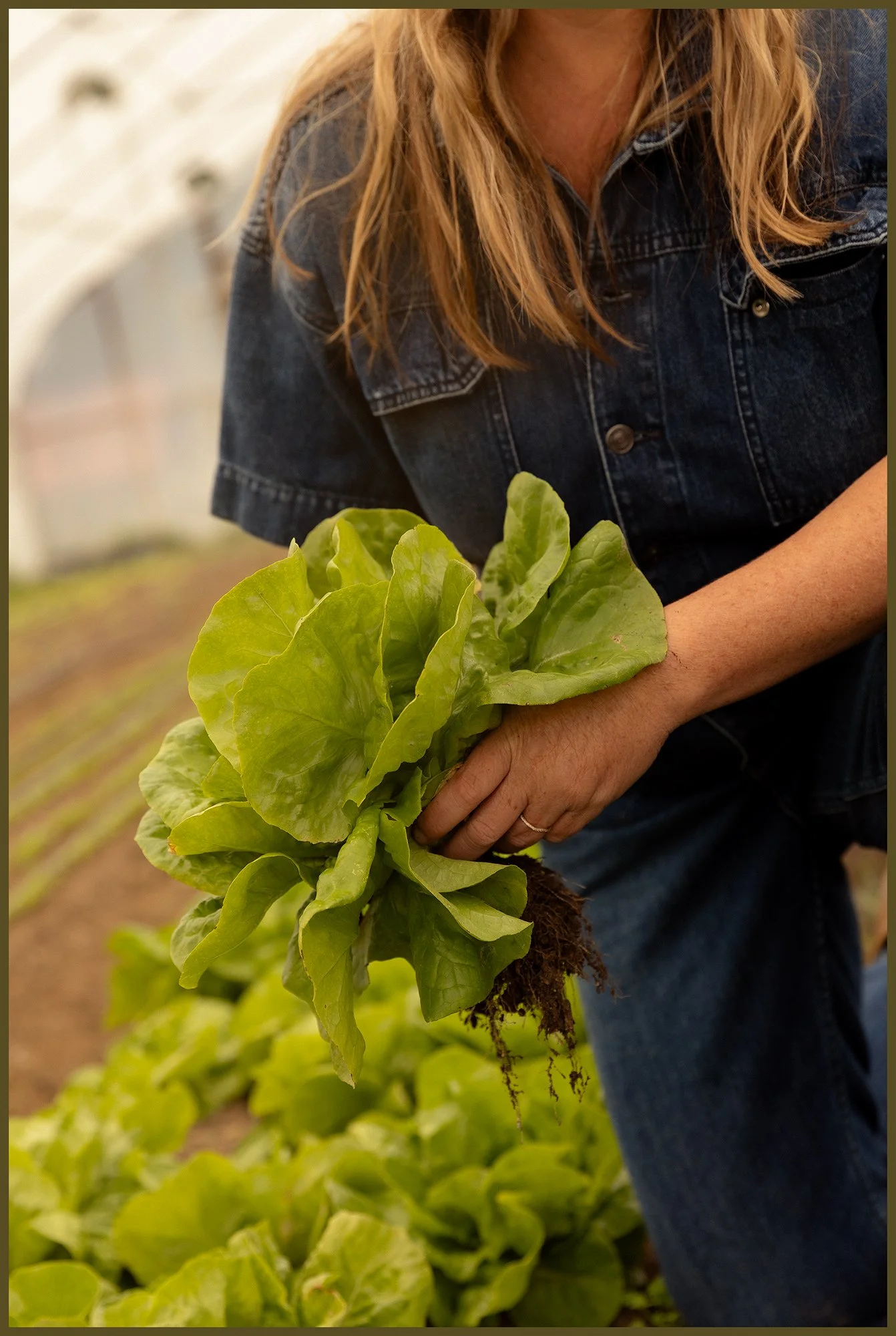
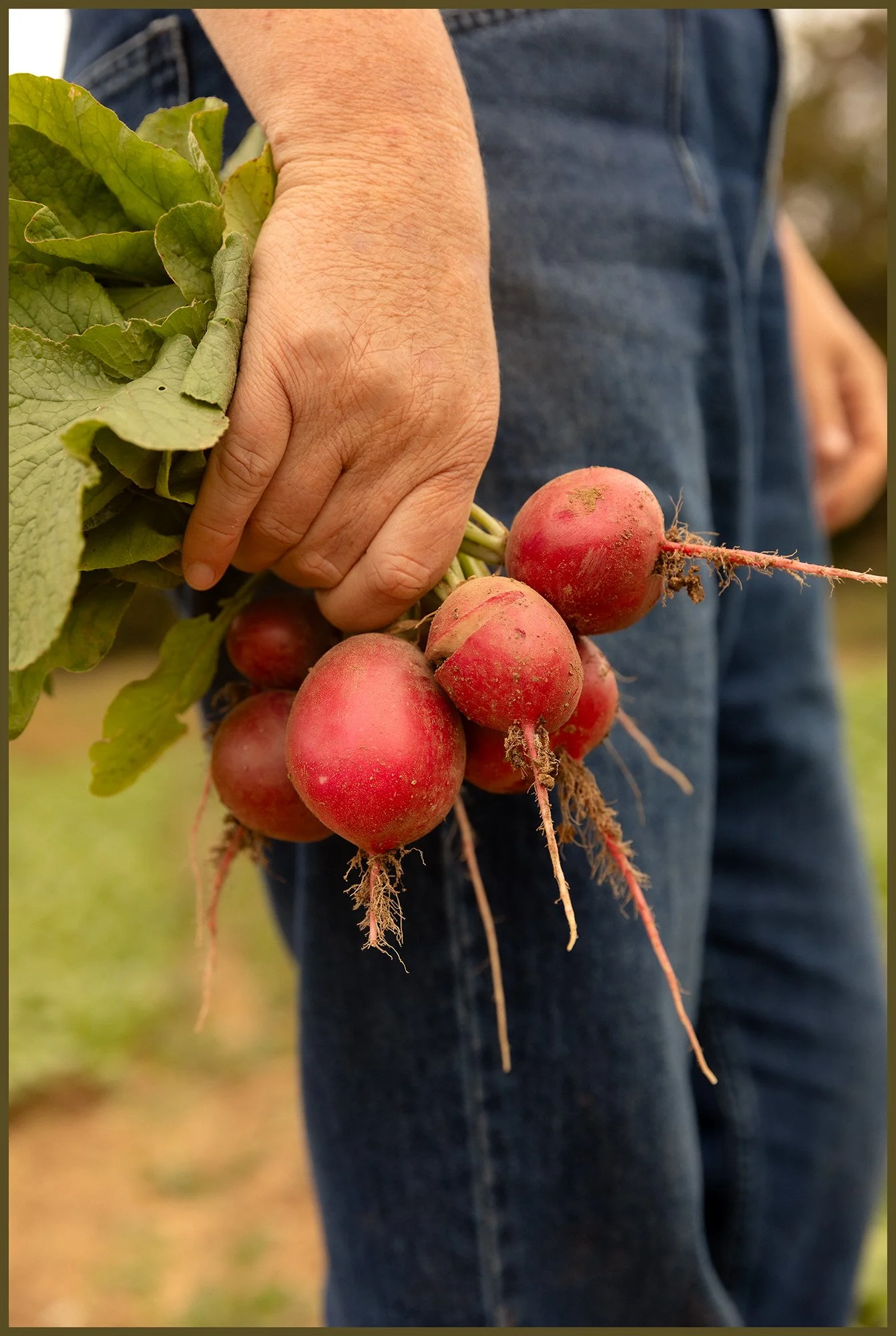
Lauren: RIIIGHT…I mean you have got to let a few things go and know that you will get to that bed of radishes tomorrow. This is a deep dive into creating every season and the fun parts about that but knowing you are never in full control and mother nature has a huge stake in the game. Thank goodness for a team and family. It’s not a singular lifestyle. I can look back and feel pride in a short amount of time. I imagine others’ work might take longer, and I can quickly see growth and life and taste the fruits daily, too. I do thrive in change and could not grow the same crops season over season. I love the new variety and boundaries we push at the farm. I think you have to be a multi-tasking queen, like walk the dog and pick weeds at the same time. I do long for a season that resembles the last and to have history repeat itself and have the best berry crop again and again, but I couldn’t be a farmer without the wins and losses. I do find peace in the ebb and flow and farmer talk and market chatter wouldn’t look the same. It’s what we do. “Hows the weather at your place, have any rain?” Gotta love it.
Chelsea: What is one food-related habit, priority, or value rooted in your past, with family or close friends, that you wish to carry forward into the future? If there isn’t one, what might you start?
Lauren: Grow to Gather and because of friend and family and community I grow because of them and with passion to provide some of the simplest of needs. We all need each other and no matter the who you are or where you came from togetherness is what makes the world go round. Don’t discount what we all can bring to the table, andI am always proud when folks show up. Grow more than you need grow wide and far and reach as many hands as you can. Grow wild and free but just grow and grow to gather.
You can follow Lauren on Instagram here.
Photos by: Chelsea J. O’Leary
In Dialogue: Leila Giannetti
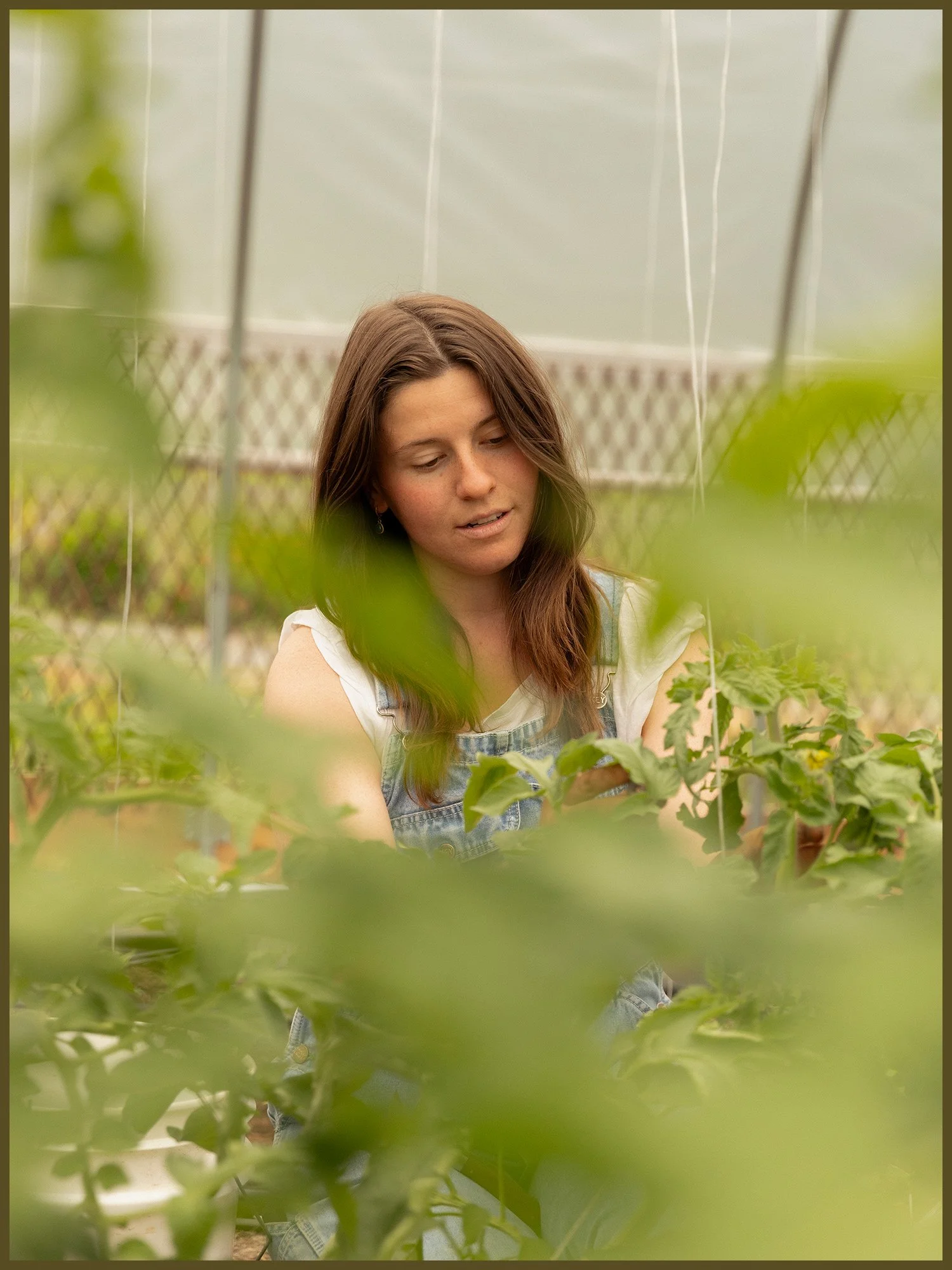
Leila is a steward of Patina Meadow, home to a nurturing farm, abundant garden beds, enlivening greenhouses, and The Shed, a gathering space and pottery studio.
In Dialogue: Leila Giannetti
Our ninth In Dialogue feature is Leila Giannetti of Patina Home and Garden and Patina Meadow. Leila is a true, endless wealth of joy, knowledge, and creative inspiration.
I first met Leila at Patina Home and Garden, a welcoming and charming brick-and-mortar store in Leiper’s Fork, Tennessee. Patina Home and Garden, where Leila plays an essential role, was founded by multi-talented Brooke Giannetti of Velvet and Linen and Steve Giannetti.
Leila is also a steward of Patina Meadow, home to a nurturing farm, abundant garden beds, enlivening greenhouses, and The Shed, a gathering space and pottery studio.
My admiration for Leila, as well as her family, is very deep. Any time I speak with her, I experience her grounded perspective, genuine gratitude and kindness, and sense of awe of the land beneath her and world around her.
I am both excited and honored to invite you to listen to our conversation.
I ask Leila the following questions:
What is one of the most rewarding aspects of your personal role and mission at Patina Home and Garden and Patina Meadow? What is one challenge you face as a part of your personal role and mission?
Is there one part of yourself that has come alive in Tennessee that may have been dormant in California? Is there one part of you that feels like it has remained in California that you might miss, or perhaps now honor?
Does working with your parents come naturally to you? Is there any action or habit you intentionally practice to remain in sync and aligned with each other as you work together?
Can you speak more about how you have made peace with the ebbs of your work, as a part of the inevitable ‘ebb and flow’?
Do you have a favorite fruit or vegetable you grow at Patina Meadow?
What is one food-related habit, priority, or value rooted in your past, with family or close friends, that you wish to carry forward into the future? If there isn’t one, what might you start?
Listen to our conversation below.
Several of my favorite Patina Home and Garden and Patina Meadow resources are below.
You can follow Leila on Instagram here.
You can follow Patina Home and Garden on Instagram here and on their website here.
You can follow Patina Meadow on Instagram here.
Photos by: Chelsea J. O’Leary
In Dialogue: Liz Martucci
Liz Martucci is the founder and sole owner of Elizabeth Suzann, a utilitarian clothing company based in Nashville, Tennessee. Liz began Elizabeth Suzann in 2013 and has honored her design philosophy for over a decade.
In Dialogue: Liz Martucci
Our eighth In Dialogue feature is Liz Martucci of Elizabeth Suzann. Liz is not only our first feature of 2024, but she is also our first-ever recorded interviewee.
Liz Martucci is the founder and sole owner of Elizabeth Suzann, a utilitarian clothing company based in Nashville, Tennessee. Liz began Elizabeth Suzann in 2013 and has honored her design philosophy—rooted in art history, inherent form and functionality, and a deeply personal approach to dressing oneself—for over a decade. She was a leading designer and manufacturer during the genesis of made-to-order slow fashion. She was also a primary initiator of accessible and expanded sizing in the direct-to-consumer clothing market. Throughout her business’s lifetime, she has grown from a team of one in 2013 to 45 in 2020, subsequently downsizing in the wake of COVID-19. She has been featured in The New York Times, Women’s Wear Daily, Quartz, Cup of Jo, and more.
She has acquired endless wisdom as a business owner, and it is privilege to share a brief snippet of this wisdom with you.
I ask Liz the following questions:
From 2013 to 2023, what is one through line you see? In other words, throughout a decade of change, what is one aspect of Elizabeth Suzann you feel has remained consistent?
What is one expectation you had of yourself in the past that you no longer have?
If you have 60 minutes to observe any moment in Elizabeth Suzann’s history, what would you observe? You cannot change the moment, and you cannot change its outcome. You can only bear witness to it. You can divide your 60 minutes among however many events you wish.
If someone like me, someone who is a part of the Elizabeth Suzann community, could better understand one thing about you, what might you wish that would be?
Is there anyone, or anything, in your life who influenced you in a palpable way when you were first getting started?
What is one food-related habit, priority, or value rooted in your past, with family or close friends, that you wish to carry forward into the future? If there isn’t one, what might you start?
Listen to our conversation below.
In Dialogue: Elise Joseph
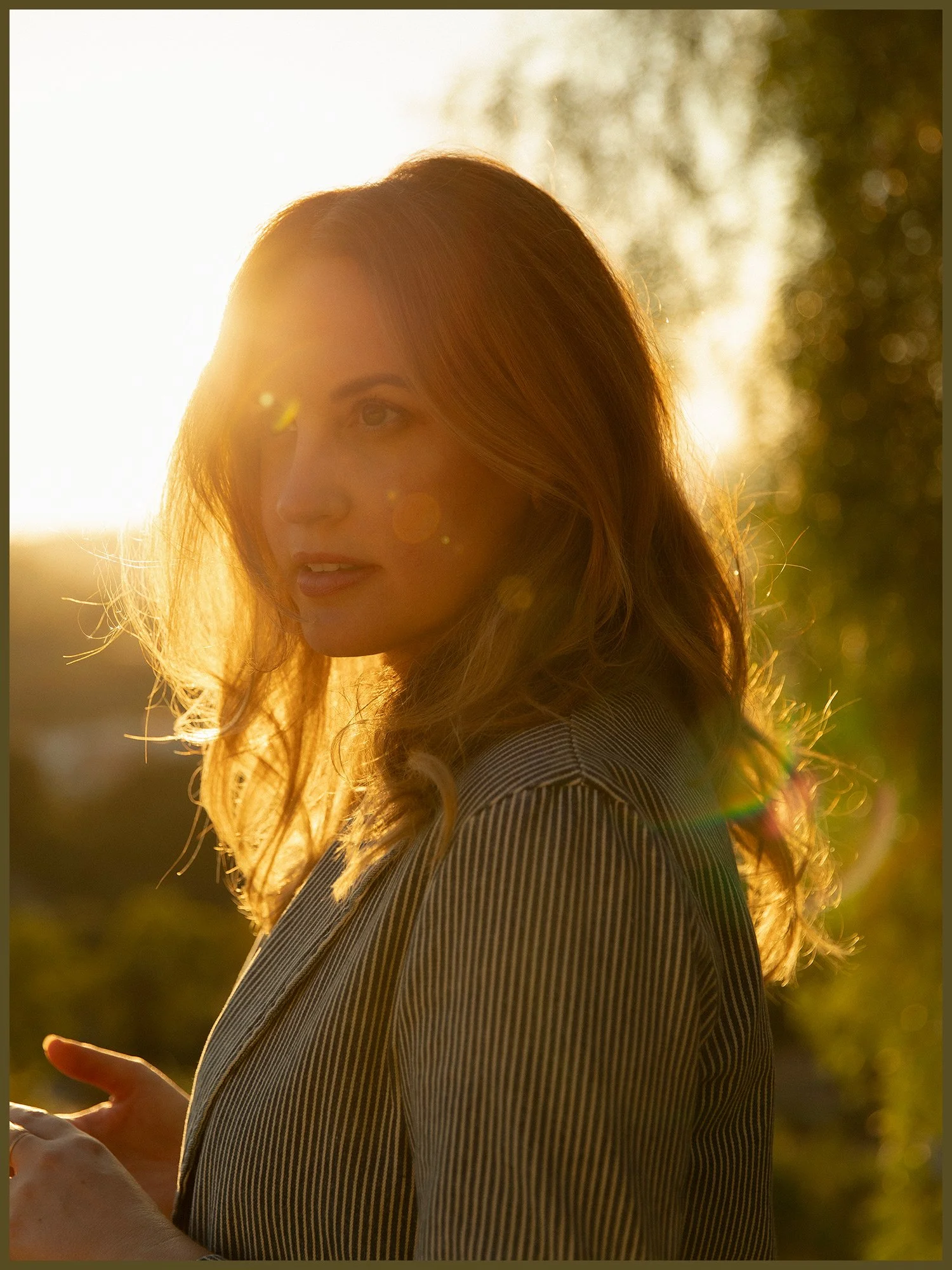
Elise is also the wise and attuned consultant behind my creative work. It is she who conceptualized The Wiley Dinner Series, our event at The Well Lived Woman, and more.
In Dialogue: Elise Joseph
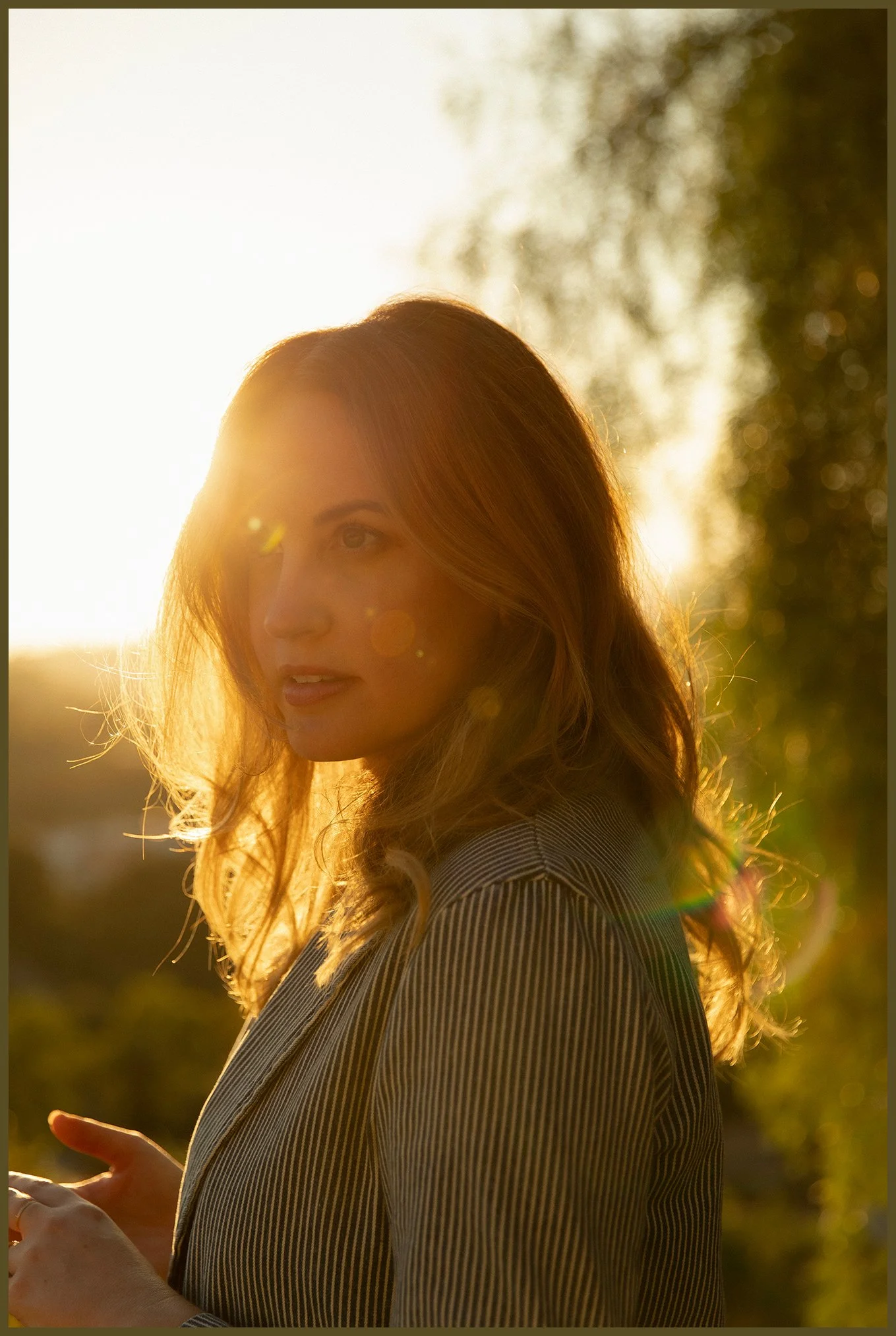
Our next In Dialogue feature honors a dear friend, colleague, and fellow entrepreneur. It is a celebration to share Elise Joseph with you today.
Elise, based in Los Angeles, is a consultant and writer. She is also the owner of Duende, a home for one-of-a-kind pieces, visual inspiration, and artistic collaborations. You may recognize Duende from Elise’s and my recent collaboration, one of my favorite Wiley-inclusive projects to date.
Elise is also the wise and attuned consultant behind my creative work. It is she who conceptualized The Wiley Dinner Series, our event at The Well Lived Woman, and more. Recently, she was studying our Instagram, and she sent me a list of recommendations for how to more clearly communicate our story and values. When you hear the voice and experience the work of Wiley Canning Company, you will know Elise’s mind is a key caretaker of the living, growing body that is Wiley.
As you read our interview below, you will detect my deep adoration for Elise. I have known her for nearly ten years, and from day one, she has proven to be tirelessly invested, honest, kind, and supportive.
Let’s dive in…
Chelsea: You are an exceptionally creative and attuned human, woman, and close friend. One thing, I believe, that contributes to this is you are a high-sensory person. You have a deep knowing about what looks, sounds, tastes, smells, and feels just right, in a variety of contexts. What is difficult about being so high-sensory? What is advantageous about it, powerful perhaps?
Elise: There’s a popular phrase that says something like, “Your greatest strength can also be your greatest weakness.” Most of the time, my senses and intuition serve me in beautiful ways. I’m able to experience the world very deeply, which often leads to intense awe, joy, curiosity, and groundedness. On the contrary, when I am struggling or not operating from a healthy place, I can experience sorrow, overwhelm, and lack of boundaries—easily feeling isolated, misunderstood, or stuck.
When I was in my early twenties, I felt frustrated that I didn’t seem to have one straightforward gift, talent, or direction for my life—something obvious to help guide me along the way. I had friends who were finding success in the corporate world, or becoming big names in the music industry. It was hard to not compare myself or feel jealous of their clear life path.
As I’ve gotten older, I’ve begun to understand that my true gift is in my creativity, in finding, celebrating, and sharing beauty in different forms. One day that might look like helping a client hone their brand identity and overall vision. Another day, I’m dreaming up special events and ways to bring people together around a shared interest. When I’m developing content and imagery, or working to bring a new product to life, I feel grateful to look at something from a unique, well-rounded perspective. No day is ever the same, which keeps things interesting and exciting to me.
Chelsea: You are so purposeful in calling out others’ gifts. For nearly a decade now(!), you call attention to what makes me me. You do so much more than acknowledge my inherent gifts; you grow them, amplify them, and even encourage me to share them in ways that stretch me. If I were to hold up a mirror to you, what might you call out about your own gifts? What makes you...you? What is an inherent gift that makes you feel proud, one you might hope your niece, Viola, experiences herself one day? In what ways do you currently wish to grow and share this particular gift, if at all?
Elise: I’ve always been drawn to collaboration and stretching myself in various ways. I am grateful to have built a large community and network over the years. I’m a deep feeler and very perceptive, so it brings me a lot of pleasure to help amplify, deepen, and connect others—especially in ways they may find surprising. When I see the people around me thriving and living fully, it makes me better, too.
I hope to maintain a childlike sense of wonder, but these days it’s easy to get cynical, negative, and down. We have so many things constantly competing for our attention. We’re addicted to our screens. We’re bombarded with information and headlines and bad news. I’ve been wrestling with this lately—trying to allow my feelings to come through, but not staying stagnant. I’m working to slow down, breathe, and incorporate rhythms and rituals that help support my mind, body, and spirit each day. I truly believe that we have to first take care of ourselves in order to best support others.
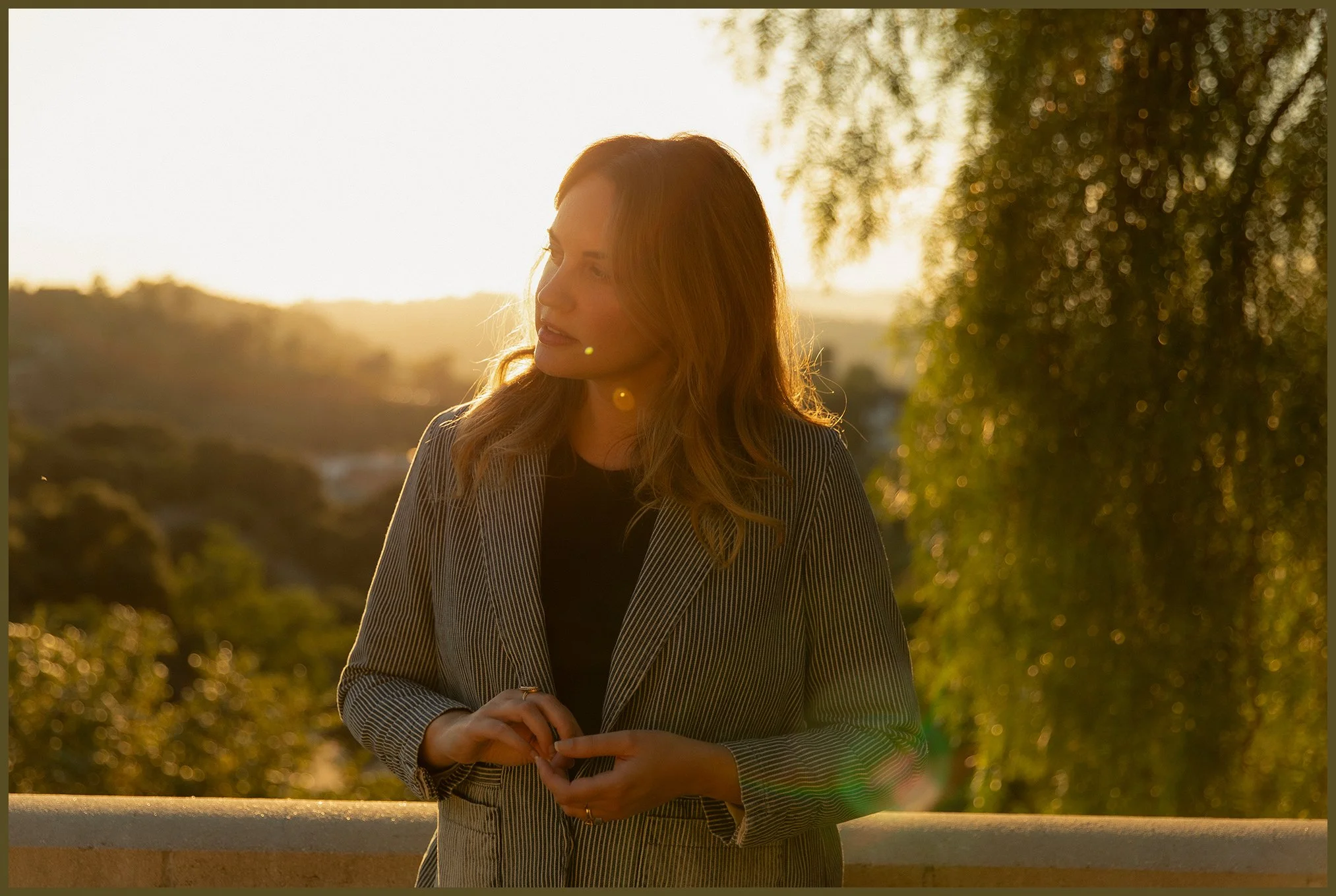
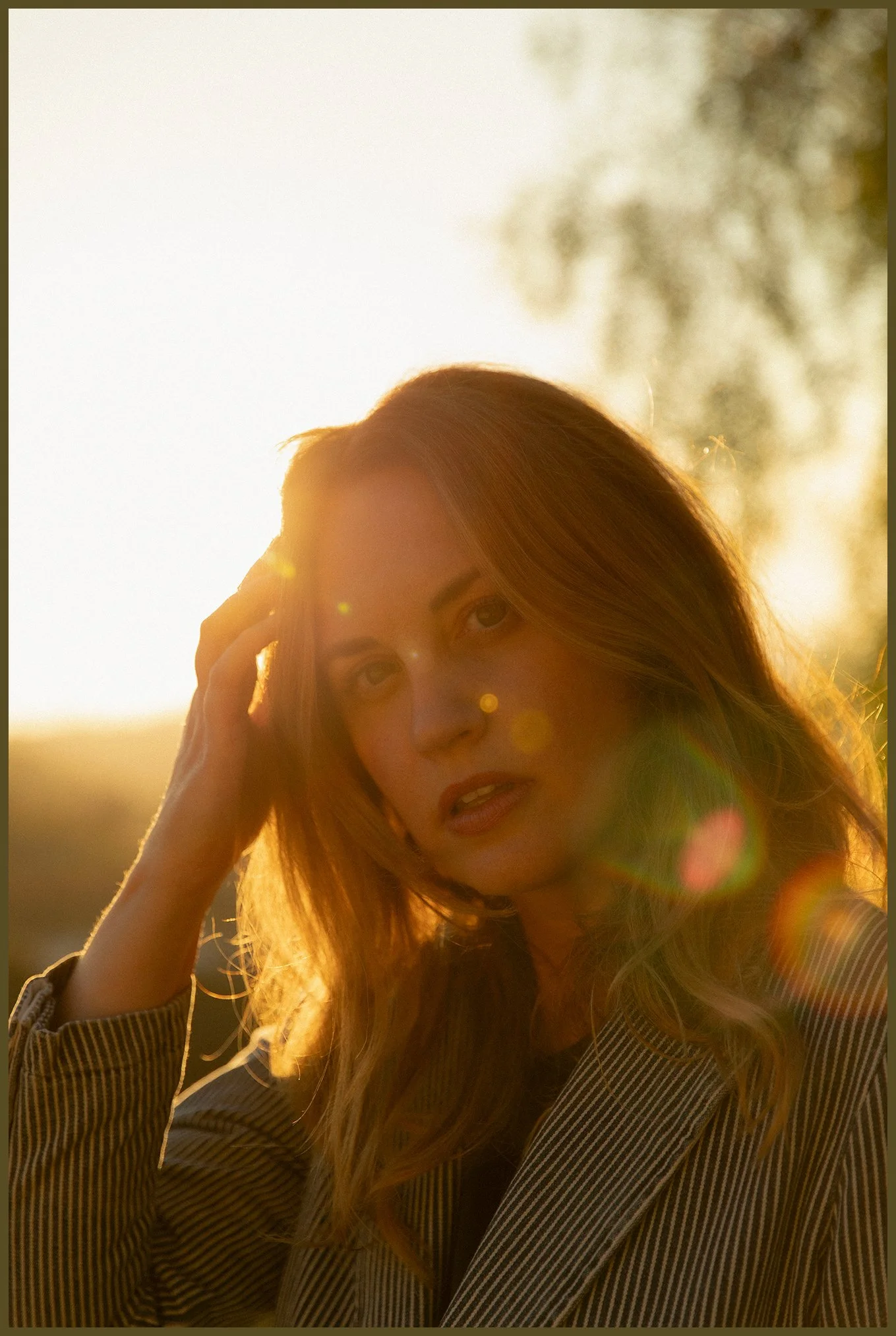
Chelsea: You were born and raised in Nashville. Recently, after over 30 years of having roots in Nashville, you cleared out your storage unit, the final space that housed and protected your belongings, some of which are your most sacred. To me, I can’t help but envision you on a stage, behind a heavy, red, velvet curtain, preparing for your Second Act. What gave you, and what gives you, the courage to change something so longwithstanding, a multi-faceted life in Nashville, after all of this time? What piece of wisdom might you share with someone also on the precipice of a Second Act?
Elise: I wish this was only my Second Act! Haha, I feel like I’ve had to reinvent many times in this life, and I’m sure many more to come. Home is a tricky word, and I’m continually digging to the core of my being to shed my idea of what safety and security mean. Home isn’t connected to one specific place for me, it’s wherever I feel free.
Sometimes there have been substantial sheddings— a divorce or a cross-country move or a career pivot—and other times there have been much smaller sheddings—a letting go or a redirection.
It’s never easy, but we as humans are pretty resilient and adaptable to change. That being said, I have to be careful not to fantasize or get too caught up in the stories inside my head—my “grass is greener" attitude definitely does not always ring true. I’m so thankful for a strong support system, my husband and close friends, who are willing to call me out when I’m acting crazy, or pick me up when I’m feeling low. My relationships are the most meaningful part of my life. We carry one another.
Chelsea: When my grandmother passed away, my longing for her didn’t begin until several weeks postmortem. We would often go a couple of weeks between texts and phone calls, but we wouldn’t ever go several weeks, or now, several months. I long to share my life with her. I long to hear her surprising, candid comments. Recently, you wrote about a very personal experience of longing. You were brought to tears by this when we traveled to Joshua Tree together. My question is: when you feel a longing for something, or someone, what do you do next?
Elise: For me personally, I often find I’m longing for something in the future, something unknown or seemingly just out of reach. A child, or financial security, or a house that we one day own. Occasionally it is a memory from the past—a motorcycle ride through the mountains with my grandfather, the passionate chemistry of a new relationship, getting to hold my niece for the very first time.
In this recent season of life, longing has felt all-consuming and distracting, keeping me from experiencing what is here for me, right now. The love, humor, delight and insanity of the present moment. I will go outside with my bare feet and my dog and just stand in the grass, trying to anchor and root into reality. I’m consistently reminding myself to surrender and hold it all with an open hand.
Chelsea: How much does your femininity influence the work you create?
Elise: I love juxtaposition and contrast—femininity and masculinity, high and low, old and new. To me, the magic is in the middle...in the both/and. If I’m operating from a heartfelt place of vulnerability and honesty, I feel the most feminine and alive.
Chelsea: What is one food-related habit, priority, or value rooted in your past, with family or close friends, that you wish to carry forward into the future? If there isn’t one, what might you start?
Elise: I grew up in a family with clearly defined roles. My mom stayed at home and my dad worked the ‘9 to 5’. Because of that, my mom felt a sense of obligation around food and cooking, which kind of sucked the joy and fun out of it for her. She didn’t want to put that on us as kids, so I usually wasn’t very attuned to what was happening in the kitchen. Now that I’m grown, with a family of my own, we enjoy spending time together cooking, prepping, grocery shopping and eating—each of us contributing to our meals without expectation.
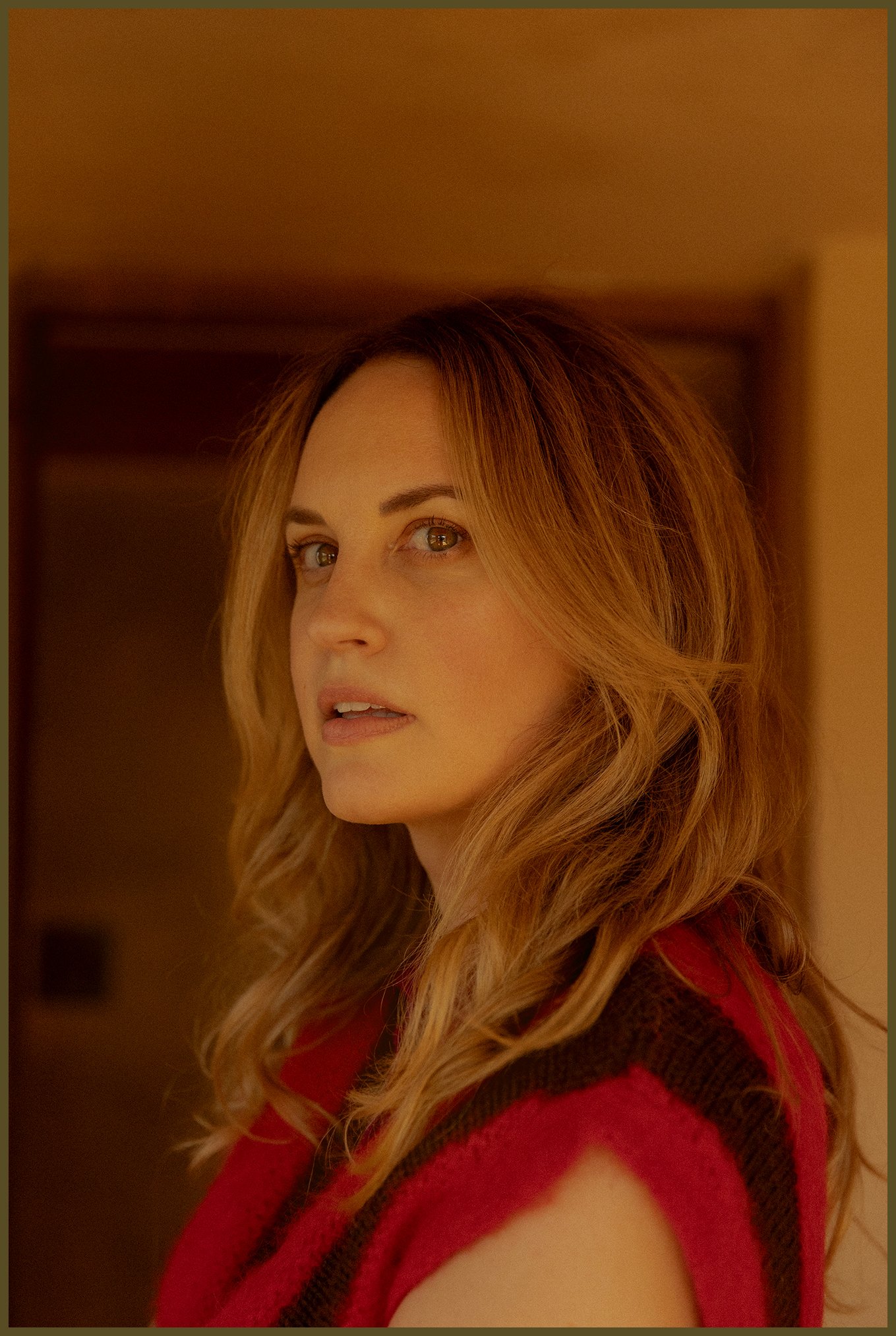
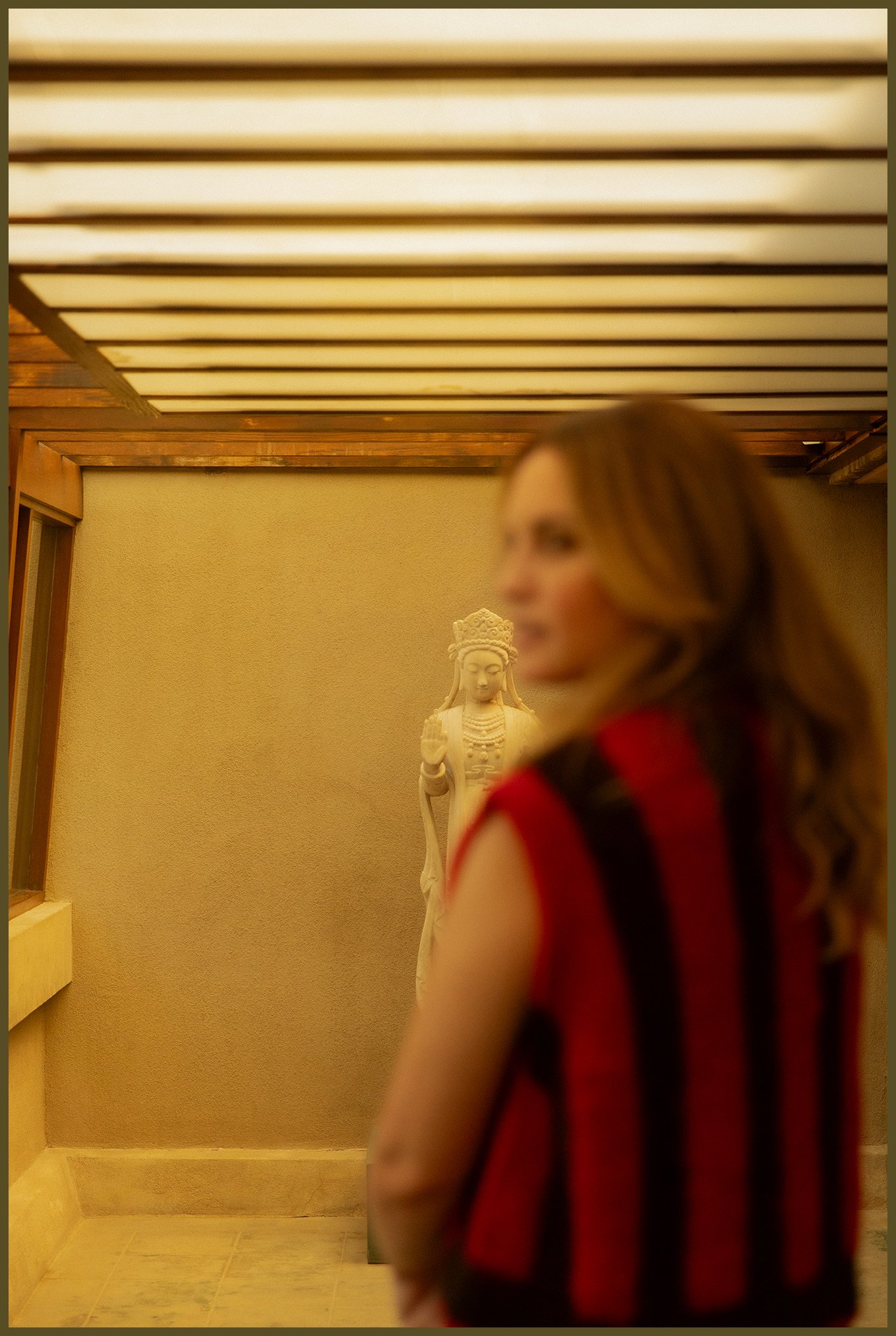
You can follow Elise on Instagram here. She also writes on Substack here.
Shop Duende items here.
Photos by: Chelsea J. O’Leary
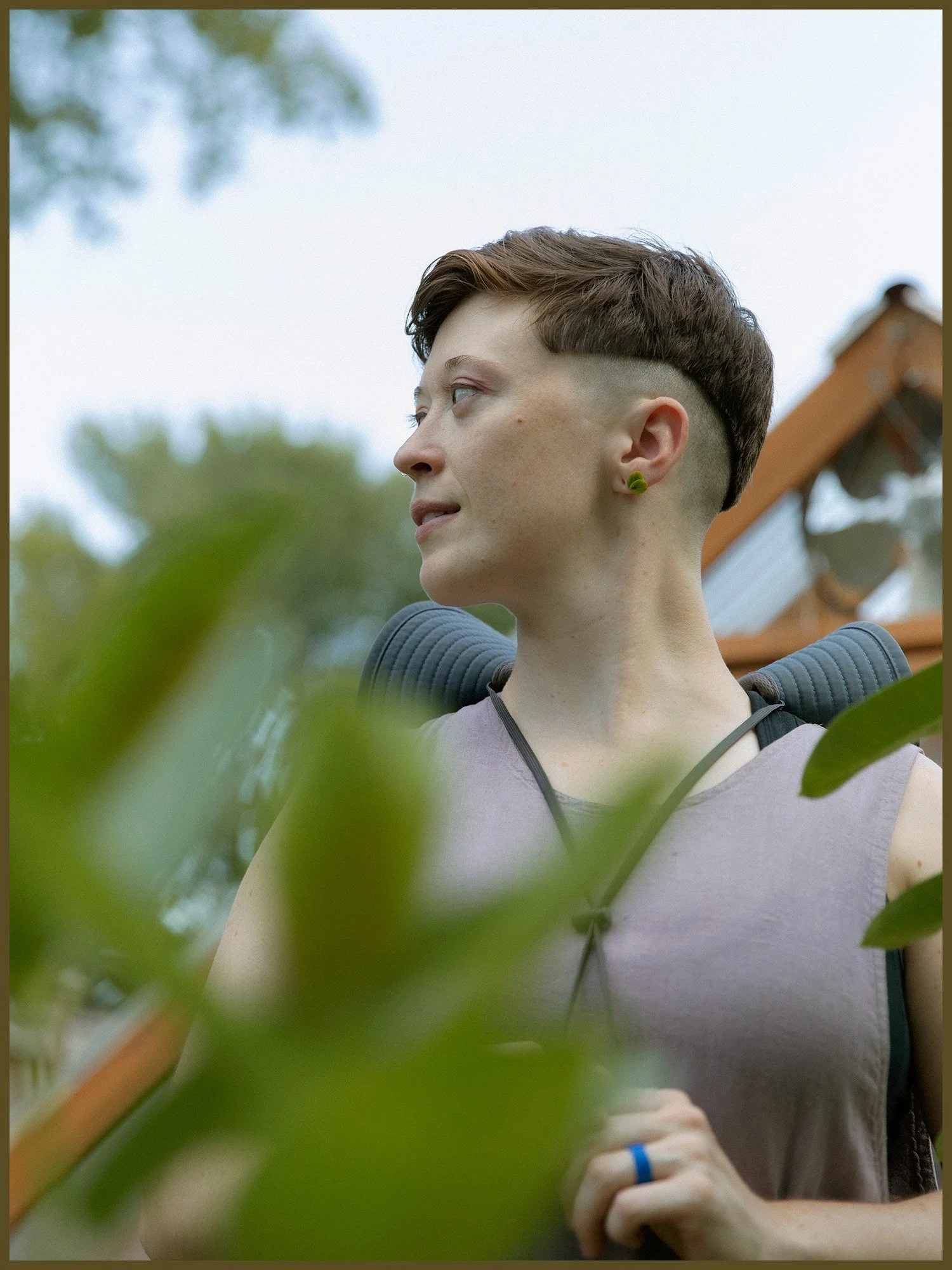
In Dialogue: Ash Adkins
Ash encourages me to be more exploratory and respectful of the land beneath me. Any time I run or hike through the woods, her voice gently echoes the words, “Leave no trace.”
In Dialogue: Ash adkins
I am filled with adoration as I share our next In Dialogue feature with you: Ash Adkins. Today, I am over the moon to share the mind and heart of someone who has a familiar presence at Wiley Canning Company. Ash has taught Introduction to Home Gardening to the Wiley community, both virtually and in her magical home garden.
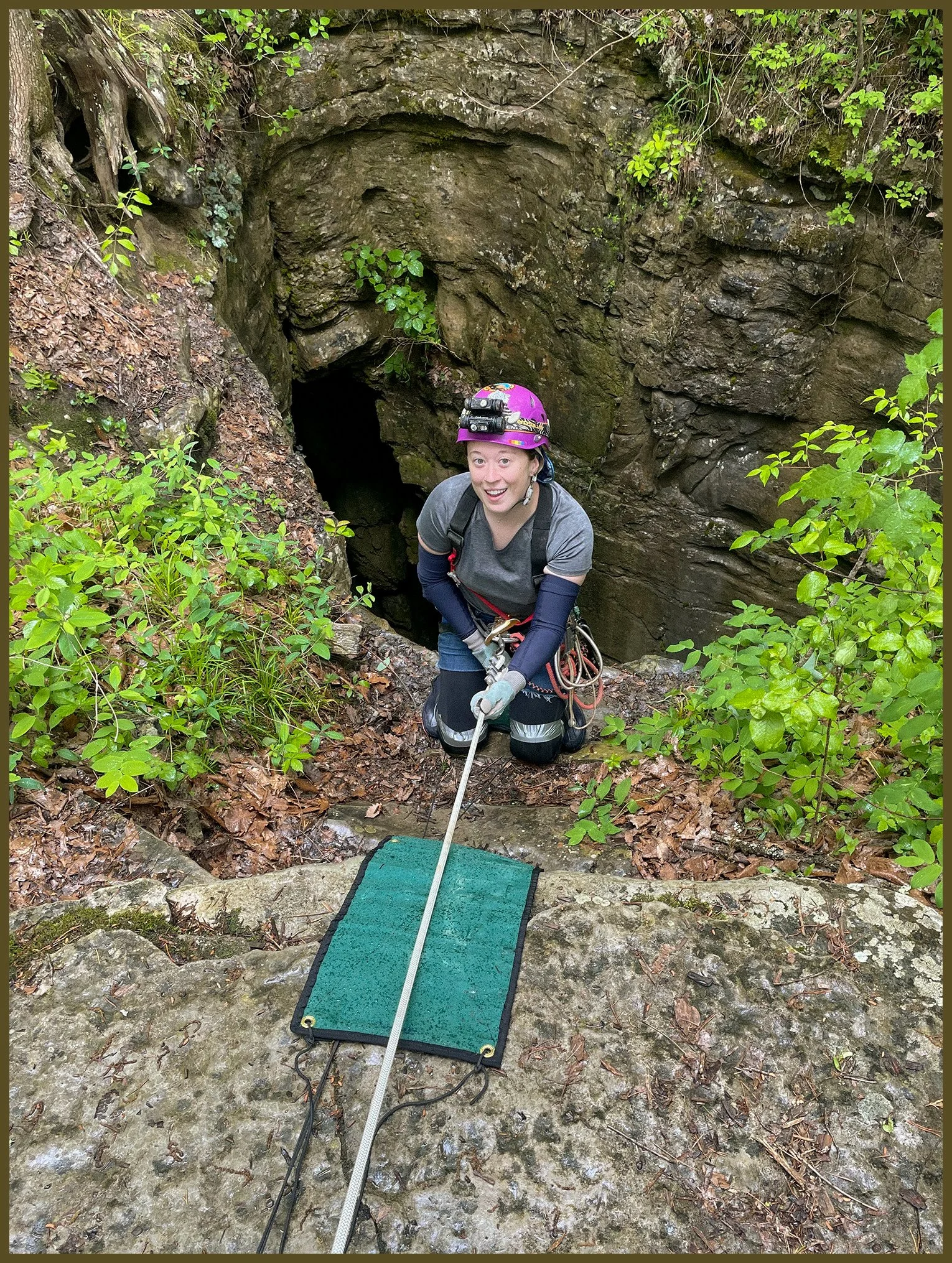
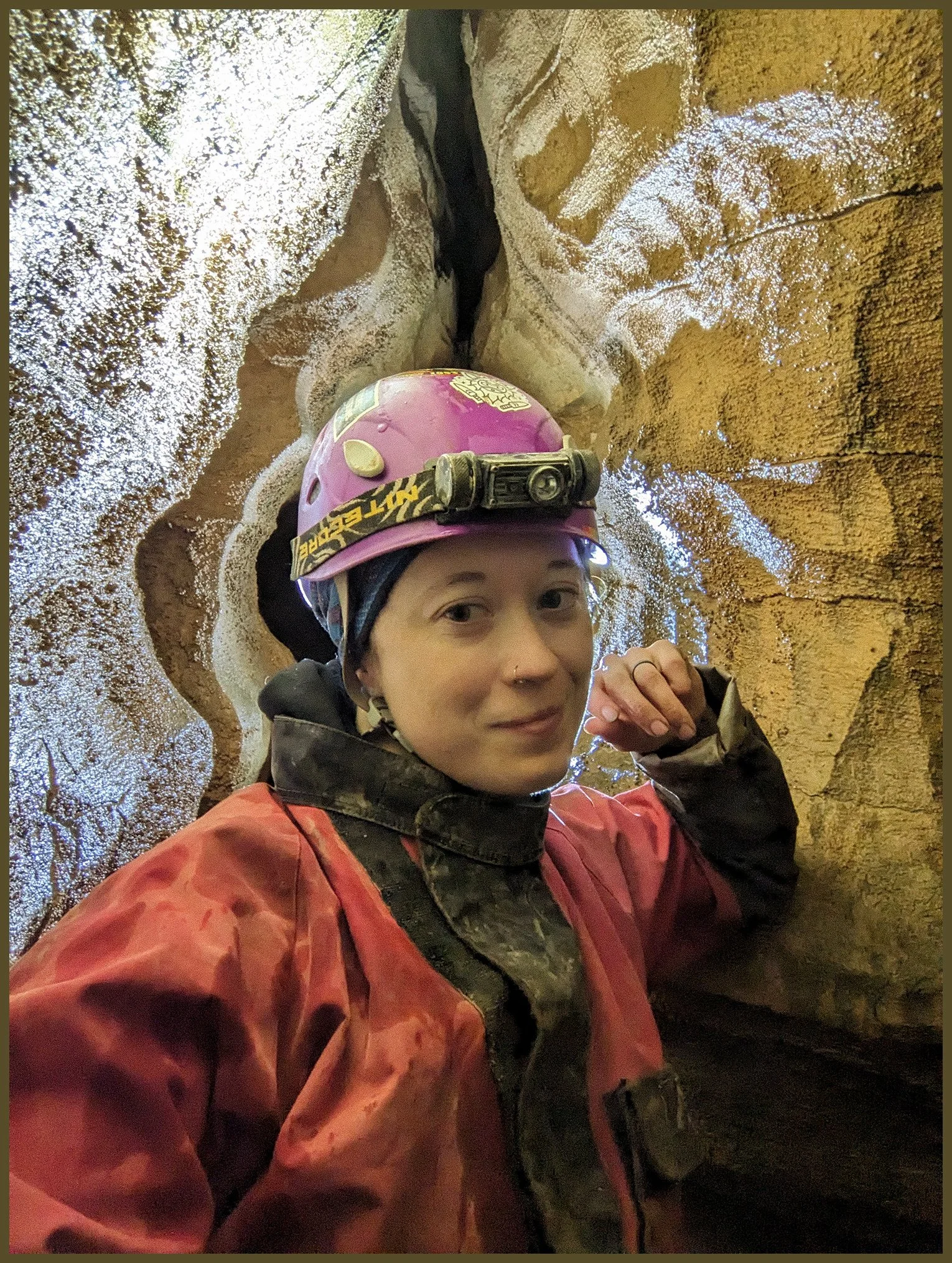
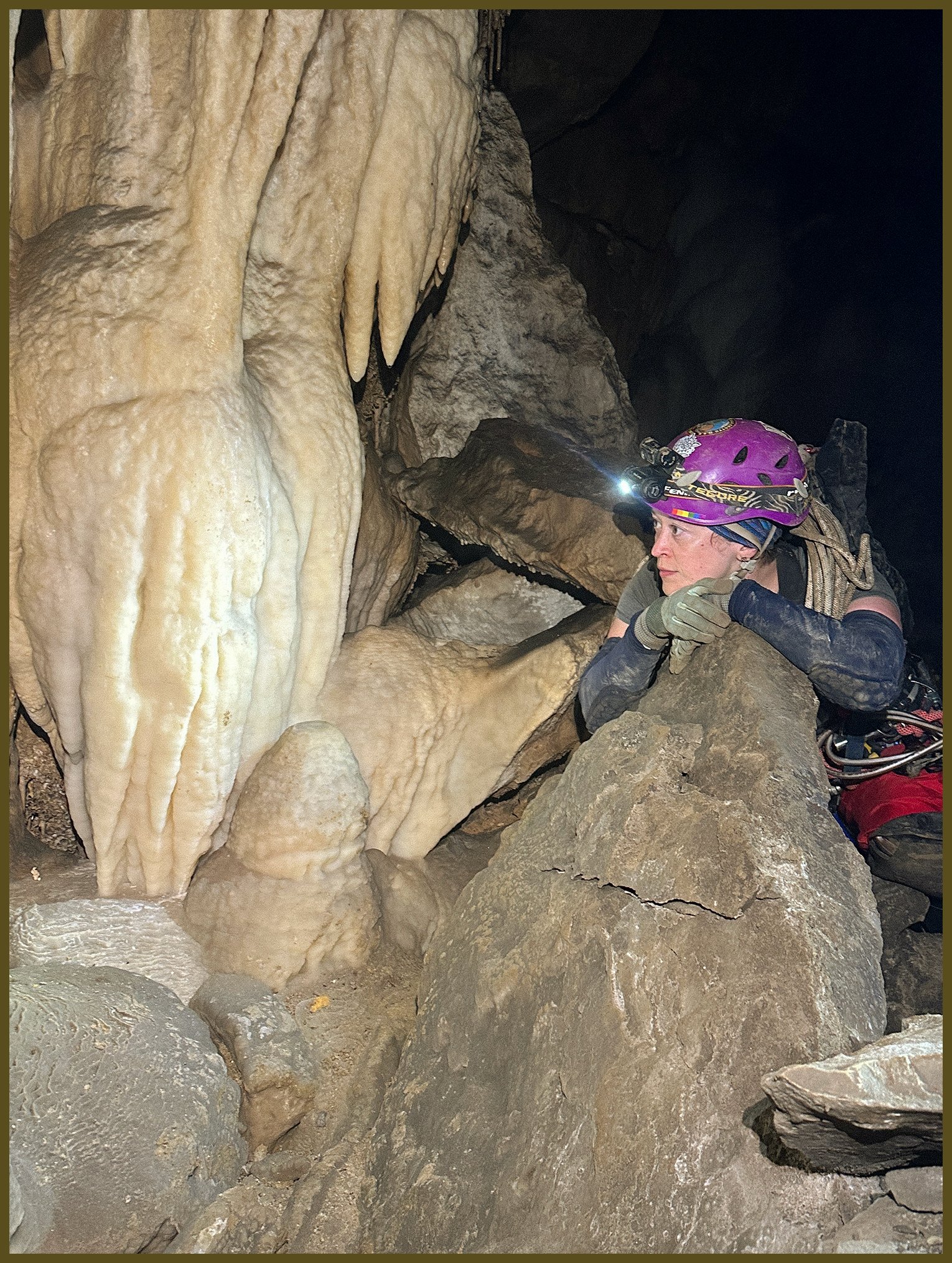
Ash is an attentive gardener, talented sewer, and adventurous caver. Yes…caver! In fact, she recently met Rick Stanton, the heroic diver who led the Tham Luang cave rescue.
Ash encourages me to be more exploratory and respectful of the land beneath me. Any time I run or hike through the woods, her voice gently echoes the words, “Leave no trace.” She reminds us to leave our surroundings as we found them, if not better.
Below, Ash and I are in dialogue about gardening, sewing, caving, and the ways we nourish our minds.
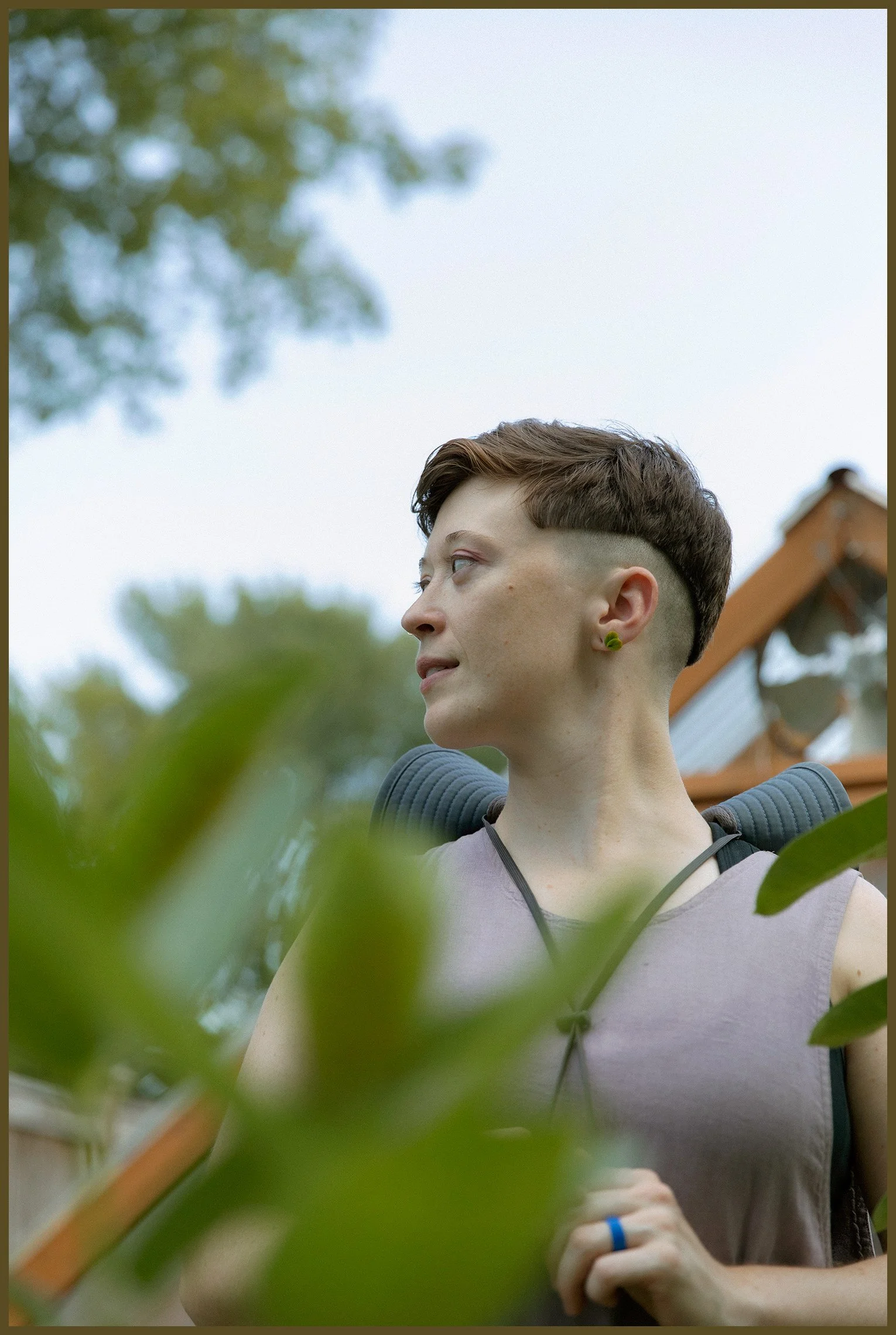
Chelsea: We, of course, met many years ago. In recent years, we’ve worked together through Wiley Canning Company. You’ve taught, now twice, a phenomenal Introduction to Gardening workshop for us. Not only do I believe you are a gifted teacher, but many others also believe you are. If someone knows you, it seems they know you are a fantastic communicator, guide, and giver of knowledge. This is especially true of your gardening, caving, and sewing knowledge. Why do you believe this is true? In other words, how do you approach teaching in way that has created a unanimous admiration and appreciation for your skill?
Ash: We did indeed meet many years ago, and gosh, what facets we have both developed as humans since then! I have always appreciated open-source learning and spent a lot of time at my local library as a young person. I also remember being able to dive into sewing as a new hobby in my college years, all thanks to a kind of MySpace of internet sewing communities. Being able to explore who I was through that community of resources and encouragement really shaped me and instilled an admiration for both sharing information and being able to access it as a learner. It also made me incredibly grateful to be born in the age of the internet! Overall, I think continuously revisiting the idea that I will always be a student of some kind is both humbling and comforting. Plus, it will keep me connected to my communities as I grow as a person.
Chelsea: To you, what do gardening, caving, and sewing have in common? How does each fill your cup in a unique way?
Ash: Each of these things is very tactile, and they all teach me an immense amount about myself. For example, they have taught me to judge myself less and really enjoy the ways I choose to spend my free time. If I engage in an activity for a period of time and begin to feel burnt out, I can pause on it and come back another day. Crafts will still exist. The perennials will come back, and new seeds will sprout on their own. Caves have been here for eons and are not going anywhere.
As for how they fill my cup, each has a different special power. With caving, I can physically push myself in demanding environments and let go of the anxiety and stress of everyday life. Time doesn't really matter down there. With sewing, I can take a break from being a consumer and simply enjoy making a thing, regardless of what it is. As for gardening, I love simply watching lifecycles play out. Seeing how a plant starts from those first little cotyledon leaves to when it bolts new seeds is a form of slow TV for me. Watching the drama of insects is surprisingly entertaining to me, haha.
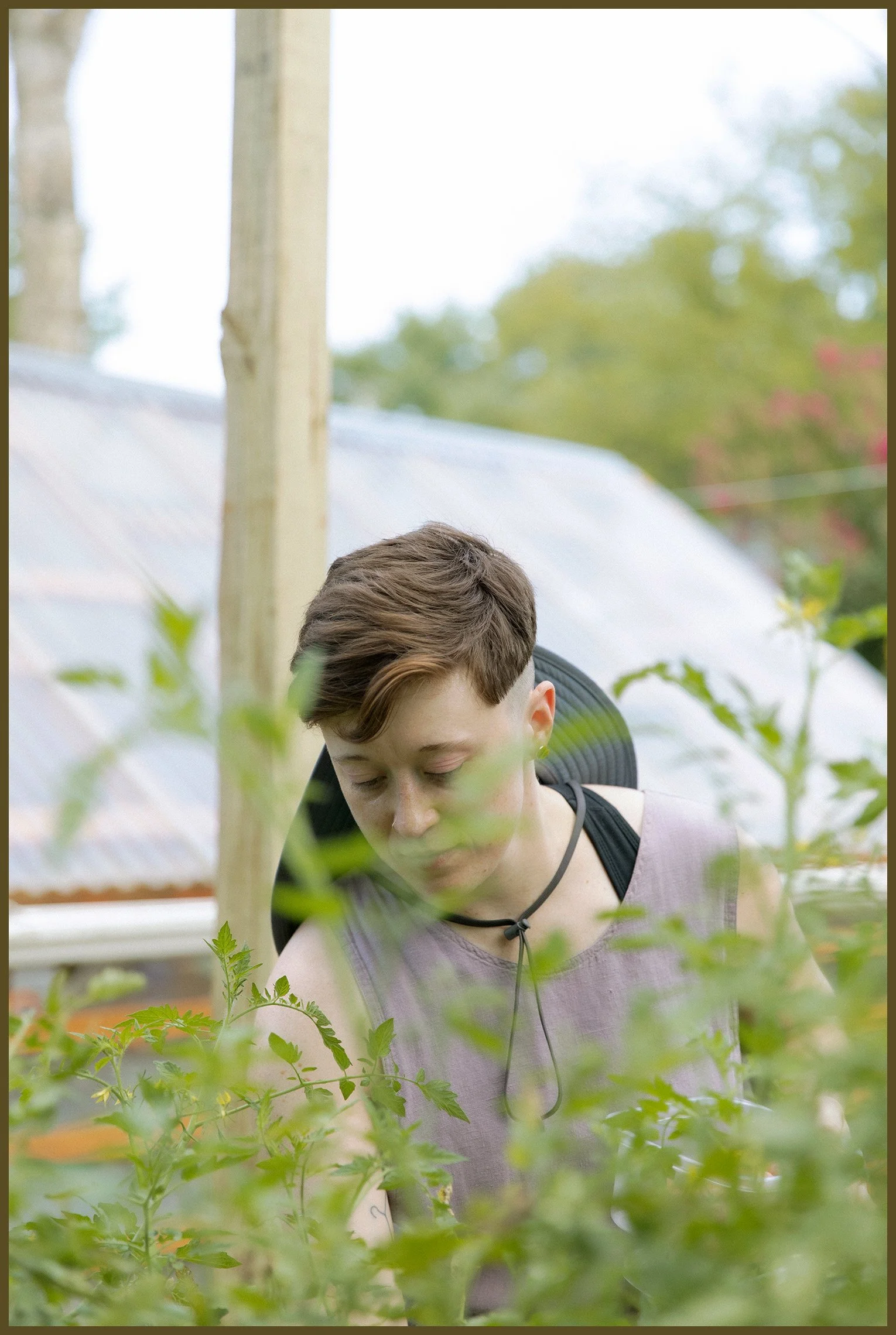
Chelsea: Gardening, in many ways, can be a form of self-expression. In what ways does your garden represent you? In other words, what makes your garden feel like Ash? Or, what might you change or add to make it feel more like Ash?
Ash: My garden represents me in that it is made up of a variety of native pollinator species, which are so well adapted to our area that I don't need to do much to maintain it. Honestly, I feel more like a facilitator than a gardener and am so grateful for the space to let things grow. To make that space even more me, I think adding more water features to encourage frogs to live in my garden would be so much fun!
Chelsea: What makes someone or something admirable to you? In other words, what quality in someone or something feels valuable or uplifting to you?
Ash: People who keep curiosity at the forefront of what they do are captivating to me. I find it refreshing when I am able to see my friends or someone I am just getting to know spark up when they talk about things they are passionate about. Curiosity also feels uplifting, especially in the polarizing time that we are currently living in and gives me hope for the future.
Chelsea: On a similar note, what is one trait one might possess that allows you to feel closer to yourself in their presence?
Ash: I have noticed that I feel that I am able to be my true self around individuals who are active listeners. Being able to deeply connect with someone in a conversation and trusting that they can and will give me their full attention to commiserate or help problem solve when the time comes helps me show up fully as a friend.
Chelsea: What is one food-related habit, priority, or value rooted in your past, with family or close friends, that you wish to carry forward into the future? If there isn’t one, what might you start?
Ash: I love making hot sauce with my partner Aaron and really enjoy the method we have organically taken on as a couple. I grow the peppers, and he makes the sauce. We plan on doing it for many years to come!
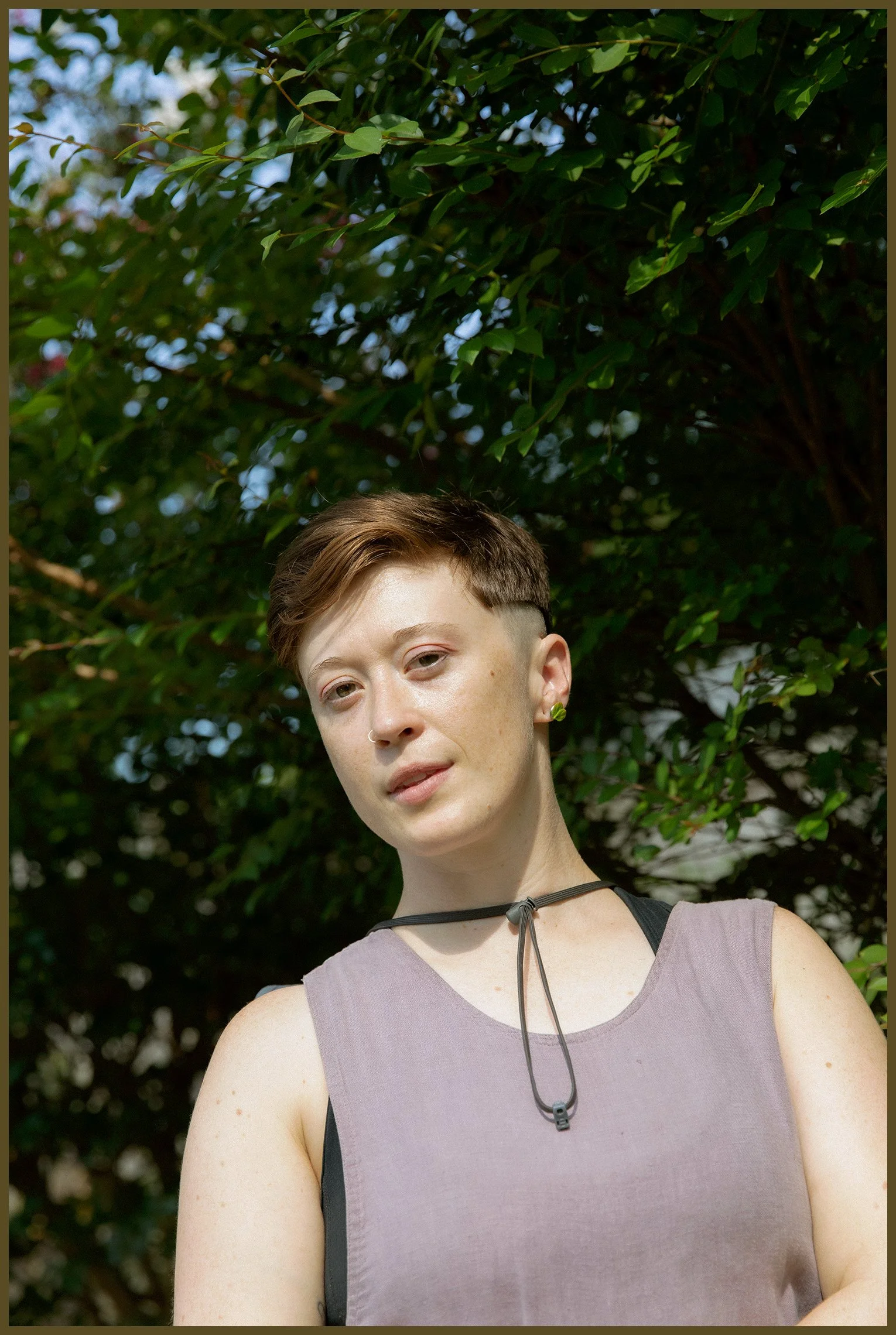
You can follow Ash on Instagram here.
Photos by: Chelsea J. O’Leary and Ash Adkins
In Dialogue: Carissa Shapiro
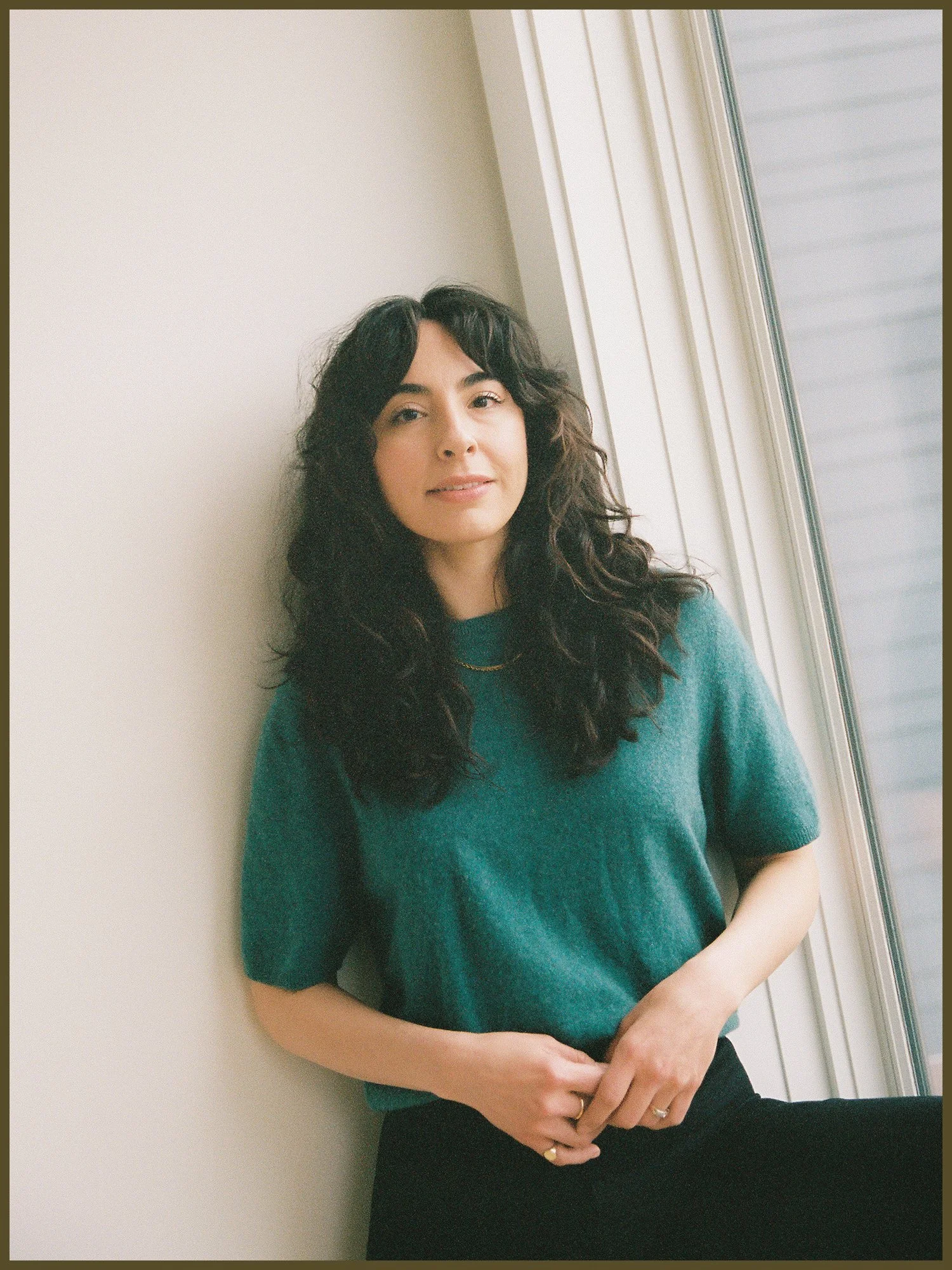
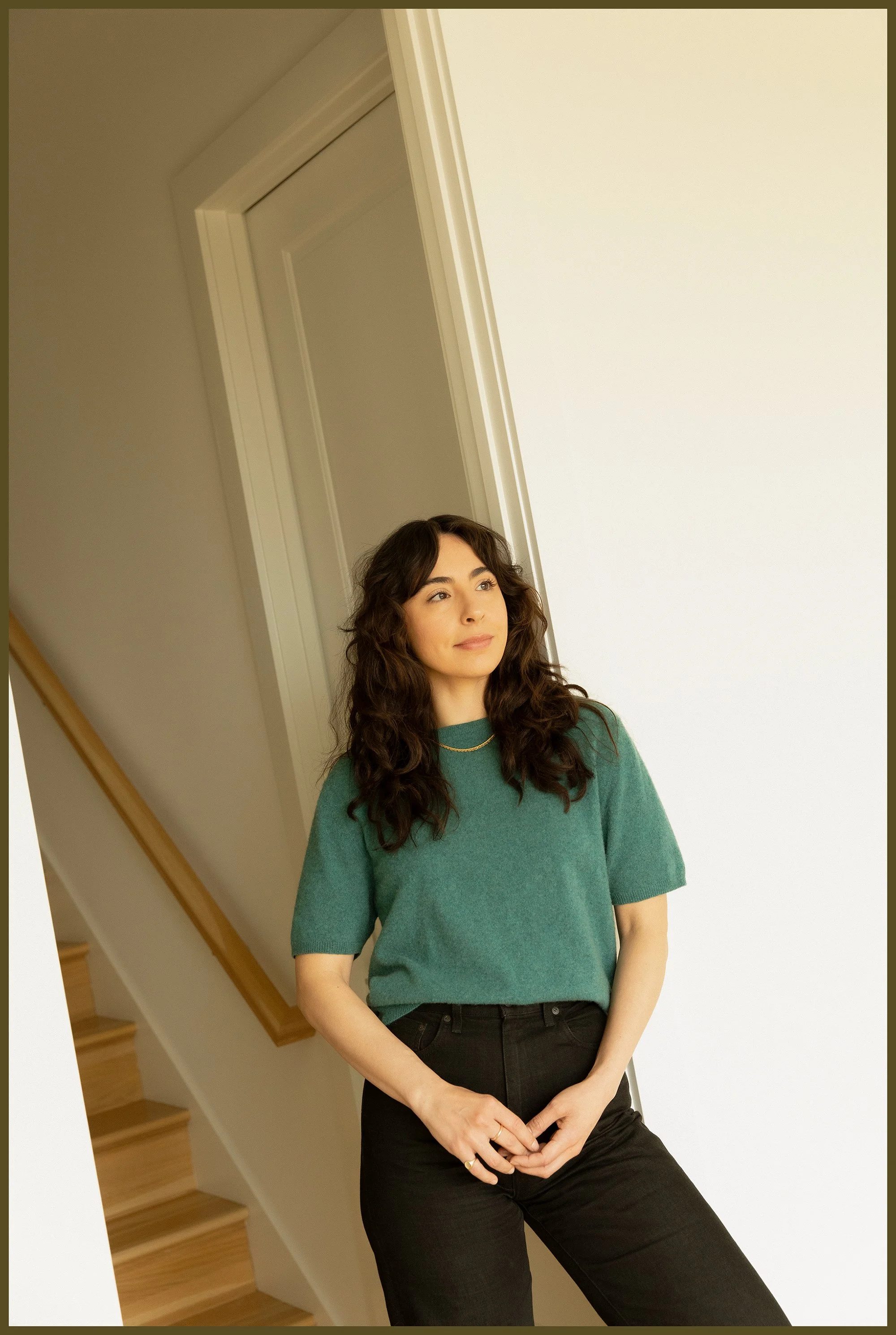
Big news! Wiley Canning Company has grown by one! Meet Carissa Shapiro, an extraordinary woman who is my new virtual assistant.
In Dialogue: Carissa Shapiro
Big news! Wiley Canning Company has grown by one!
Meet Carissa Shapiro, an extraordinary woman who is my new virtual assistant.
It is with joy, gratitude, and ease that I introduce you to Carissa through our In Dialogue series. Carissa is a Nashville-based virtual assistant who supports several business owners. She joined Wiley Canning Company in January, and already, she has assisted me with the release of The Wiley Canning Company Cookbook, event planning, and website development. Carissa fully developed The Wiley Kitchen, helped organize our upcoming event at June, and assisted me in shipping each and every pre-order. You will continue to see her mind and heart come alive through Wiley.
I have known Carissa for nearly six years. Her presence alone immediately centers and softens me. She is a vault of wisdom and experience, and she very organically helps strengthen others’ strengths through her attunement, empathy, and goal-oriented mind. When I think Carissa, I think of a flowing current that keeps my river oxygenated and healthy.
Below, Carissa and I are in dialogue about career evolution, routine, family, and more.
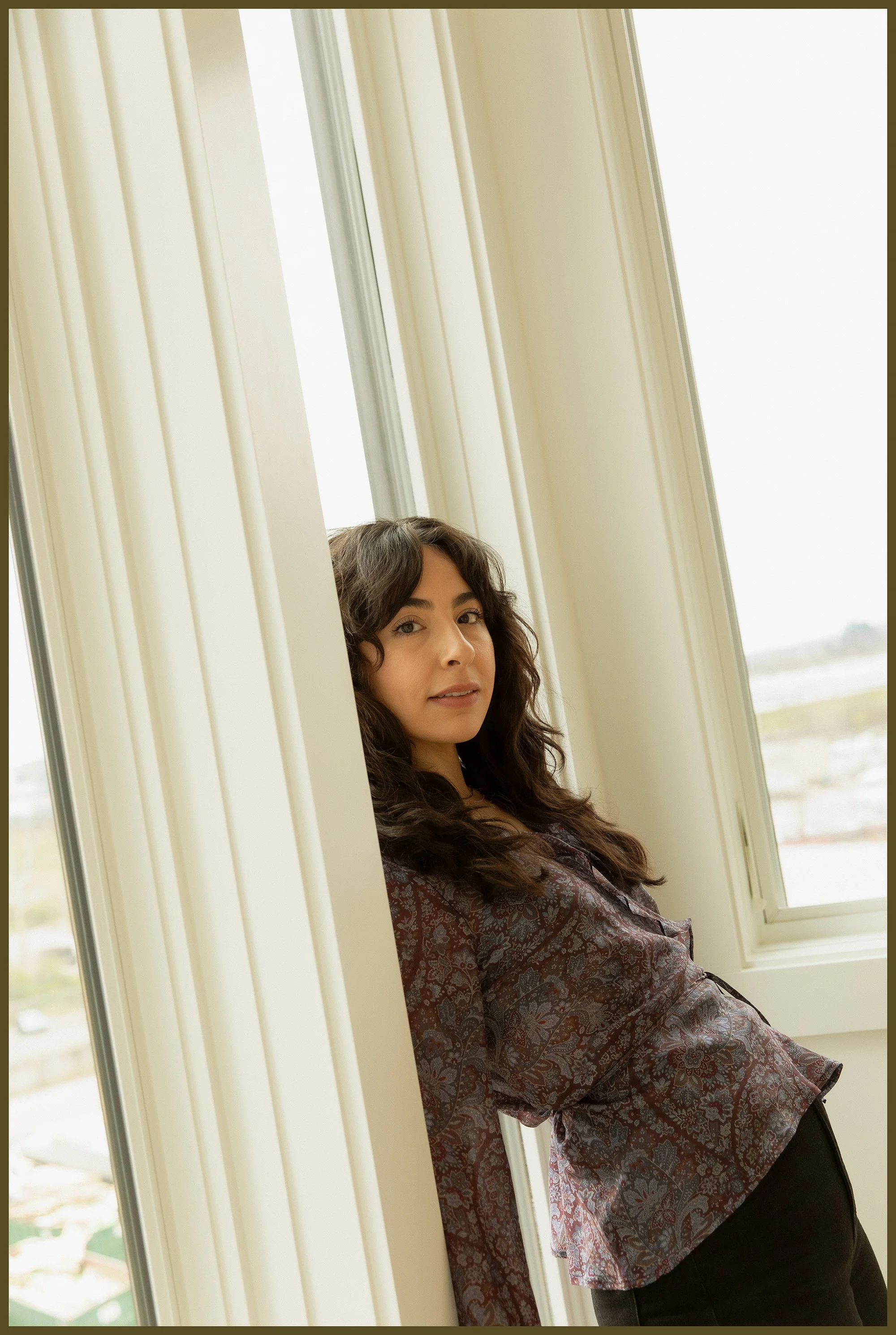
Chelsea: We had the absolute pleasure of working together at Elizabeth Suzann from 2017-2020. Elizabeth Suzann, like many independently-operated businesses, was affected by COVID-19, ultimately downsizing and presenting us both with an opportunity to begin new jobs or our own businesses. I took this as an opportunity to dive fully into Wiley Canning Company, and you took this opportunity to create a thriving career as an independent virtual assistant. What is one facet you love about operating as an independent virtual assistant? What is one facet you miss about being a part of a larger team, like the team at Elizabeth Suzann? Are you able to creatively incorporate the facets you miss into this new season of your career and life?
Carissa: I am forever grateful for my years with the Elizabeth Suzann team. It was a time that brought much fulfillment and growth for me on a personal and occupational level. Those years were the bridge to my work now.
While the transition had its many heartbreaks and valleys, as many of us experienced during the time, it ultimately led me to start my own business. Hindsight is everything, isn't it?
I absolutely love what I do. I love supporting passionate, creative people who build their businesses with the dream of touching other people's lives. In my past work environments, my primary goal was to support a single person as their Executive Assistant. Now, my work provides me the capacity to support many people which brings me that much more joy and fulfillment. There are so many more reasons why I love working as an independent virtual assistant, but that one is the highlight for sure.
While I get to work with inspiring people in a virtual space (and sometimes in person!) I still dream of our days at ES when our team came together to work on a project. Our launches, photoshoots, and just about anything else we worked on brought so much satisfaction through our collaboration. Team collaboration is where we learn from each other, share ideas, ask questions, and ultimately grow. I miss this the most from our time at ES. I’m thankful I can create a smaller sense of this feeling when I work one-on-one with my clients.
Chelsea: Anyone who knows you will agree you are one of the most peaceful, grounding humans in our orbit. From where do you derive a consistent sense of peace? What practices sustain your calm, kind nature?
Carissa: That is so kind of you to say. Thank you. I believe that any sense of peace or “groundedness” I outwardly exude is equal to the highs and lows I often feel internally. It’s very natural for me to worry, stress, and feel unsure of things on any particular day. Therefore, I rely heavily on my anchors to help me return to an internal sense of peace and assuredness. Anyone who knows me knows that I practice hot yoga regularly. It has become a practice that is essential for my well-being. When I’m on my yoga mat, in a hot 100-degree room, all my concerns float away because I’m hyper focused on my breath and movement. It’s my safe space to practice patience, self-trust, positive self-talk, non-judgement, and contentment. Repeatedly practicing these essential pillars brings me to equilibrium, or what some would call my calm nature.
I also greatly value evenings at home with my family—my husband and our dog named Disco. Our connection brings me so much comfort, which then makes me feel grounded and balanced. I will often plan social gatherings outside of a Friday night because of how much I value our Friday evening routine together. Our dog gives me a sense of deep internal peace through her love and affection. My relationship with her equalizes my fears and my worries. She’s my unofficial support animal.
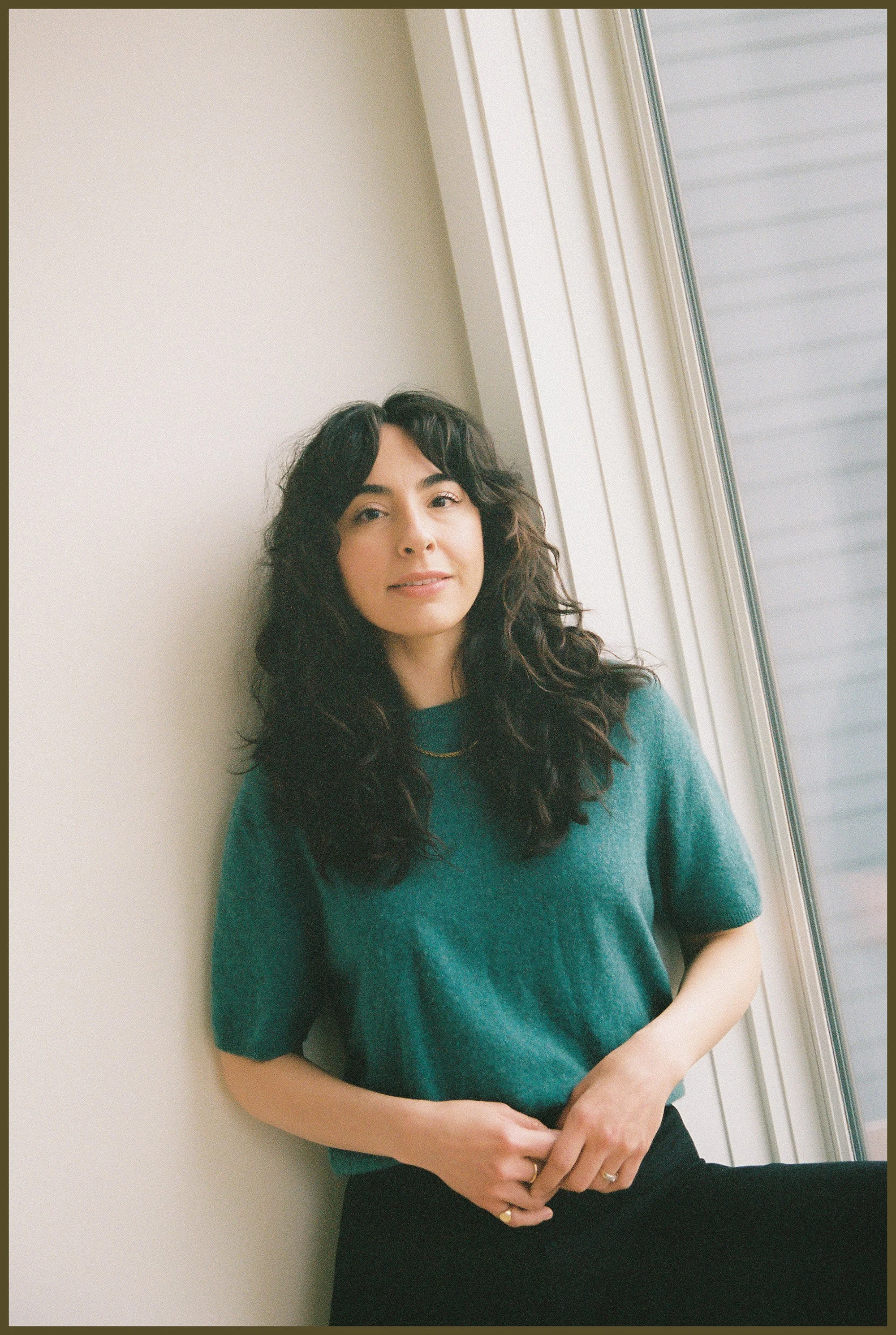
Chelsea: Recently, you made and shared homemade tortillas with me. It was such a special treat, one full of meaning and story. What prompted you to make homemade tortillas? What prompted you to then share them with loved ones?
Carissa: Oh, there is so much I could say about a simple homemade tortilla. I had never made flour tortillas until we were all stuck at home during quarantine in 2020. Like so many, I spent my newfound time in the kitchen experimenting with new recipes. During that time, I felt drawn to making my own flour tortillas for the first time. I guess I should say, making them by myself for the first time. One of my clearest childhood memories is of myself standing on a stool at the kitchen counter next to my grandma while she showed me how to make tortillas. She used to make them all the time for our family. She showed me how to roll the dough, cook them on the pan, and the joy of eating a freshly-cooked, warm tortilla. During quarantine, I explored cooking various meals from my Mexican heritage. I asked my mom and grandma what they ate while growing up and what part traditional Mexican food played in their lives. Their answers are a story for another time, but it gave me a lot to meditate on while I rolled out dough balls. When I make tortillas, I love sharing them with others because it allows me to extend the same care and love that my grandma shared, and continues to share, with me.
Chelsea: When you think of succeeding in your career, who do you envision as the recipient of this success? In other words, who, or what, drives your idea of success, as subjective as it might be?
Carissa: This is a great question and one that I will be pondering for a while. I think there are many people that fuel my pursuit of growth (or what you can call success).
Most obviously, my husband and I benefit from my growth. My success leads to our success. Our collective success leads us to live a life rich in love, laughter, exploration, community, self-enrichment, etc.
My family and my ancestors fuel my desire for growth as well. As a second-generation Mexican American, I know how hard, specifically the women, in my family had to work to get their families (i.e. me) to where I am today. I recognize and am so grateful for the privileges I have that they did not. I see them being recipients of my success because it proves their hard work led to the greater success of their family. I also must mention my girlfriends here. My girlfriends are some of the most inspiring women in my life. Their success is my success. My success is their success. We each benefit from each other because we learn, grow, share, and inspire each other to move onwards in our careers in our most authentic way. We are holding each other up and cheering each other on as we each walk through our lives (occupational or not) together.
Perhaps most importantly, my idea of growth and success is fueled by my desire to know myself. The better I know myself, and can confidently stand in who I am, the better person/friend/partner/daughter/sister I can be.
Chelsea: As a virtual assistant, you create routine and increase productivity for others. How important is routine to you? What is true about your life, your day-to-day, when you feel a personal sense of productivity?
Carissa: This may sound surprising, but routine is not the thing I want to pursue most. While I love creating routines and structure for others, I actually value spontaneity and variety in my personal life more. In other words, I really like to change things up. Here is why: I believe that routine comes very naturally to humans. We naturally gravitate towards creating rhythm in our lives. This of course will look different depending on the person and season of life they are in. Without thinking, I will spend my Monday through Friday going through the same motions in a very routine manner. Where is the magic? Where are we infusing joy, fun, and adventure? Spontaneity is so valuable to me because it brings in the spice of life. It’s the thing that pulls me out of my routine that makes me appreciate both respectively. I also must add that I’m in a position personally and professionally where I’m fortunate to allow for as much or as little routine as I’d like.
Chelsea: What is one food-related habit, priority, or value rooted in your past, with family or close friends, that you wish to carry forward into the future? If there isn’t one, what might you start?
Carissa: While growing up, my family ate dinner at the table together every night. My mom cooked most of our dinners. Although, my dad is a great chef as well. I would help set the table, and we’d eat together without distractions. When I think about this now, I feel so grateful. I’m grateful to my mom for cooking delicious homemade meals for us. I’m grateful to my parents for valuing this brief time where connection, along with great food, was prioritized. Our dinners were never rushed, and we’d often linger after finishing our meal to continue talking.
Sitting at the dining table with my husband, and any guests we have, feels like a sacred place to me now. While this may not be a nightly occurrence, it feels really special when we can set our phones aside (off the table, please!) and connect over delicious food. I will usually light candles while he puts on a favorite jazz record. Evenings like this leave me feeling an increased tenderness toward myself, our relationship, and our home.
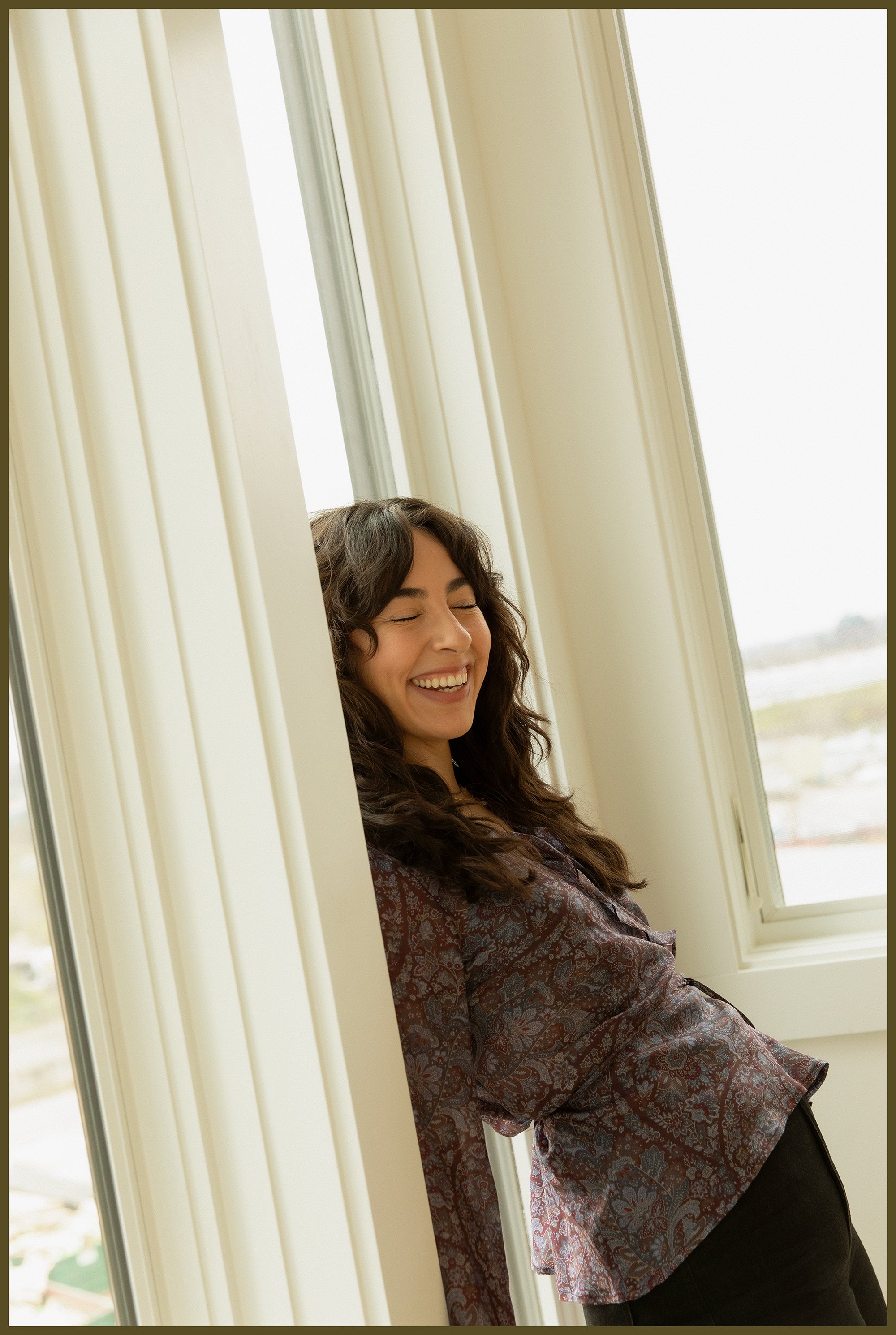
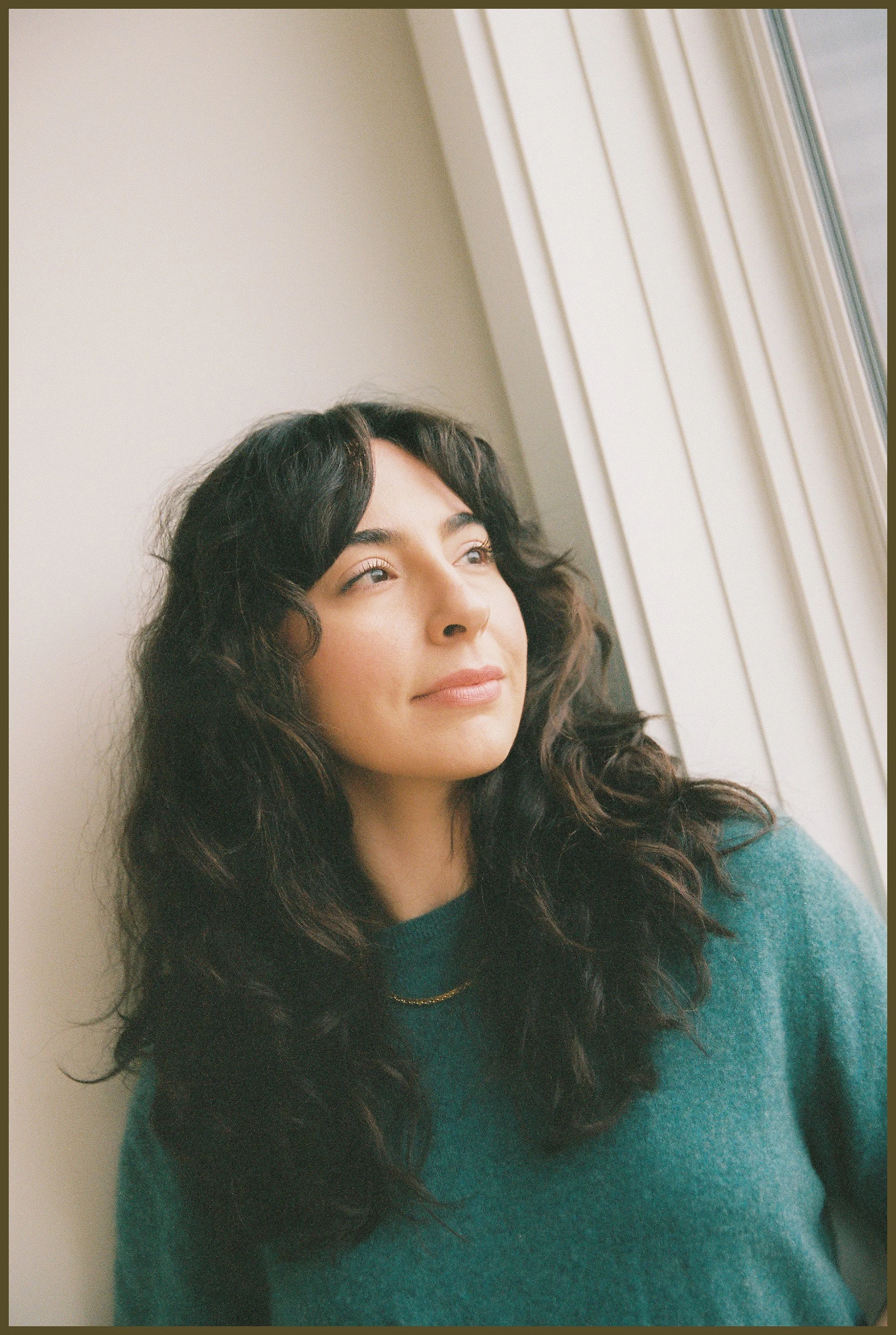
You can reach out to Carissa by emailing her here.
Photos by: Chelsea J. O’Leary
In Dialogue: Zachary Gray
Friendship, to me, is the fourth leg of a chair. It is the fresh egg in a chocolate cake. It is the lush towel packed in my beach bag.
In Dialogue: Zachary Gray
What does friendship mean to you?
What does a friend mean to you?
How much value do you place on friendships?
Does the value of a healthy friendship equal the value of a healthy partnership? Good health? Financial security? A career that is intellectually and creatively satisfying?
Friendship, to me, is the fourth leg of a steady chair. It is the fresh egg in a chocolate cake. It is the lush towel packed inside my beach bag. It is absolutely necessary to the wholeness of my life, and because of this, I often ask myself, “Why? What does a friend mean to me?”
A friend means I have a safe home outside of my home. It means I have an extra set of eyes and ears that see and hear the brutally honest truth of my heart. It means I can babble and vent and embarrass myself knowing my innate goodness will be seen and valued regardless. It means I will be course corrected if I have ventured off my path and haven’t yet noticed myself. I place tremendous value on this. A healthy friendship is as important as a healthy partnership. Good health. Financial security. A career that is intellectually and creatively satisfying. It is that good. It is that unique. It is that integral to the wholeness of my life.
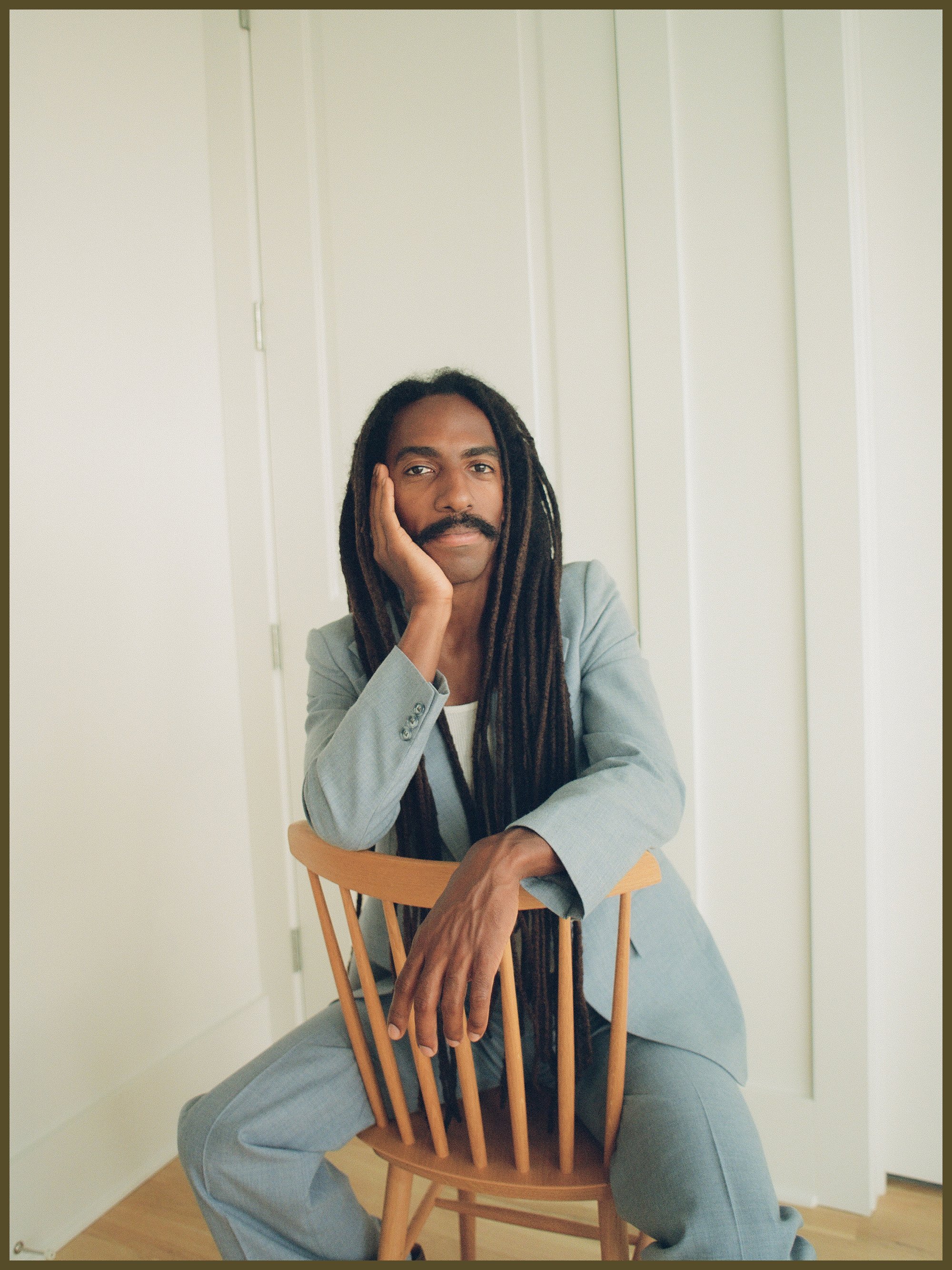
Zachary Gray is a close friend of mine—one who listens more than he speaks, one who gives me honest feedback about the work I create, and one who reminds me that my husband’s love for college football is completely normal and healthy.
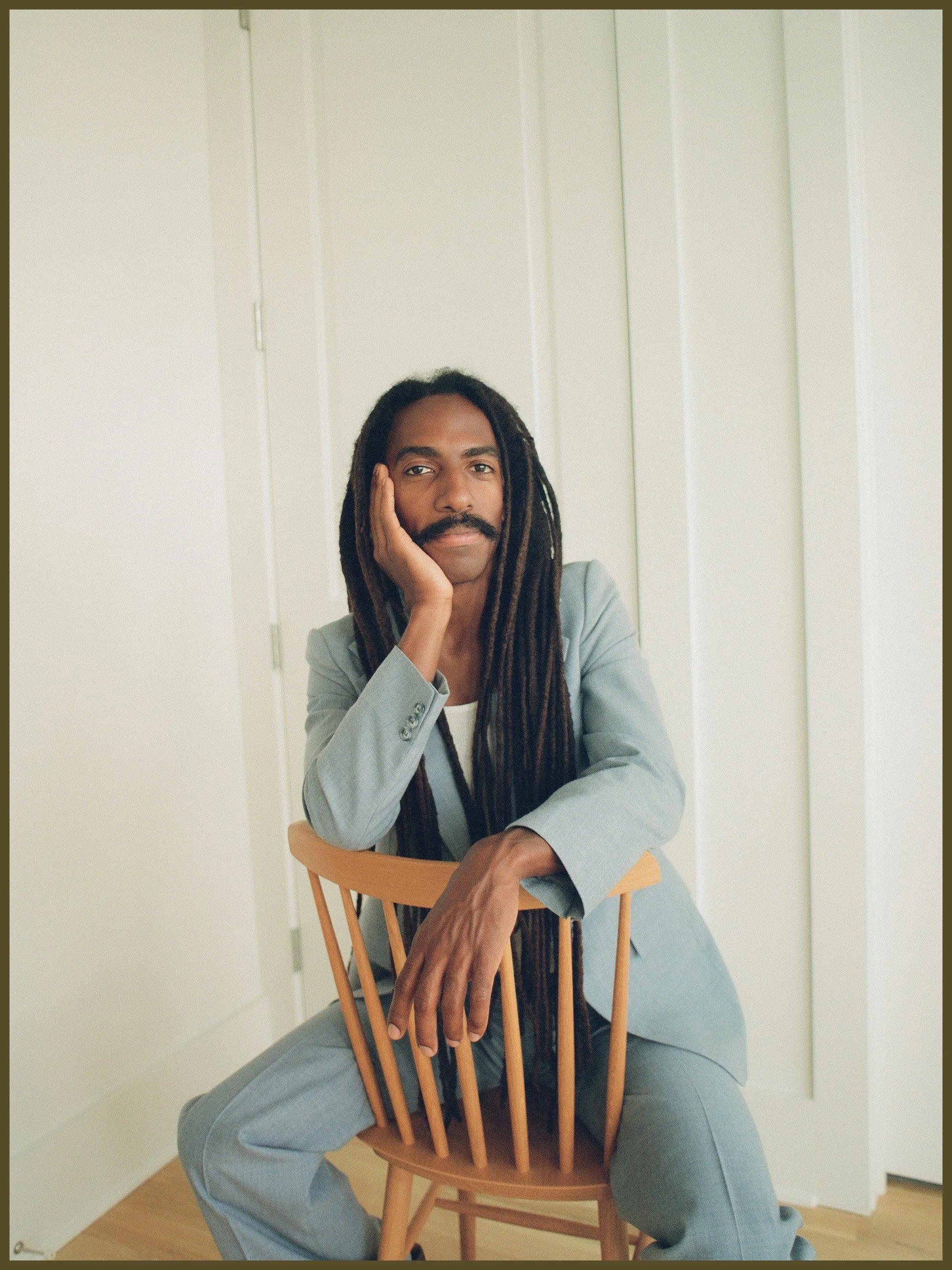
Zachary is also a muse and mentor. We first met through Elizabeth Suzann Studio. I helped plan our product and editorial photoshoots, and Zachary captured every product and editorial photo. He did so while remaining calm, consistent, and so very kind. Since we met, we have built a friendship that has brought growth, honesty, joy, and generous listening to my life. When I faced my most insecure moments while writing The Wiley Canning Company Cookbook, I went to Zachary for feedback knowing he would tell me the truth, knowing he wished the absolute best for me. This level of trust and respect is a level I covet. I ultimately made several changes to my book after speaking with Zachary.
Zachary is a Los Angeles-based photographer. His clients include Elizabeth Suzann Studio, Imogene and Willie, Reformation, and Paramore. Zachary also photographed my portraits from The Wiley Canning Company Cookbook, seen here.
Below, Zachary and I are in dialogue about friendship, humanity, photography, family, and more.
Chelsea: When we have the opportunity to visit with each other, I always leave feeling listened to. As a friend and fellow artist, you make me feel as though my ideas and experiences uniquely matter. If someone were to spend two to three hours with you—a dinner, a long walk, an easy-going photoshoot—how do you hope they feel after leaving? In other words, how do you hope people feel in your presence?
Zachary: Overall, I hope people feel comfortable in my presence and that they can trust me. I'd rather listen than talk any day.
Chelsea: Tiana Gidley, a dear friend and past In Dialogue interviewee, and I recently discussed this truth: we live in a culture of improvement, or betterment. We are often encouraged to improve our health, caliber of work, social skills, and more. If, for a moment, we immersed ourselves in a world of pure, unadulterated satisfaction and acceptance, one without a desire to improve any part of ourselves, what parts of yourself feel most valuable? In other words, what don’t you feel a need to improve? What makes you proud as is?
Zachary: I could list off many of my weaknesses! I'd say that no matter how uncomfortable I am in different social settings and especially at work, I have a layer underneath that somehow keeps me at peace with who I am, and I don't feel the need to put on an act or show. I think I can attribute that to becoming an adult in a place like Nashville where you can truly be yourself without judgement. I can't imagine how moving to Los Angeles without a proper foundation would have played out for me.
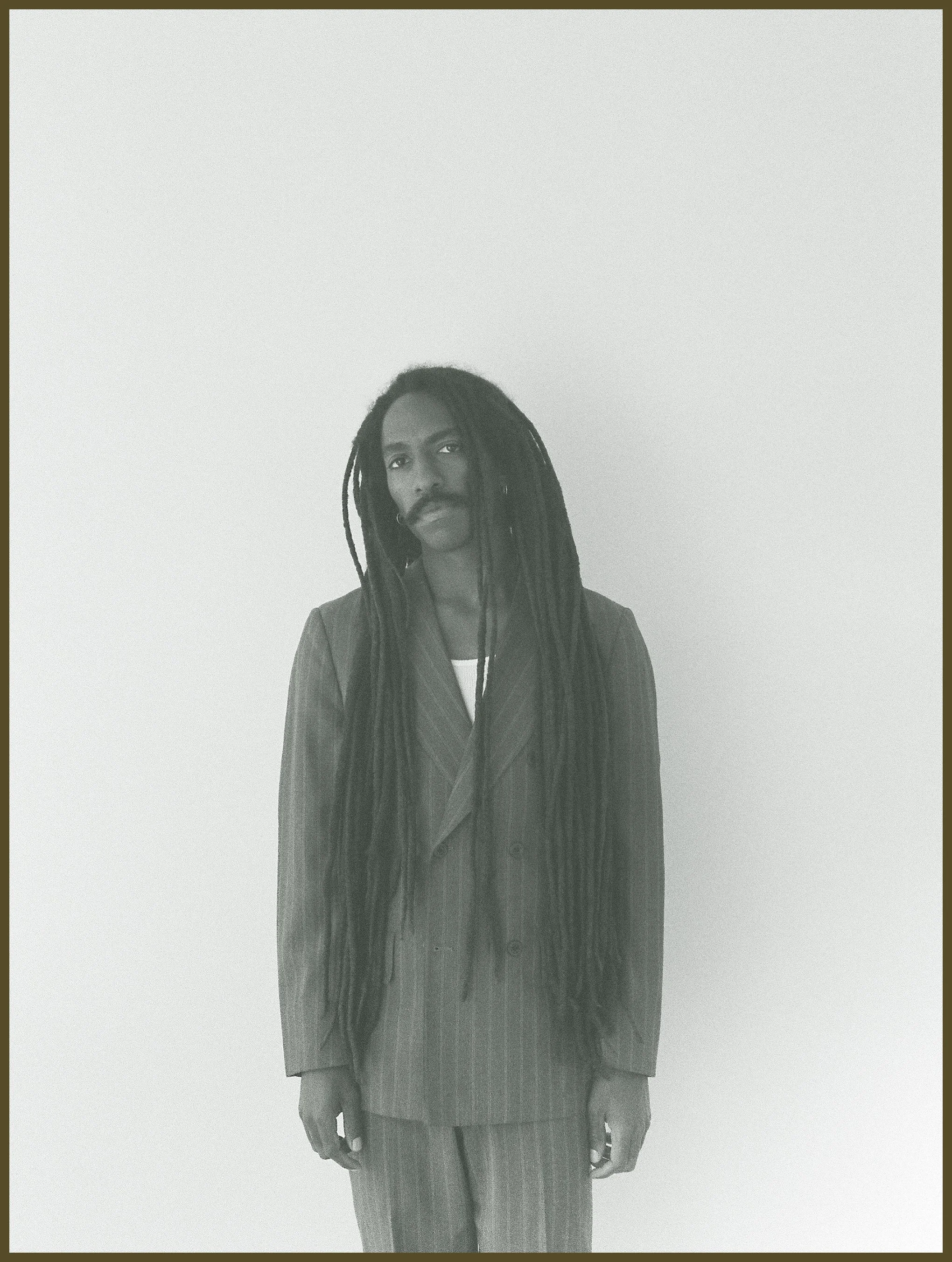
Chelsea: You’ve told me once before that you use a camera you received from your father. Does he create photographs himself nowadays? Is there any one feature of your own work that is inspired by your father? In a similar way, if someone were to inherit your camera one day, what is one feature you would be honored to see carried forward in your name? In other words, what is one feature that makes a photo a “Zachary Gray” photo? I always know a Zachary Gray photo when I see one. Why is this?
Zachary: He isn't out shooting as much as he used to, but he has work in the Jazz Museum and Nelson Atkins Museum in Kansas City. Whenever I'm home he has an old camera or print to show me that hasn't seen the light in 20–30 years. His work was very reminiscent of Guy Bourdin or Helmut Newton in that the same picture could exist on a gallery wall as fine art, and also in a catalog selling you a product. He has so many negatives sitting in storage that no one has ever seen. I think I must get some of that from him. I'm pretty sentimental and sometimes my work feels a little too personal to set free. So as much as I give him a hard time for not having a website, I get it. Still, my favorite camera to shoot with is his old Mamiya from the ’70s. It's fully mechanical and weighs 8 lbs, but there's something about the slowness and simplicity that maybe contributes to how I shoot when using it.
Chelsea: As an artist—specifically as a photographer—when have you felt most confident? In other words, is there a particular project, place, or team that has brought out the most confident version of you?
Zachary: I am forever indebted to Liz, Chelsea, Elise, and the entire Elizabeth Suzann team for believing in me when they really had no reason to. I didn't always know what I was doing, but their patience and trust gave me so much confidence that was vital for my growth as an artist. What started out as a client relationship has turned into many years of friendship that extends beyond photography or fashion.
Chelsea: Oppositely, as an artist, can you share with us a time when you have felt insecure, uncertain, or embarrassed? As someone who identifies as an artist, I have had to move through several instances of insecurity, uncertainty, and embarrassment. It has taken me years—several hours of introspection and dialogue—to have a healthy relationship with embarrassment, for example, and it requires encouraging self-talk often.
Zachary: Even after years of doing photography, I still have these moments. It's usually when I take on a job that's out of my realm. Luckily, there's always learning that comes from embarrassment and it usually doesn't happen twice.
Chelsea: What is one food-related habit, priority, or value rooted in your past, with family or close friends, that you wish to carry forward into the future? If there isn’t one, what might you start?
Zachary: My mom would wake up early to make breakfast for me and my brother every morning before school. Then, when we got home after school and practice, my great grandmother who lived with us would have dinner ready on the table. I grew up with three generations of women who made sure I was always fed, who showed their love by making sure I had everything I needed. Consistency is something I hope to carry with me when I have a family of my own. For now, I try to implement consistency with food in my day to day. I stick to making the same three to four meals and rotate them, much like it was growing up.
You can follow Zachary on Instagram here.
Photos by: Chelsea J. O’Leary
In Dialogue: Julia Sullivan
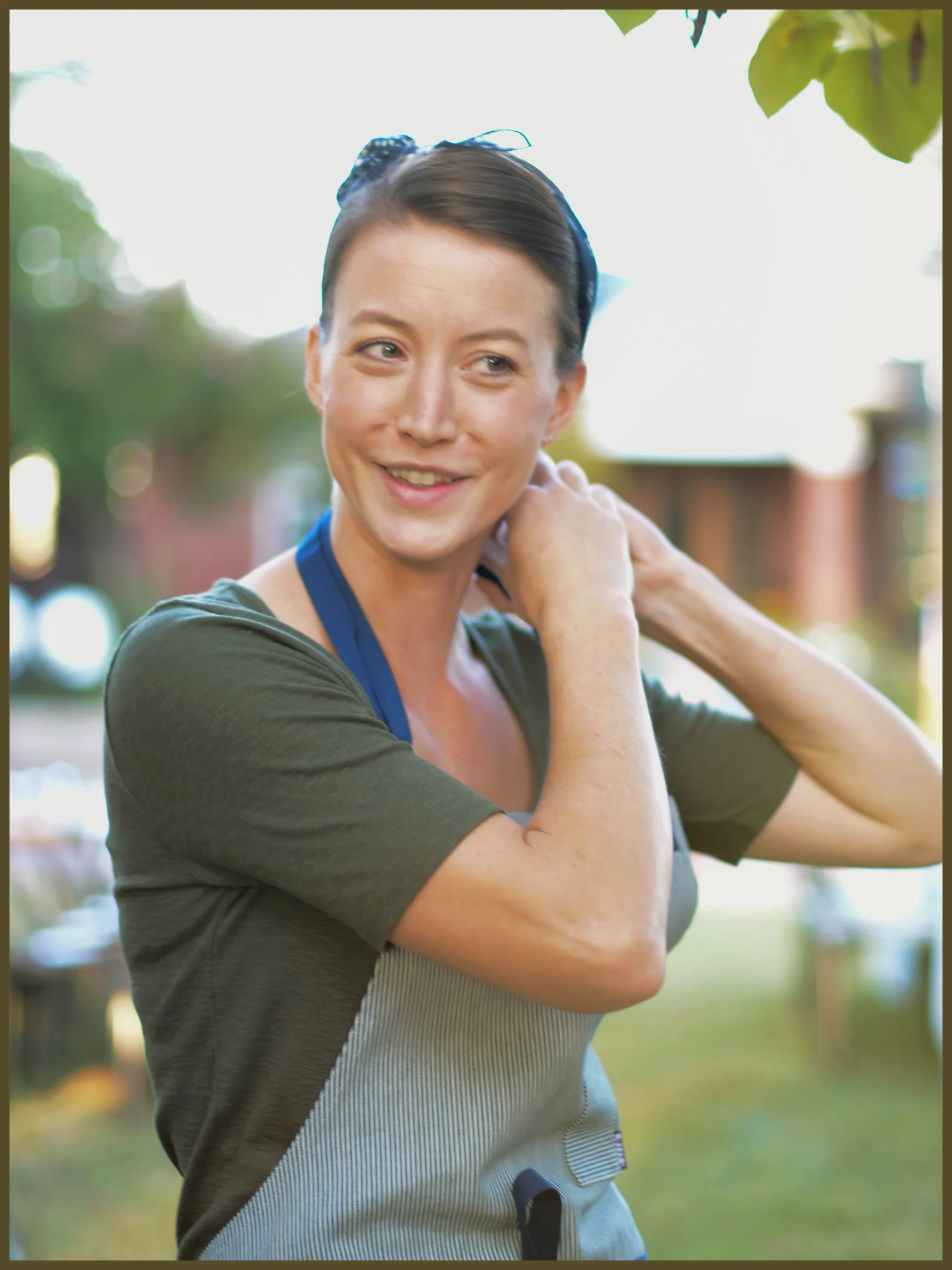
More than I feel drawn to Henrietta Red itself, I feel drawn to Julia Sullivan, its chef and co-owner. Julia is one of most creative and hardest-working women I have ever met.
In Dialogue: Julia Sullivan
When I’m in need of time to recharge, I immediately envision arriving at Henrietta Red at opening, choosing two open seats at the bar, ordering a Little Deuce Coupe and a half-dozen Kumamoto oysters, and filling up by way of delicious flavors and restorative conversation. Henrietta Red is one of my very favorite places to take a deep inhale, with myself, my husband, and close girlfriends.
Sunlight pours into each room of Henrietta Red. A color palette of soft blues and neutrals covers its surfaces and calmly welcomes me. A rich sense of friendship and connection reaches wall to wall and ceiling to floor. It is a wonderfully fitting place to find myself when I’m craving a long-lasting boost.
More than I feel drawn to Henrietta Red itself, I feel drawn to Julia Sullivan, its chef and co-owner. When Henrietta Red first opened, I was inspired to learn about the human being behind such a refreshing and remarkable place, one that serves delicious seafood in the inland state of Tennessee. Only someone with an utmost commitment to quality can accomplish such a feat, and Julia has absolutely done so.
Julia is one of most creative and hardest-working women I have ever met. Not only have I seen her creativity come to life through her restaurant, but I’ve also seen it come to life in the wake of the COVID-19 pandemic. As the pandemic devastated small business owners and restaurants, Julia simultaneously pivoted and remained true to her artistic and entrepreneurial values. She led virtual classes, opened Henrietta’s Fish Camp, and promptly created a process for takeaway and dining safely. I believe one of the greatest manifestations of human creativity is the act of adapting and changing, and Julia has exemplified this time and time again.
Julia is the chef and co-owner of Henrietta Red in Nashville, Tennessee. Charleston Wine and Food writes, “Since opening, Henrietta Red was named one of America’s 50 Best New Restaurants by Bon Appétit in 2017 and one of GQ’s Best New Restaurants in America, as well as recognized as a James Beard Foundation Award semifinalist in the Best New Restaurant category, in 2018. Additionally, Julia was named one of the Best Young Chefs in America by Robb Report, one of the Best New Chefs in 2018 by Food & Wine, and recognized as a 2019 semifinalist and a 2020 finalist in the James Beard Foundation Awards Best Chef: Southeast category.”
Below, Julia and I are in dialogue about family, the value of time, self-efficacy, and more.
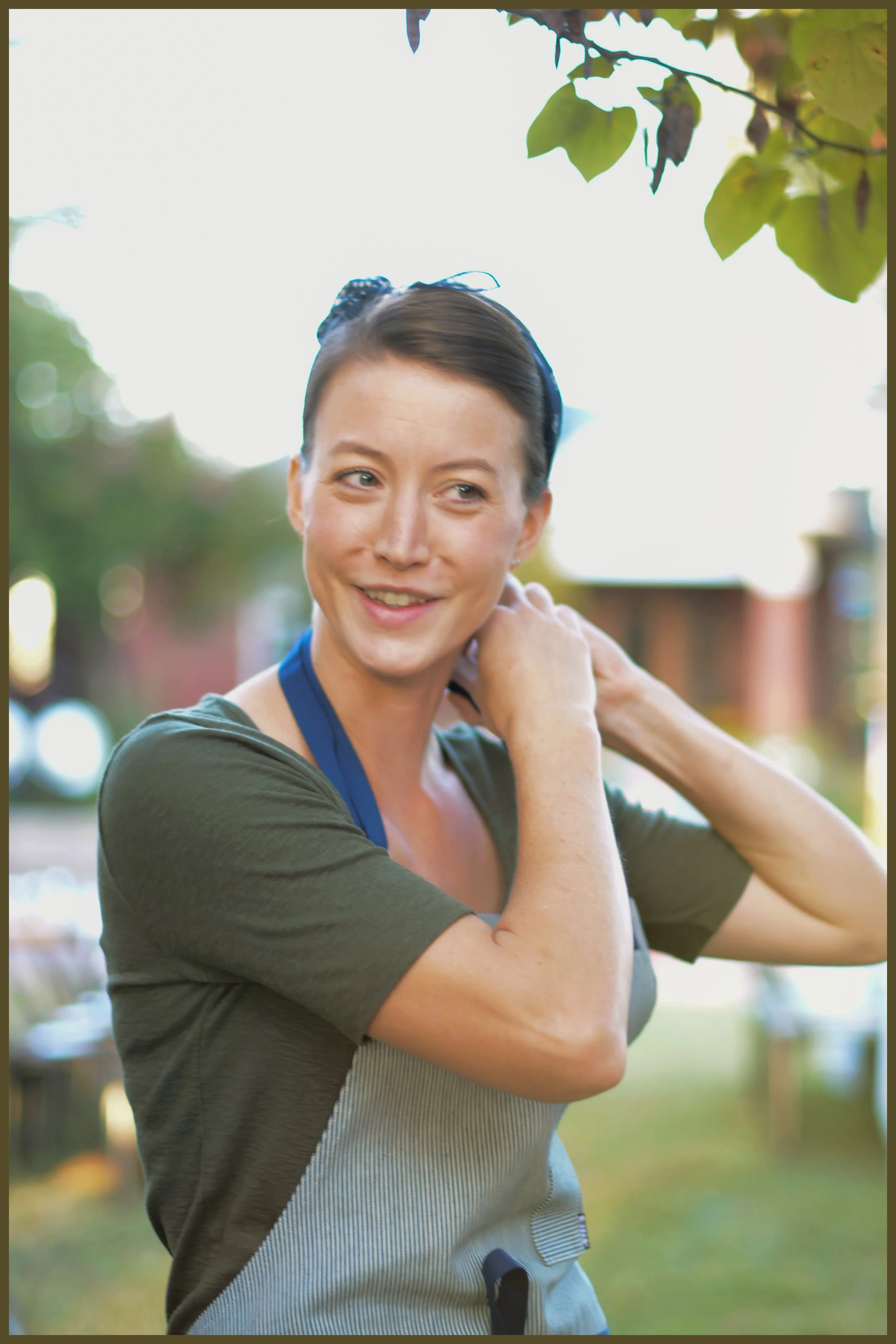
Chelsea: Henrietta Red, your welcoming and delicious restaurant, is named after your grandparents. What is one thing you cherished about your relationship with them? What does each part of the name, “Henrietta” and “Red”, mean and represent to you?
Julia: My grandparents were smart, hilarious, and humble people who loved family and storytelling. I have memories of sitting on their shag carpeting, with a South Carolina football game playing in the background, listening to them tell tales while everyone else in the room laughed until they cried. Henrietta was one of five sisters from South of Charleston who spoke with a thick low country accent and used incredibly charming colloquialisms that were sometimes difficult to follow. Red was a sweet, southern doctor who knew everyone in their community and delivered most of its children, including my Aunt Sharon, who coincidently married my Uncle Harry many years later. They were beloved by many, including their family, and represent hospitality and conviviality to me. The name 'Henrietta Red' represents that but has come to mean something different. She has a life and personality, almost like another character altogether.
Chelsea: In my upcoming cookbook, I write, “Delicious ingredients lead to delicious meals. To fully appreciate each meal we create, we must understand that which makes it great: our commitment to the individual ingredients themselves.” Is there one ingredient, one that may feel unexpected to the reader, you feel is especially essential in a kitchen?
Julia: Time! In a world where cooking and eating are often about doing the least amount possible, we cannot undervalue time. Learning takes time, skill-building takes time, and processes take time. Of course, we can make plenty of delicious things well and quickly, but to really cook and enjoy it requires time.
Chelsea: Alongside healthcare professionals, teachers, and more, chefs were greatly affected by COVID-19. I vividly recall how diligently you worked to pivot the priorities of Henrietta Red and The Party Line. I especially appreciate that you prioritized teaching cooking classes through Zoom. In spite of your steadfast efforts, I can’t imagine how difficult the impact of COVID-19 must have felt in the moment. Now, in a post-pandemic world, is there one lesson you carry with you from this time of rapid change and re-prioritization?
Julia: I learned that there is no rush to do more. A city like Nashville has more opportunities than our creatives can possibly respond to, so it's perfectly fine to wait for the right one.
Chelsea: Your work asks so much of you—physically, intellectually, and creatively. It’s evident you pour your body, mind, and heart into your restaurant, food, and the experiences you create. What is one way you nourish yourself in the in-between moments? In other words, what is one thing that feeds you as you feed the bodies, minds, and hearts of others?
Julia: Running a restaurant keeps me busy, so I don't cook at work every day, and if I do, I complete a prep list and run a service, which feels very different from cooking a meal. I do various things for self-care, but something that still fills me up is cooking a full meal for my friends. I love having friends over on a Sunday or Monday for family dinner—spending the day cooking, setting a proper table, drinking good wine, and laughing while they tell stories.
Chelsea: What is one personal characteristic, or one personality trait, that helps you bring your vision to life as a chef and entrepreneur? (In other words, what is one personal characteristic, or one personality trait, of which you feel proud and grateful?)
Julia: I have high self-efficacy, which is to say I believe in my ability to get things done. I also trust my taste. When I opened Henrietta Red, it was important to me that I was adding value to the market in Nashville, and not opening something redundant just ’cause it might make money. If I didn't believe I could do it, I wouldn't have tried in the first place.
You can follow Julia on Instagram here. You can follow Henrietta Red on Instagram here, as well as book a reservation here.
Photo by: Danielle Atkins
In Dialogue: Tiana Gidley
In his book, Consolations: The Solace, Nourishment, and Underlying Meaning of Everyday Words, David Whyte says, “Beauty is the harvest of presence.”
When I think of an ability to be present, I think of Tiana Gidley.
In Dialogue: Tiana Gidley
In his book, Consolations: The Solace, Nourishment, and Underlying Meaning of Everyday Words, David Whyte writes, “Beauty is the harvest of presence.”
When I think of beauty, I, impacted by David Whyte, think of an ability to prioritize presence: presence with oneself, presence with those we hold closely, and presence with near strangers.
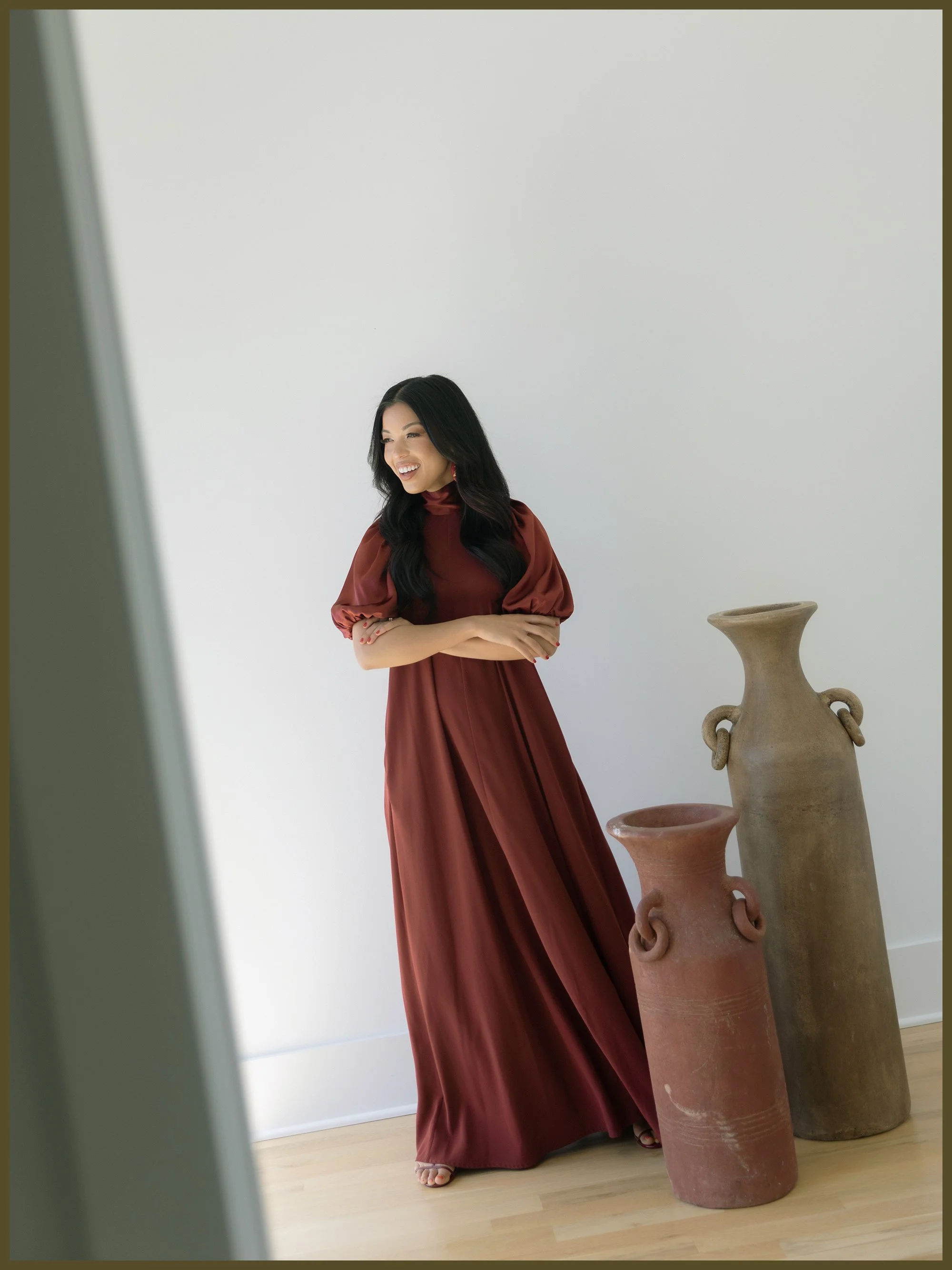
When I think of an ability to be present, I think of Tiana Gidley. Anyone who is fortunate to know Tiana has experienced how she brings curiosity, comfort, and safety to any conversation. If you sit across a table from Tiana, it is promised you will feel like the most important person in the room. When I speak with her, I am certain I have her full attention. She asks evocative questions, and she exquisitely listens. She inspires me to deepen my curiosity about the places and people around me, and she exemplifies what it means to honestly hear someone.
Tiana herself also has a powerful presence. She strikes a balance of emitting joy and confidence without intimidation. She knows who she is, and she persistently attempts to uncover more of who she is as time passes.
David Whyte also writes, “Beauty is the conversation between what we think is happening outside in the world and what is just about to occur far inside us.” Tiana also has an impressive way of witnessing the world around her and subsequently learning personal, specific lessons from its teachings. Tiana is present with herself because she first present with the world around her.
Tiana is the founder and owner of Tiana Gidley Creative, a full-service design studio that helps build beautiful and intentional brands online. She designed my book proposal for The Wiley Canning Company Cookbook, the catalyst to its ultimate creation and success.
Tiana is also the creator of WITHIN, a self-reflection journal full of thoughtful prompts.
Below, Tiana and I are in dialogue about mindset, power, friendship, and more.
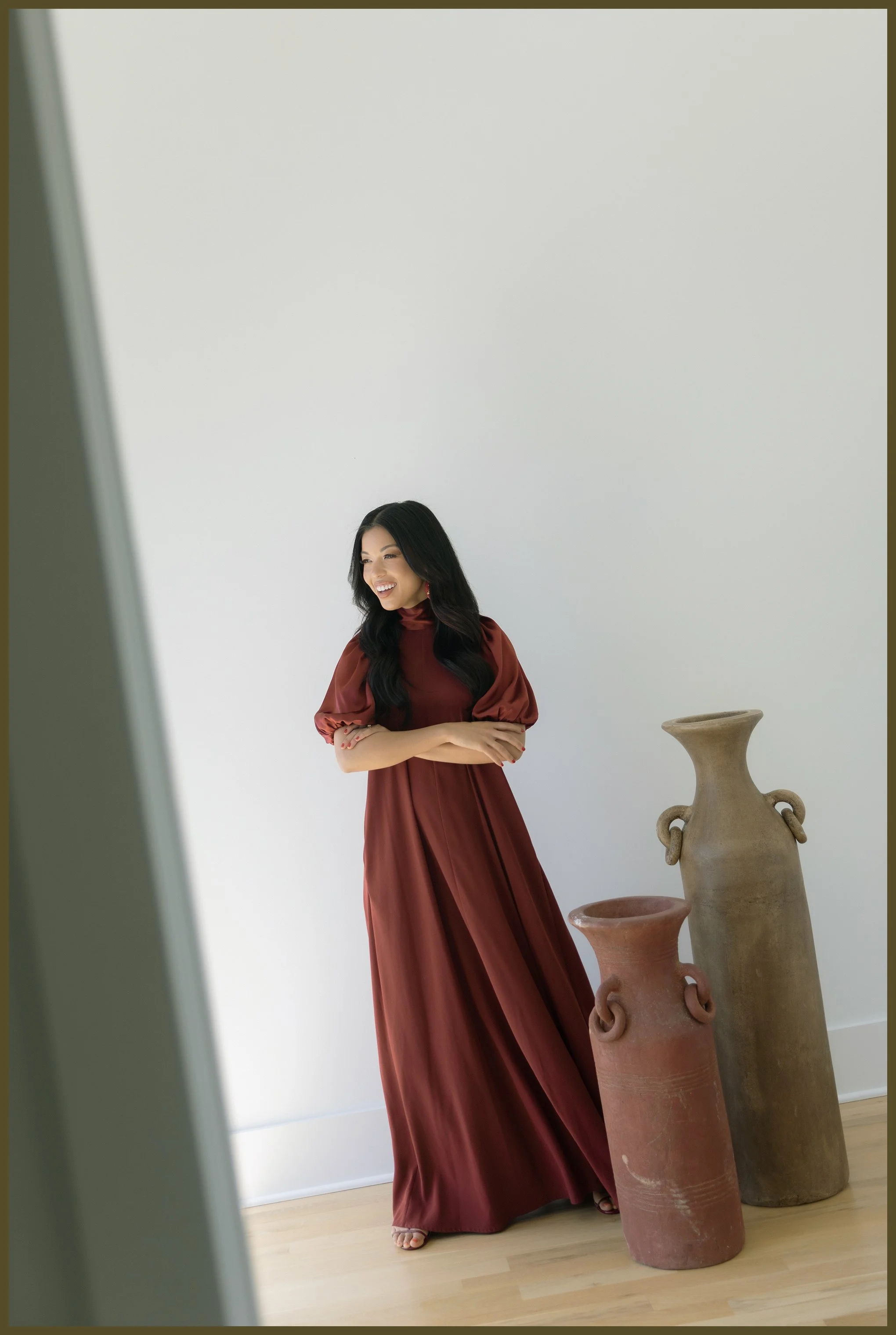
Chelsea: One major mindset shift I have had to adopt at Wiley is a shift from from, “I didn’t get more done today,” to “Look at all I accomplished today.” As women, partners, and business owners, our list of action items is endless, at times. If we let it, this list can cause us to feel like we are not ever finished, or like we are not getting enough done day to day. This, of course, can lead to feelings of shame or inadequacy. So, instead of focusing on what I did not complete, I try hard to focus on what I did complete. This is, honestly, a daily practice—one I have to be aware of each and every day.
How do you, as a woman, partner, business owner, and loyal, consistent friend, operate from a place of abundance? In other words, how do you feel proud and satisfied by the work and relationships you do create and nourish day to day? Do you have one piece of advice for others, like me, trying hard to honor the abundance of their lives, as opposed to the scarcity?
Tiana: The immediate response that comes to mind has something to do with ensuring that where I am focusing my time, energy, and efforts feels in alignment with my truth. As women (and as human beings in general), every day we are faced with a series of micro-decisions. What I'm starting to realize is that these micro-decisions, like essential pieces to some unknown puzzle, eventually create the entire mosaic that is one's life. To feel as though I am truly operating from a place of abundance, I must first assess if the actions I'm taking are in accordance with my truth. If not, I believe I could spend my whole life "doing things" that don't wholly sustain me, eventually winding up in a place I never intended to be. In order to decipher if something feels in alignment with my truth, I use an inner compass of intuitive trust I've spent the last few years rediscovering and fortifying. When I operate from this place, sentiments like satisfaction and nourishment come more easily. That would be my advice for everyone: pause and give yourself the space to reflect on if the to-do list feels in alignment with your truth and the brightest, most colorful version of the life you aim to create. If not, then who or what are you doing it for?
Chelsea: You recently turned thirty years old. The photo and words you shared on your birthday are honest and honorable. You call attention to the push and pull between insecurity and power. In one moment, we might feel small…insecure. In another, we might fill a room; we’re powerful. If we focus on the latter, power, what comes to mind for you? In other words, what allows you to feel powerful? What allows you to stand tall and strong?
Tiana: I think if you would have asked me this question a year ago, my response would look much different, and I hope it changes a year from now still. In this present moment, what makes me feel powerful is a deep reverence for who I inherently am, and the role I play in this lifetime. For far too long, I attempted to create a wall of self-preservation composed entirely of what I thought others expected of me. You can imagine how fragile this so-called fortress turned out to be. As I began to dismantle these perceived layers of protection, I was forced to ask myself what armor I would don in its place. Armor, by nature, makes the wearer feel strong, but for me, the question always comes back to, "What is that armor rooted in? What anchors it into place?" Slowly but surely, I started to craft my view-of-self based not on what others wanted me to be, but who I felt I was at my core when I quieted the past conditioning and "shoulds". This manifests through the courage to choose my needs, even if it means disrupting others, as well as through choosing to view my hopes and desires through the eyes of tenderness, as opposed to incessant logic, to name but a couple examples. In short, I feel strong when I honor myself, even when the world tells me it isn't safe or appropriate to do so.
Chelsea: In this specific season of life, what is one trait you value in a close colleague or friend? Right now, in a season of life with a young child, I notice I value ease and flexibility. I feel loved when a close friend casually pops by to visit Sullivan and me, and I feel understood when I’m met with ease and grace when I need to reschedule a commitment due to our family’s ever-changing needs.
Tiana: Because the past year orbited a lot around restoring confidence and comfortability in my being, I've especially cherished when others have granted me both permission and encouragement to be myself. When the majority of your existence is in response to how others feel about you, you become acutely aware of your own presence. Your flaws seem unforgivable. Living in your skin feels unbearable at times. The ego can be so relentless. Choosing to honor my truth is hard work, especially after nearly 30 years of abandoning it. This year though, I was fortunate enough to foster a friendship with someone very special that challenged me in all the ways I didn't realize I needed. Every time I silenced myself in the name of shifting the focus elsewhere to present as someone more palatable (My ego: "People like women who aren't too loud, too selfish''), she'd rebuttal, "No, go back. I want to hear about you. This time, give me the whole story." Slowly but surely, she invited me to show up outside of my own self-protective narrative of what I thought I needed to be. Not only that, but she reminded me how beautiful that true and complete version is. This friend I speak of knows how much this meant, but I wish I could express in words just how much she gave me. When every bit of you is screaming that who you are isn't enough, having someone provide a safe space, however small, to be exactly that? Precisely who you are? Well, it changes everything.
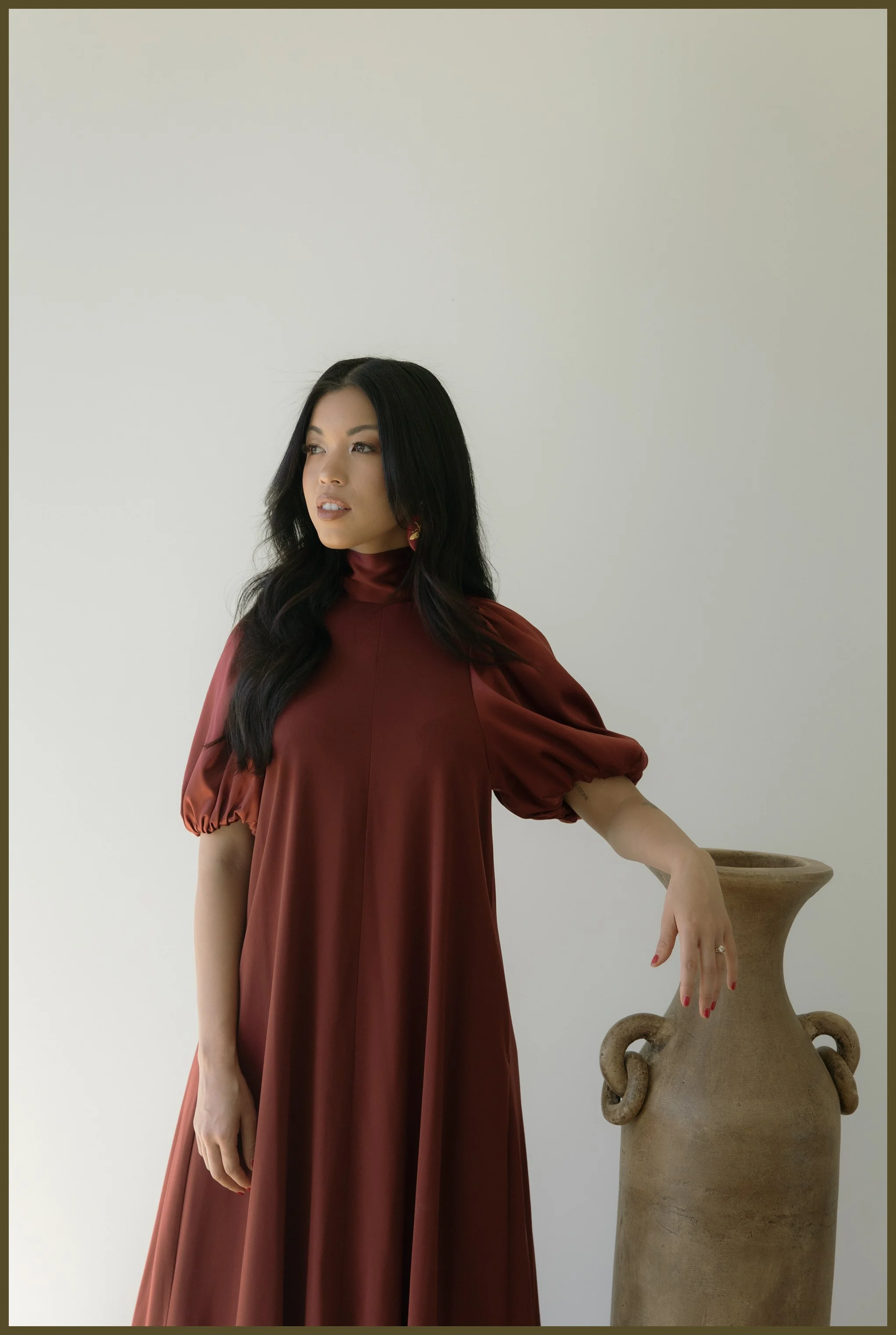
Chelsea: We live in a culture of improvement, or betterment. We are often encouraged to improve our health, mindfulness, social skills, and more; the list is endless, it seems. If, for a moment, we immersed ourselves in a world of pure, unadulterated satisfaction and acceptance, one without a desire to improve any part of ourselves, what parts of yourself feel most valuable? In other words, what don’t you feel a need to improve? What makes you proud as is?
Tiana: My mind wanders to the smallest moments: the way the sun looks as it flickers through the blinds in the morning, this ineffable feeling of satisfaction coursing through me, knowing my people (Sam and my dog, Pete) are in bed close by; the pride that serendipitously swells in my heart after I leave a day of leading and directing in a way I can only describe as synergistic; the "ah-ha" moment of remembrance when I let myself indulge in something purely for fun and discover I've awoken something previously denied and dormant. When I think about what makes me proud as is, it's some amazing amalgamation of that. Those moments and the fact that I have the courage to reach for them time and time again, especially when it feels hard and even when I don't think I know how.
Chelsea: What is one food-related habit, priority, or value rooted in your past, with family or close friends, that you wish to carry forward into the future? If there isn’t one, what might you start?
Tiana: The value of curiosity. I recently rediscovered my love for cooking as an artform. When I fantasize about what this has looked like in my life, I'm brought back to late nights chopping and stirring and dancing in a bright and fragrant kitchen, my dad as lead chef and me as his sous during our designated visits every other weekend. When I distill down the memory, the undercurrent of these special times was always curiosity. What new recipes can we try? What do our taste-buds tell us the dish needs? What might I discover about someone over this shared meal? I see food as one way to witness the beauty of this world (love, connection, inspiration) manifested. I hope to always carry with me the curiosity to see where it leads.
You can follow Tiana on Instagram here. You can find her website here, as well as her self-reflective journal here and digital course here.
Photos by: Chelsea J. O’Leary
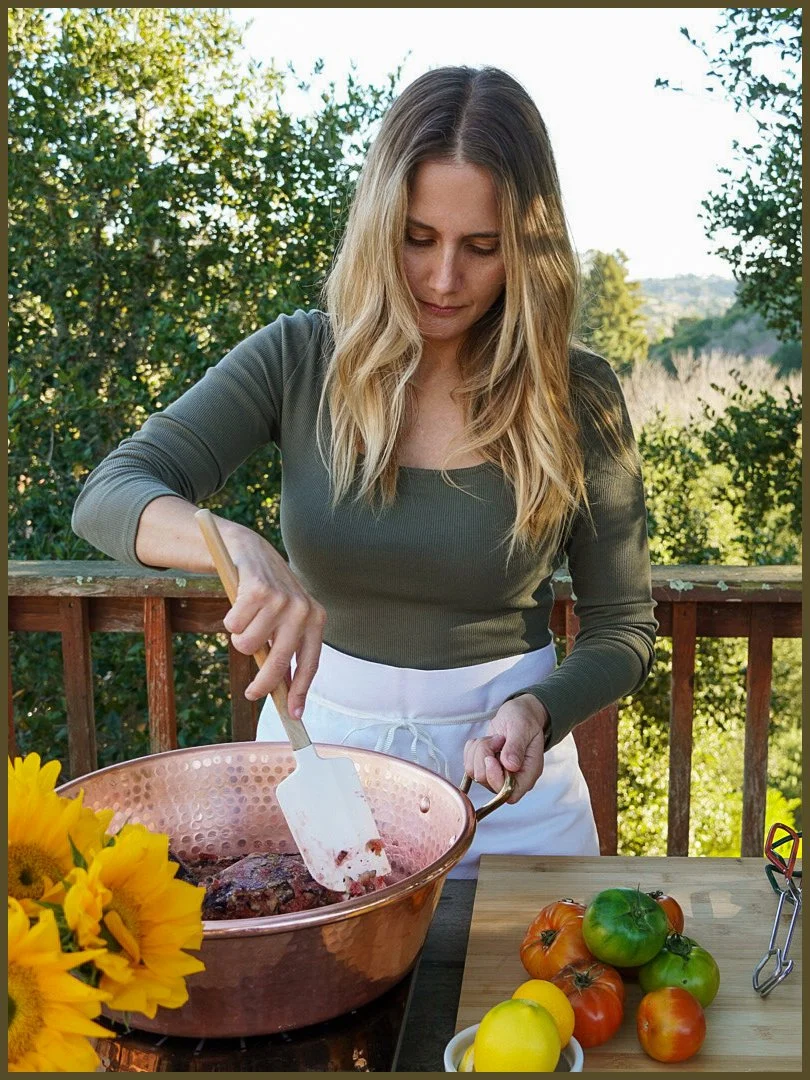
In Dialogue: Christiana Christian
We cannot will ourselves to feel connected to something or someone. We cannot predict what or who will gain our attention.
When I first discovered Christiana Christian on Instagram, I felt immediately drawn to her work and lifestyle.
In Dialogue: Christiana Christian
We cannot will ourselves to feel connected to something or someone. We cannot predict what or who will gain our attention. These feelings, these experiences, happen to us. They find us. They stay with us. We, mysteriously, notice feelings, or experiences, of admiration or respect after they are earned.
When I first discovered Christiana Christian on Instagram, I felt immediately drawn to her work and lifestyle. Christiana is the founder and owner of Christiana’s Preserves. As I paid attention to her, I quickly noticed I felt both admiration and respect for her. Simply put, she seems to do what feels important to her: prioritize time with her family, create delicious meals, and habitually spend time with herself outdoors. To live simply requires great complexity and curiosity. A life made of only a few important ingredients is often harder to cultivate and protect than one made of ever-changing top priorities. Christiana seems to, very consistently, focus on her family, work, and personal wellness. This is a discipline I admire and respect. This is a discipline that leaves me feeling drawn to Christiana.
I recently found myself with a list of questions and ideas about the future of Wiley Canning Company. At first, I felt unsure of who to ask, if anyone. As I sat with this unncertainty, an idea ultimately struck.
“Christiana might be willing to talk with me. I’m going to reach out,” I thought to myself.
I wrote to Christiana, and she immediately responded with a willingness and open heart. We scheduled a phone call, and I held no questions back. She advised and encouraged me simply because she was interested, open, and kind. Christiana is a wealth of knowledge in the culinary world, and I am so fortunate to learn from her, little by little, while states apart.
Below, Christiana and I are in dialogue about canning, family, and their symbiotic, difficult, and always-meaningful intersection.
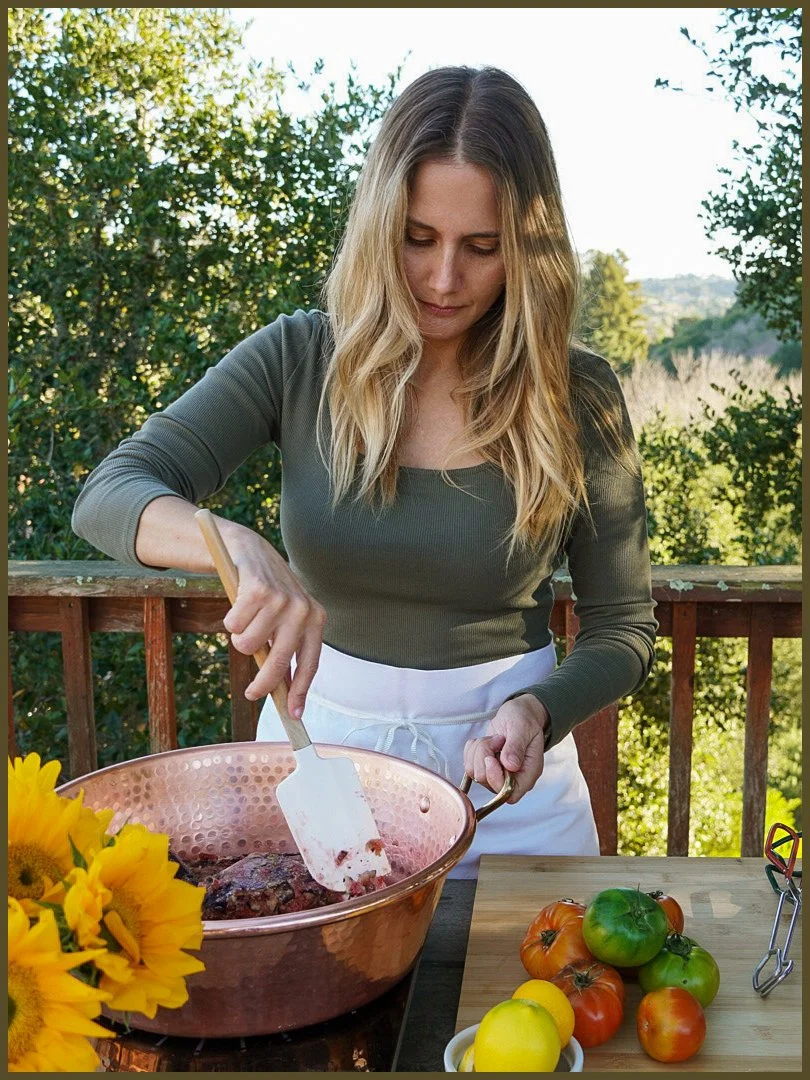
Chelsea: You created Christiana’s Preserves in 2012. What led you to create and build Christiana’s Preserves? What is one aspect of Christiana’s Preserves that has worked well?
Christiana: I began Christiana's Preserves in 2012 in Orange County to make extra money while being a stay-at-home mom. I would do small pop-ups in the area, which garnered a small following of customers. This was also when Instagram was beginning to take off. I was privileged to be featured as a local canner by Ball® and start a partnership with King Arthur Flour. In 2015, I put my business on hold. My family was moving up the coast to the San Luis Obispo area, which was a hard transition for our kids. I felt I needed to put my kids first and sacrifice my business, which was difficult because things were starting to take off.
In 2019, I relaunched Christiana's Preserves. It felt like the timing was right. I had been working as the Culinary Expert for Williams Sonoma, making many connections and getting a feel for the area's demographics. I cold-called farmers all over the Central Coast and began selling my jams and teaching cooking classes out of my home kitchen and at local wineries. I think an aspect that has worked really well is my connection to people, whether it's a vendor who sells my preserves, the farmers with whom I work, or the customers I meet at classes or through social media platforms. The community aspect of my business has brought people together.
Chelsea: Nowadays, what is one pursuit or ritual that brings you joy, consistently?
Christiana: I walk or hike every morning with my Australian Shepard, Rudy. We live in a fantastic coastal climate with lots of trails and hills, which makes for great hiking. I love the peacefulness of being in nature; it's my therapy.
Chelsea: How does your role as a mother strengthen your work?
Christiana: I think back on the sacrifice of closing down my business to be present for my kids. It makes me realize how we will do anything for our kids to thrive. I'm very close to my kids; they are all teenagers now. When I relaunched my business, they were part of it from the beginning. Going with me to farms to pick up fruit, meet the farmers, and process fruit. They have helped with prep work for cooking classes. They have sold jam. They help me record content for social media; it's a family-run business. They have cheered me on from the beginning.
Chelsea: How does your role as a mother challenge your work?
Christiana: The balance of it all. As moms, we carry so much, and I think I tend to overwork but also try to be a supermom. Having had some health issues in October of 2021, I realized after working with my doctor and ending up in the hospital that I needed to slow down. I needed to cut back on stress. I was working nonstop but also trying to be everything for everyone, and it was an impossible task. I try to balance and put boundaries where boundaries need to be.
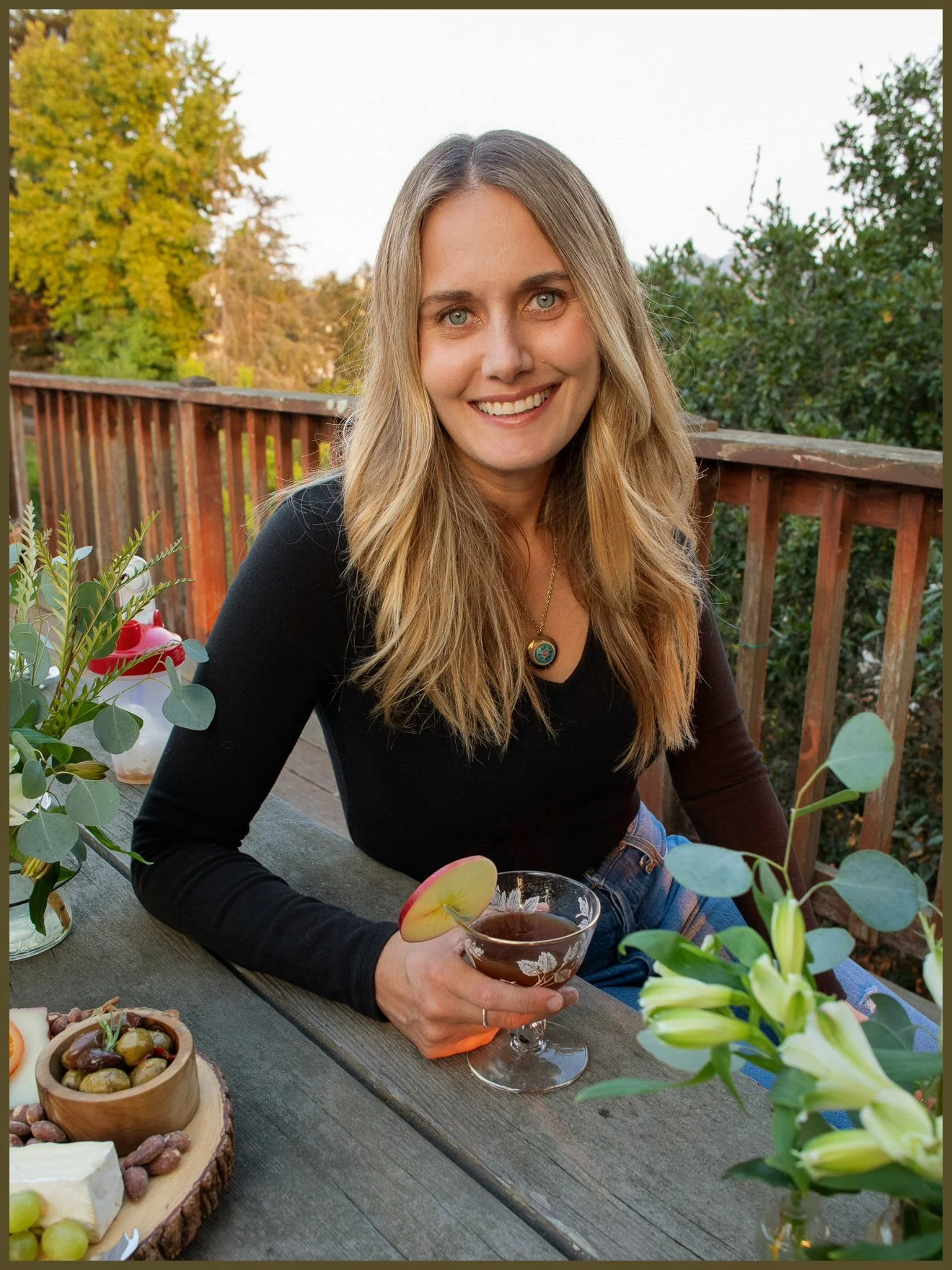
Chelsea: To you, what does a preserved good add to a meal? How does it change a meal? To me, adding a preserved fruit or vegetable atop a dish, many times, feels as important as salt and pepper.
Christiana: It adds so much flavor and depth! When you add mango chutney to curry, it brings another level of taste. I make a spicy tomato jam that brings a unique sweetness and spice when added to a burger or eaten with sharp English cheddar. I also love how pickled vegetables can change a dish; I add pickled carrots or pickled green beans to my salads to add the right amount of acid and crunch.
Chelsea: What is one food-related habit, priority, or value rooted in your family’s past that you wish to carry forward into the future? Or, what might you begin?
Christiana: The art of cooking. I have had my kids in the kitchen since they were 18 months old. It's been messy and stressful, but I want my kids to understand that making food is not a task but an art form. It's fun to see them now as teenagers. They appreciate food and flavors; it honestly brings me so much joy! All my kids can cook, and it makes my heart so happy to see them creating a meal.
You can follow Christiana on Instagram here. You can find her website here.
Photos by: Christiana Christian